

Table of contents
.jpg)
.avif)
4 Eden AI alternatives to consider in 2026


Jon Gitlin
As you build AI features into your product, you'll likely rely on multiple models and providers to balance cost, reliability, and output quality across different tasks.
Eden AI addresses this with a single API that routes requests across 500+ models. It also offers unified billing, a monitoring dashboard, and automatic failover to keep requests flowing when a provider goes down or hits a rate limit.
Before deciding whether to use Eden AI as your LLM gateway, we'll help you evaluate it against its top competitors: Merge Gateway, OpenRouter, LiteLLM, and Portkey.
Merge Gateway
Merge Gateway is an enterprise control plane for production LLM traffic. It gives you one API for LLM routing across models while adding the governance, per-customer controls, and observability you need when you ship AI features to your own customers.
Top features
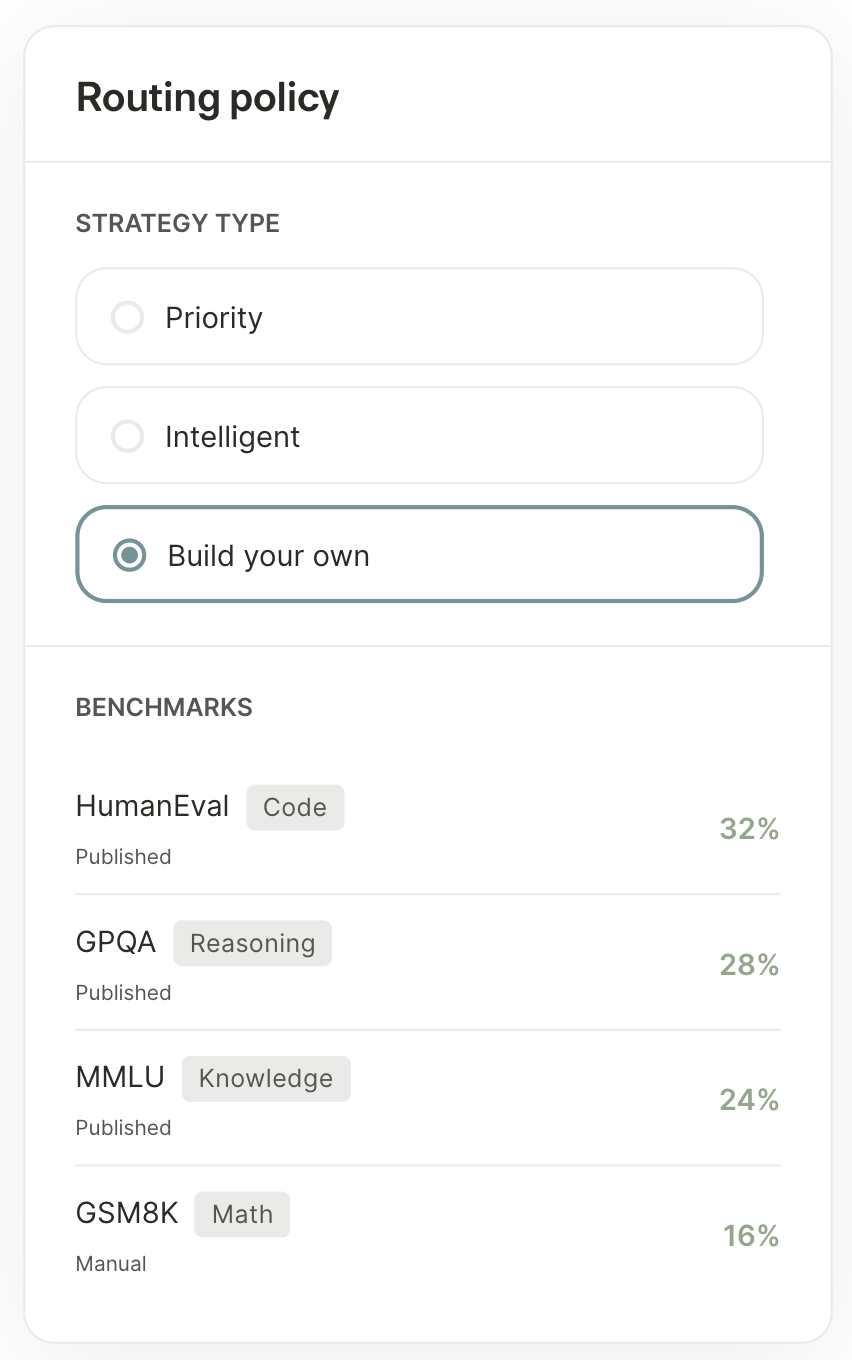
- Build Your Own Router (BYOR): Route requests on your own benchmark and evaluation scores, not just cost, latency, or provider health, so "best" is defined by your data
- Embedded routing per customer: Provision a headless routing environment for each end customer, with its own policies, keys, budgets, and usage reporting, all managed from your backend
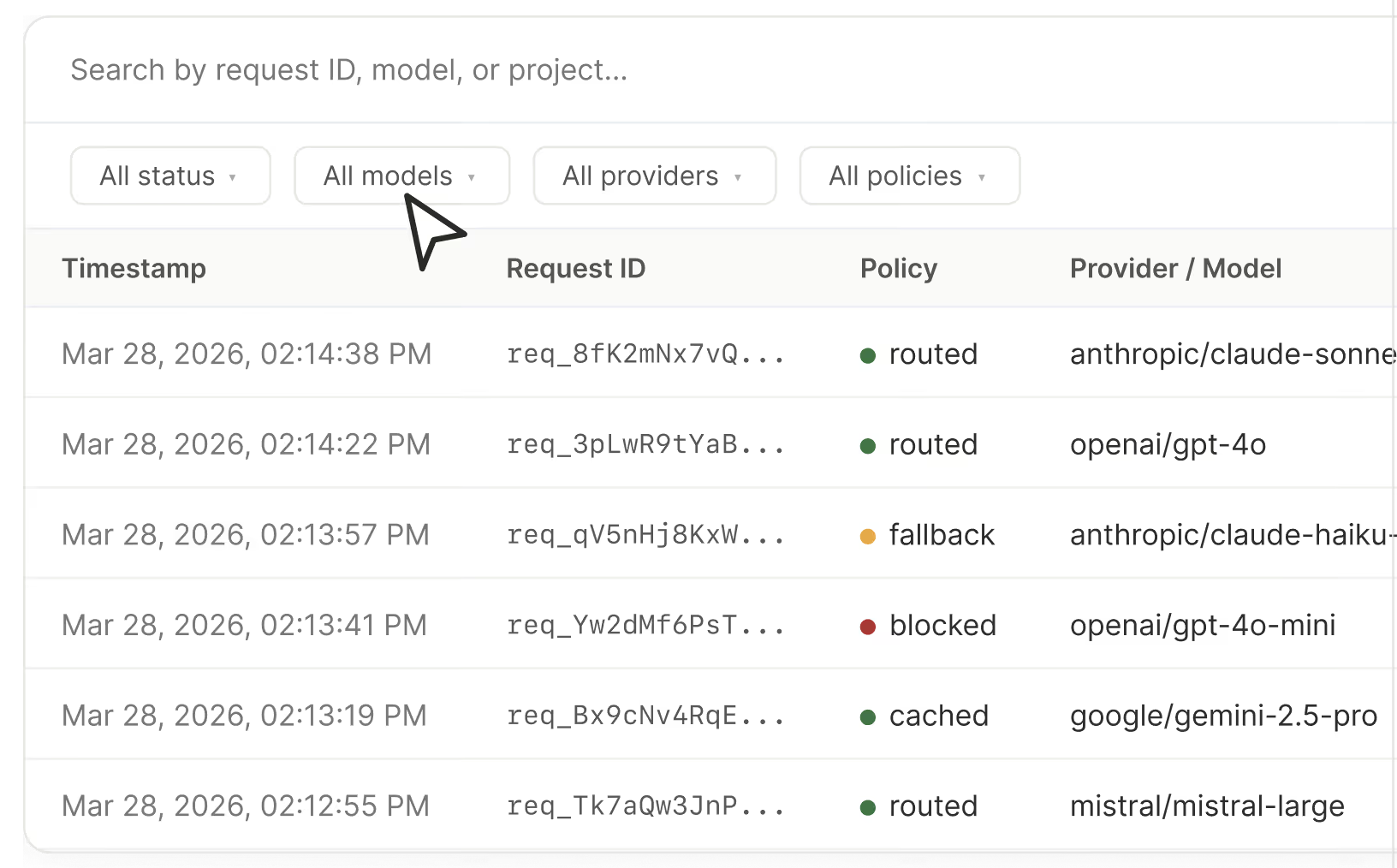
- Governance and data protection: Enforce org-wide policies, real-time data loss prevention (DLP), and per-request audit trails across every model call
When to choose Merge Gateway over Eden AI
- You want routing driven by your own evaluations. BYOR lets you route on your benchmark scores and prompt complexity, so you land the right model for each use case. Eden AI can't route requests based on your own quality evals
- You're shipping AI features to your own customers and need per-tenant controls. Merge Gateway maps routing policies, keys, budgets, and cost attribution to each end customer through its embedded routing stack. Eden AI offers per-customer model selection, but you'd build that tenant-level governance yourself
- You need enterprise governance in place before you launch. You get org-wide policy enforcement, DLP, and per-request audit trails aimed at your security and IT stakeholders, so the controls legal will eventually ask for are there from day one
{{this-blog-only-cta}}
OpenRouter
OpenRouter is a unified API that gives you access to hundreds of models, with usage tracking and billing consolidated in one place.
Top features
- Broad model access: Reach hundreds of models from 70+ providers through one OpenAI-compatible API
- Provider routing and failover: Redirect requests around provider outages and rate limits with built-in fallbacks
- Organization usage tracking: Consolidate spend, shared credits, and API key management into a single org-level view
When to choose OpenRouter over Eden AI
- You want the deepest LLM catalog behind one API. OpenRouter is purely LLM-focused, with hundreds of models and a large developer community. Eden AI spreads across many AI service types (OCR, speech, vision, and more), so its LLM-specific ecosystem and community are smaller and growing slower
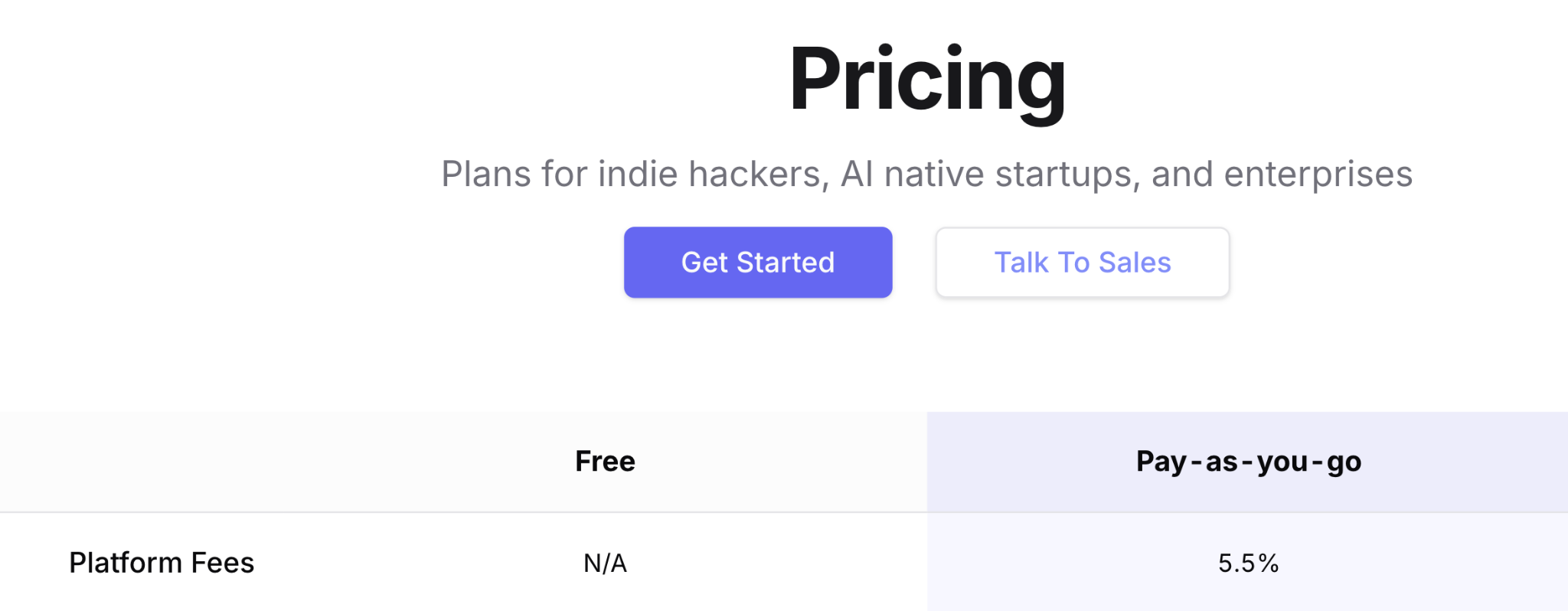
- You want to test the platform for free. OpenRouter offers zero platform fees on their “Free” plan, while Eden’s only self-serve plan includes a 5.5% markup fee
- You want a widely adopted, well-documented routing layer. OpenRouter is one of the most established players in the multimodal routing category (e.g., they recently raised a $113 million Series B), so you get strong docs and a big community to lean on. Meanwhile Eden AI is still a seed-stage company with significantly fewer users
Related: The top alternatives to OpenRouter
LiteLLM
LiteLLM is an open-source LLM gateway.
It offers an OpenAI-compatible proxy and Python software development kit (SDK) that routes requests to 100+ LLM providers, with virtual keys, spend tracking, and support for self-hosting.
Top features
- Open-source gateway: Self-host the proxy and SDK with full access to the source, so you control deployment and infrastructure
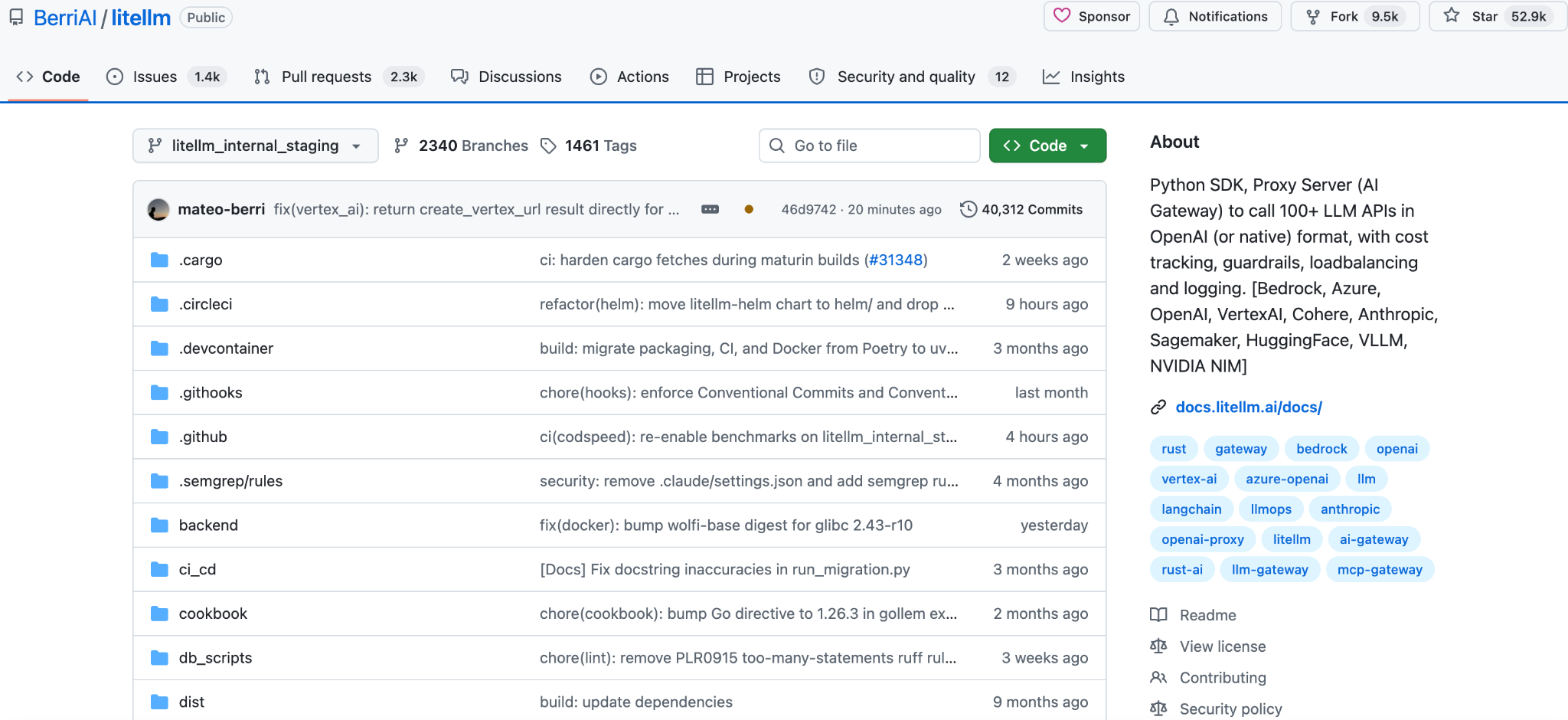
- Broad provider coverage: Connect to 100+ LLM providers through one consistent, OpenAI-compatible interface
- Spend tracking and virtual keys: Track budgets and issue virtual keys per team or project to control usage
When to choose LiteLLM over Eden AI
- You want to self-host and own your gateway infrastructure. LiteLLM is open source and can run in your own environment, which helps if you want source-level control or strict data residency. Eden AI is a cloud-only service, so you can't run it inside your own infrastructure (the EU endpoint helps residency but still runs on Eden AI's cloud)
- You prefer building on an open-source community project. You get a fast-moving codebase and frequent updates, so you can extend or contribute to the tooling yourself
- You mostly need provider abstraction in your code. LiteLLM's Python SDK lets you standardize calls across 100+ providers directly in your application, which helps when you want a lightweight library rather than a fully-managed platform
Related: A guide to LiteLLM alternatives
Portkey
Portkey is an LLM operations (LLMOps) platform that pairs an AI gateway with observability, guardrails, and prompt management. It’s available as both a managed service and an open-source gateway.
Top features
- Integrated observability: Trace requests with logs, feedback, and cost metrics alongside routing in one platform
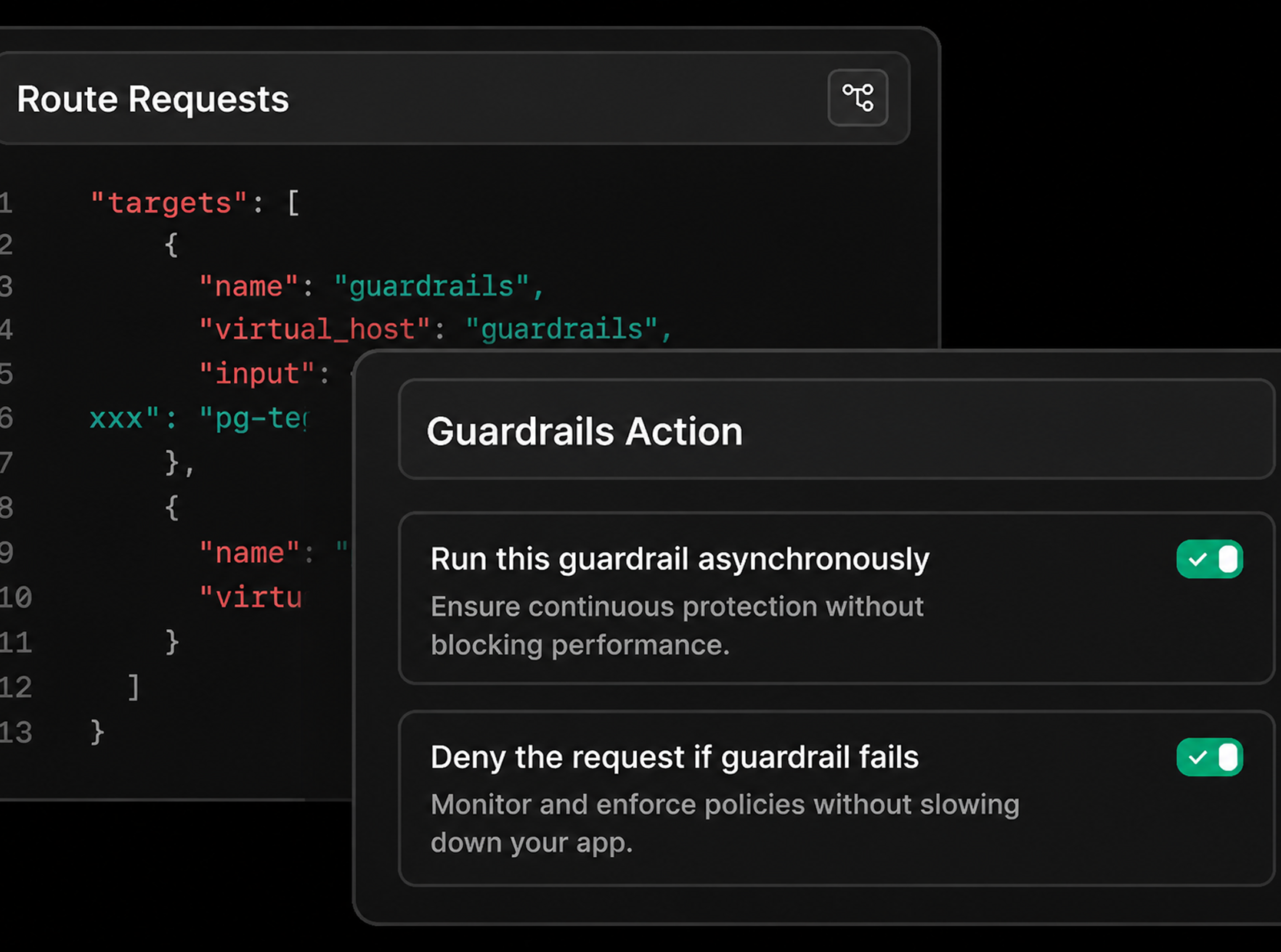
- Guardrails: Screen requests and responses with policy checks that redact, block, or reroute them based on your rules
- Prompt management: Version, test, and analyze prompt templates in a central library
Related: The most popular Portkey alternatives
When to choose Portkey over Eden AI
- You want guardrails and prompt management alongside routing. Portkey bundles LLMOps tooling around the gateway, so you can run guardrails and version prompts in the same place you route requests. Eden AI gives you a usage dashboard and key management, but no dedicated guardrails or prompt management
- You need self-hosting, including hybrid or air-gapped deployments. You can run Portkey's open-source gateway in your own environment, whereas Eden AI runs only on its own cloud
- You want deep observability for internal AI operations. Portkey treats observability as a core pillar, with request tracing and detailed metadata filtering that go beyond a usage summary, allowing you to debug and analyze AI behavior in depth
{{this-blog-only-cta}}
Jon Gitlin
.png)
.png)

Don't settle for Eden AI
Integrate once with Gateway to get access to every major model. You'll also access built-in routing, cost controls, and request-level visibility.


But Merge isn’t just a Unified
API product. Merge is an integration platform to also manage customer integrations. gradient text
But Merge isn’t just a Unified
API product. Merge is an integration platform to also manage customer integrations. gradient text
But Merge isn’t just a Unified
API product. Merge is an integration platform to also manage customer integrations. gradient text
But Merge isn’t just a Unified
API product. Merge is an integration platform to also manage customer integrations. gradient text