

Table of contents
Just for you
No items found.
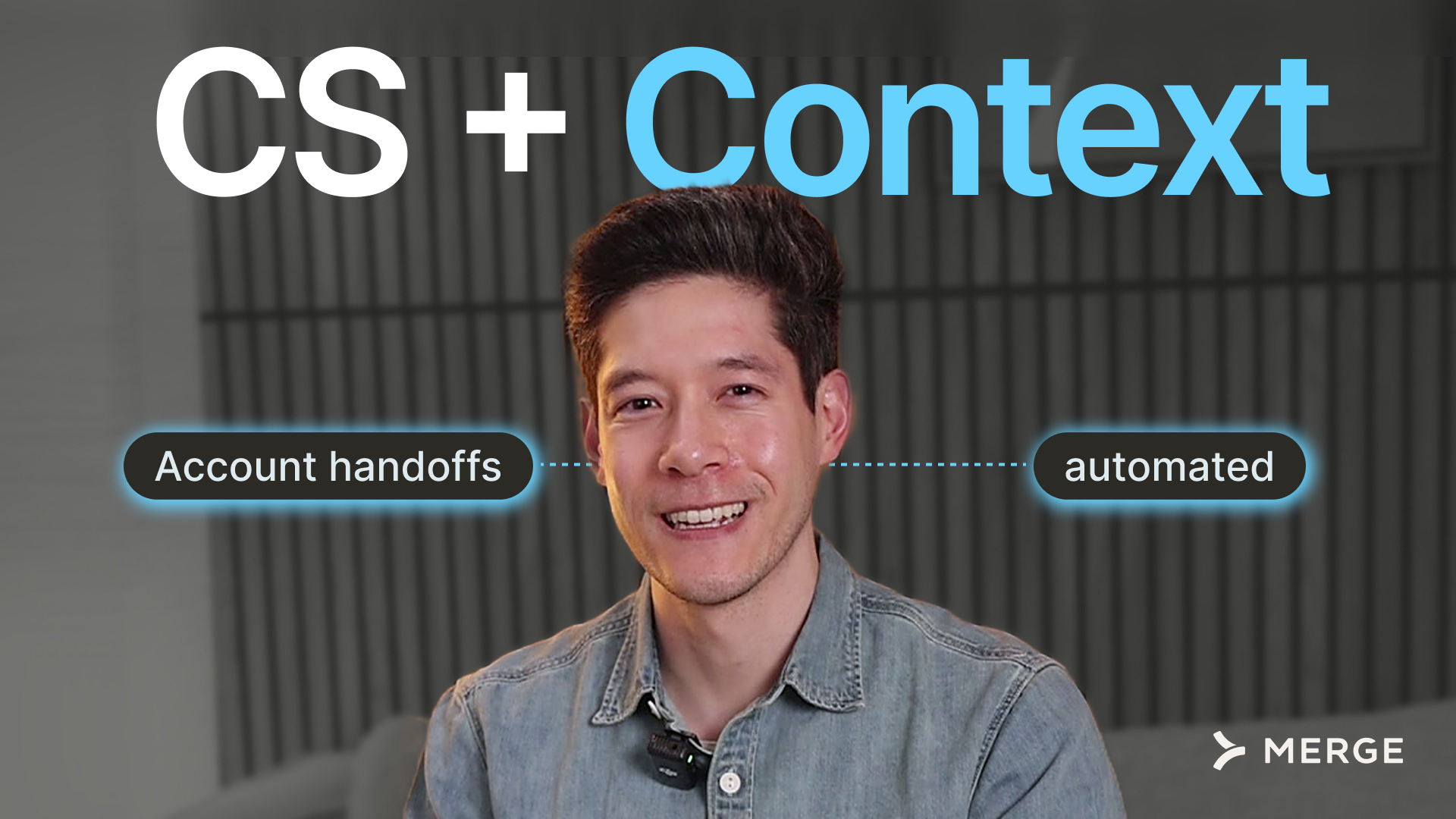
How a Merge CSM takes over a new account in minutes with Merge for Workforce
No items found.
If you're a CSM, you've probably inherited an account and found out the hard way that you were missing context, like a connector launch the customer expected last month that nobody wrote down.
Matt Mittleman is an enterprise customer success manager at Merge. He uses Merge for Workforce to pull an inherited account's history out of every tool his team uses, so a handoff takes minutes instead of days.
Why account transitions are slow
When an account changes hands, the context doesn't come with it. It lives in call recordings, support tickets, project boards, Slack threads, and whatever notes the last CSM left behind.
Matt needs to understand three things fast: what the customer has asked for, what's high priority for them, and how healthy the relationship is. Before, getting there meant digging through each tool and then waiting on internal folks to fill in the gaps.
Depending on when he could get time with those people, Matt says, it could take hours or a couple of days.
How it works
Matt starts a new Claude session and invokes his account transition skill. He tells it which account is coming over and asks for a new Notion page with everything he needs to know.
From there, the agent works through the connectors Merge for Workforce gives it access to:
- Gong for customer calls
- Notion for existing account notes
- Pylon for support tickets
- Asana for internal tasks
- Slack for internal context
- Google Drive for contracts and docs
It looks back over the last three to six months. On the account in Matt's demo, it found 13 Gong calls in that window and pulled an AI brief for each one.
Claude also posts a summary in the session: account health, the biggest risk, current engagement, the key stakeholders, and the source for each finding so he can check it.
What lands in the Notion page
The skill writes a new Notion page titled with the account's name. It covers:
- Contract: dollar amount, term length, and an executive summary of the agreement
- Adoption and usage: a high-level read on how the customer is using Merge today
- Use case: what the customer originally bought Merge for
- Connectors: which integrations matter most now, and which ones they want to launch next
- Stakeholders and growth opportunities: who to talk to and where the account could expand
- Friction points: what's gone wrong in onboarding so far
The friction section means Matt knows where the customer has already struggled, so he can watch for it before he's said a word to them.
Drafting the first email
Matt has a second skill that drafts emails in his voice, using what the transition skill pulled.
In the demo, he asks it to email the customer's primary stakeholder and find out their connector launch timeline. The agent uses the Gmail connector to write the draft and saves it to his account. It's addressed to the customer's product owner, the exact person Matt wanted to reach.
What changed
Matt now gets an account's history in minutes, and there's a draft to the right stakeholder in his Gmail before he's spoken to anyone.
"That means less time searching and more time helping customers achieve their goals," Matt says.
To see how this could work for your team, learn more about Merge for Workforce.
This post is part of How Merge Uses Merge, a series on how our own teams use the products we build.
No items found.


But Merge isn’t just a Unified
API product. Merge is an integration platform to also manage customer integrations. gradient text
But Merge isn’t just a Unified
API product. Merge is an integration platform to also manage customer integrations. gradient text
But Merge isn’t just a Unified
API product. Merge is an integration platform to also manage customer integrations. gradient text
But Merge isn’t just a Unified
API product. Merge is an integration platform to also manage customer integrations. gradient text