

Table of contents

.png)
3 Lasso alternatives to consider in 2026



Jon Gitlin
As your employees adopt AI tools, you'll likely need to govern which company systems those tools can reach, protect the data moving through them, and keep an audit trail of every action.
Lasso is an AI security platform that can help by discovering the AI agents and applications running across your environment, testing them against a large library of attacks, and enforcing policies at runtime to catch threats like prompt injection and data leakage.
Before deciding whether to use Lasso Security to secure your employees' AI usage, we'll help you evaluate it against its top competitors: Merge for Workforce, Runlayer, MintMCP, and Glean.
Merge for Workforce
Merge for Workforce is a governance layer that sits between your employees' AI tools and the enterprise systems they connect to, giving you centralized control over which tools each person's AI can reach and what data flows through them.
It pairs managed AI agent integrations with authentication, permission scoping, data loss prevention, and audit logging in one place.
Top features
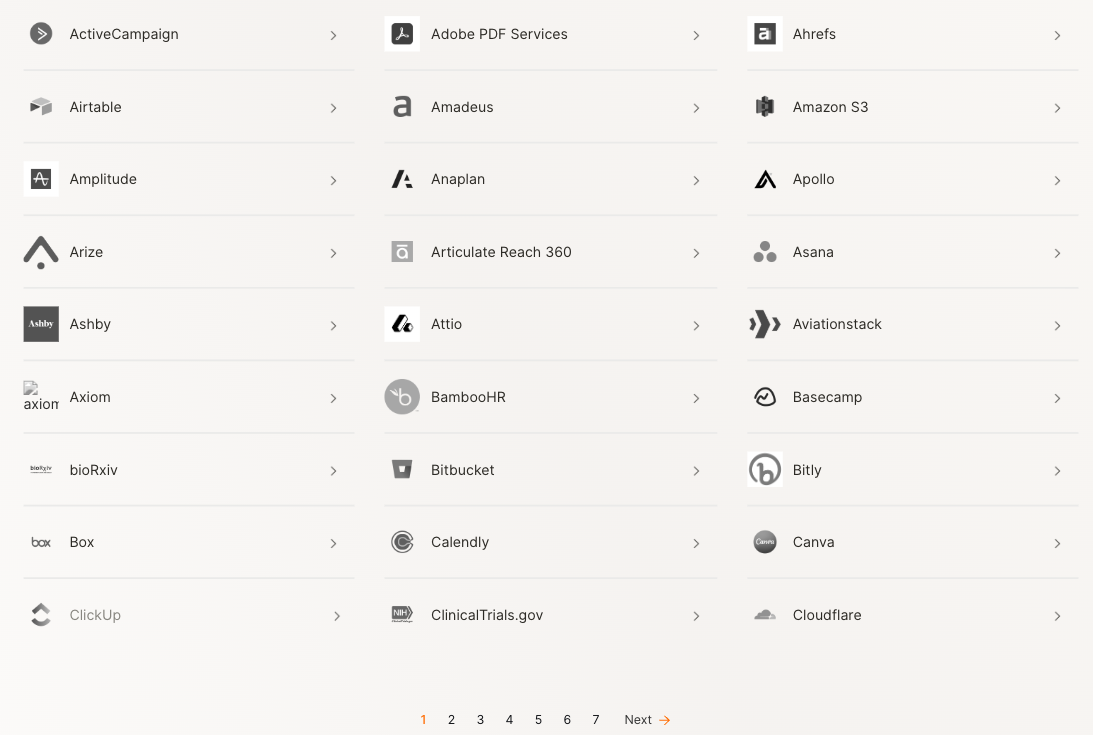
- Managed MCP connectors: Connect employees' AI tools to hundreds of systems like Salesforce, Slack, and Jira through prebuilt MCP integrations Merge maintains
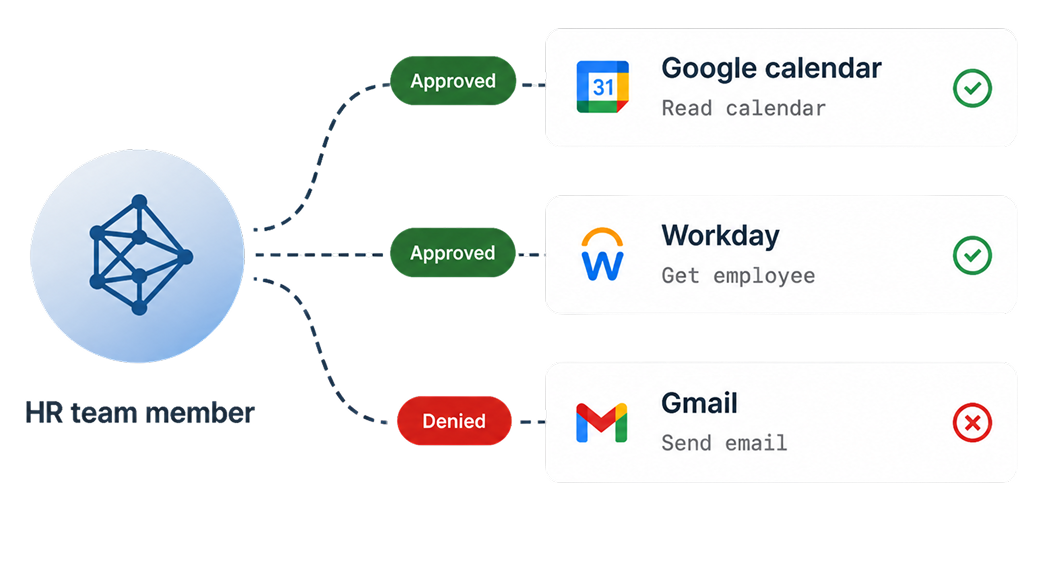
- Identity-based access control: Provision tool access from Okta or Azure AD over SCIM, and then bundle approved MCP connectors and tools into Tool Packs so an employee's AI only reaches what their role allows
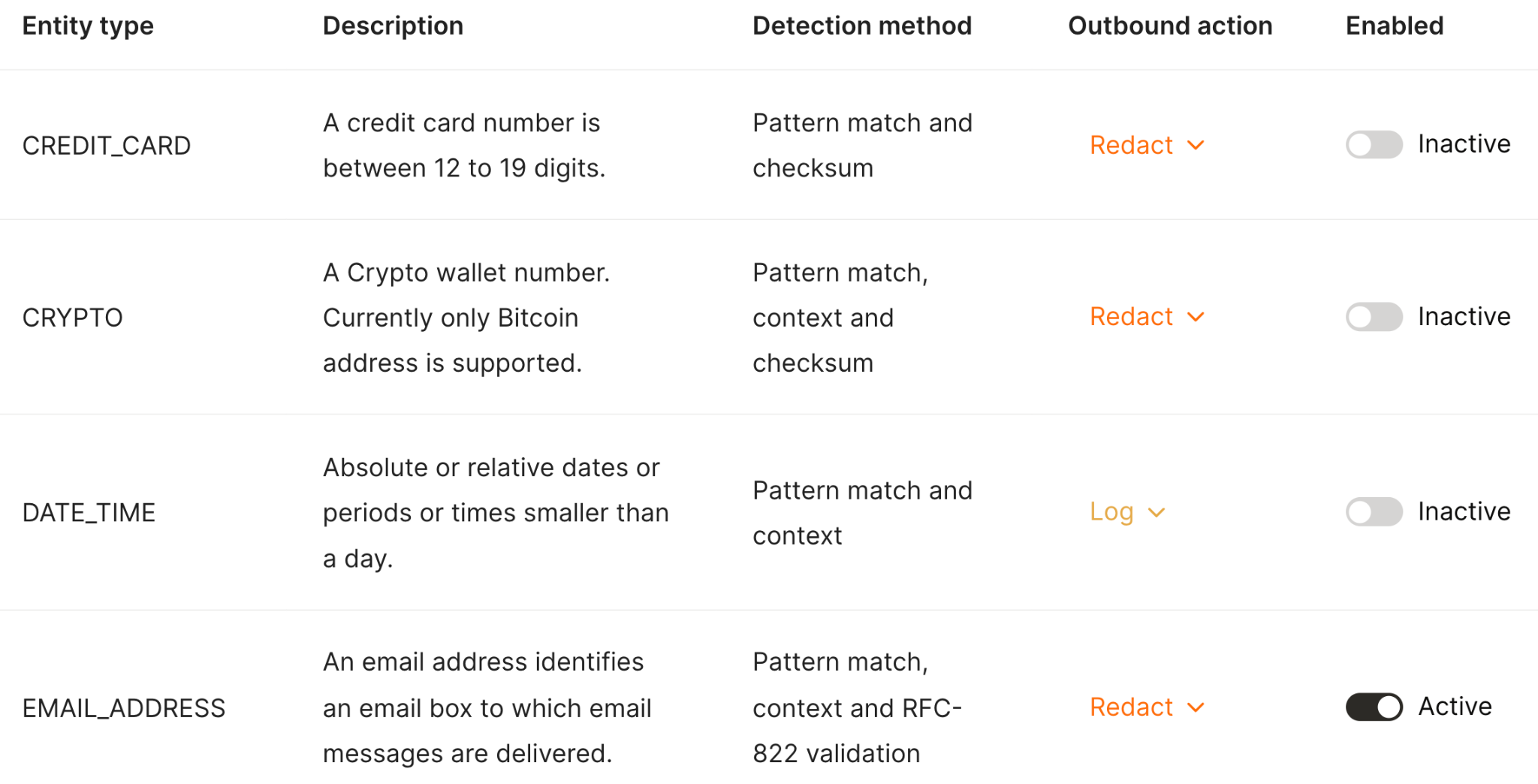
- Data loss prevention and audit logging: Inspect every tool-call input and output to block, redact, or mask sensitive data, and log every action your workforce's AI takes for compliance
When to choose Merge for Workforce over Lasso Security
- You're looking to connect and govern employee AI access in one layer. Merge supplies the connectors linking AI tools to your systems and governs them in the same place, while Lasso secures AI usage but doesn't supply those connectors
- You need access provisioned automatically from your idP. Merge syncs with platforms like Okta over SCIM, so tool access follows an employee's role. Lasso enforces role-based permissions at runtime but doesn't provision access from your identity provider, so you'd manage that mapping separately
- You want the tools employees connect to be authenticated for you. Merge handles authentication and stores each login, so employees can connect a tool securely without managing it themselves. Lasso decides who can connect but doesn't handle those logins, so you'd set up authentication elsewhere
{{this-blog-only-cta}}
Runlayer
Runlayer is an AI control and enablement platform built around a Model Context Protocol (MCP) gateway, giving enterprises a governed catalog of tools their agents can use along with security, access control, and spend visibility.
Top features
- Govern a large MCP catalog: Govern your agents’ access to thousands of MCP servers through a central gateway with policy enforcement and audit controls built in
- Scan agents in real time: Inspect tool calls, outputs, and sensitive data before execution, and surface shadow AI across unmanaged agents and clients
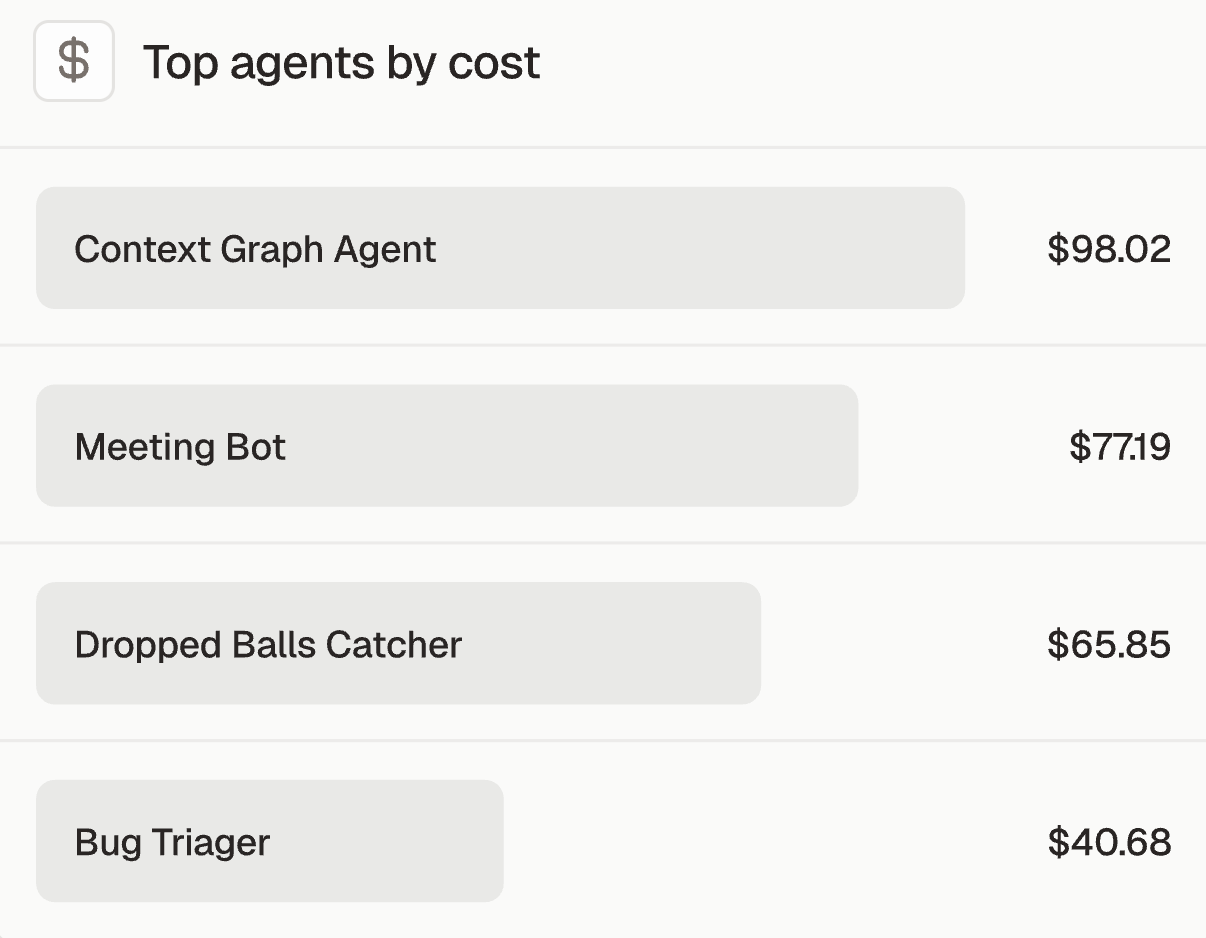
- Track AI spend: Monitor usage costs, adoption, and agent activity by team
When to choose Runlayer over Lasso Security
- You want to track AI spend by team. Runlayer monitors usage costs and adoption across teams, while Lasso focuses on threat detection
- You need to build governed agents fast. Runlayer includes tooling to deploy reusable, policy-bound agents from your existing workspace tools, which helps when rolling AI out across many teams
- You’re looking for a more financially stable vendor. Unlike Lasso, Runlayer has recently raised a significant round of funding ($25M Series A), giving the company a stronger financial foundation
Related: Runlayer’s top competitors
MintMCP
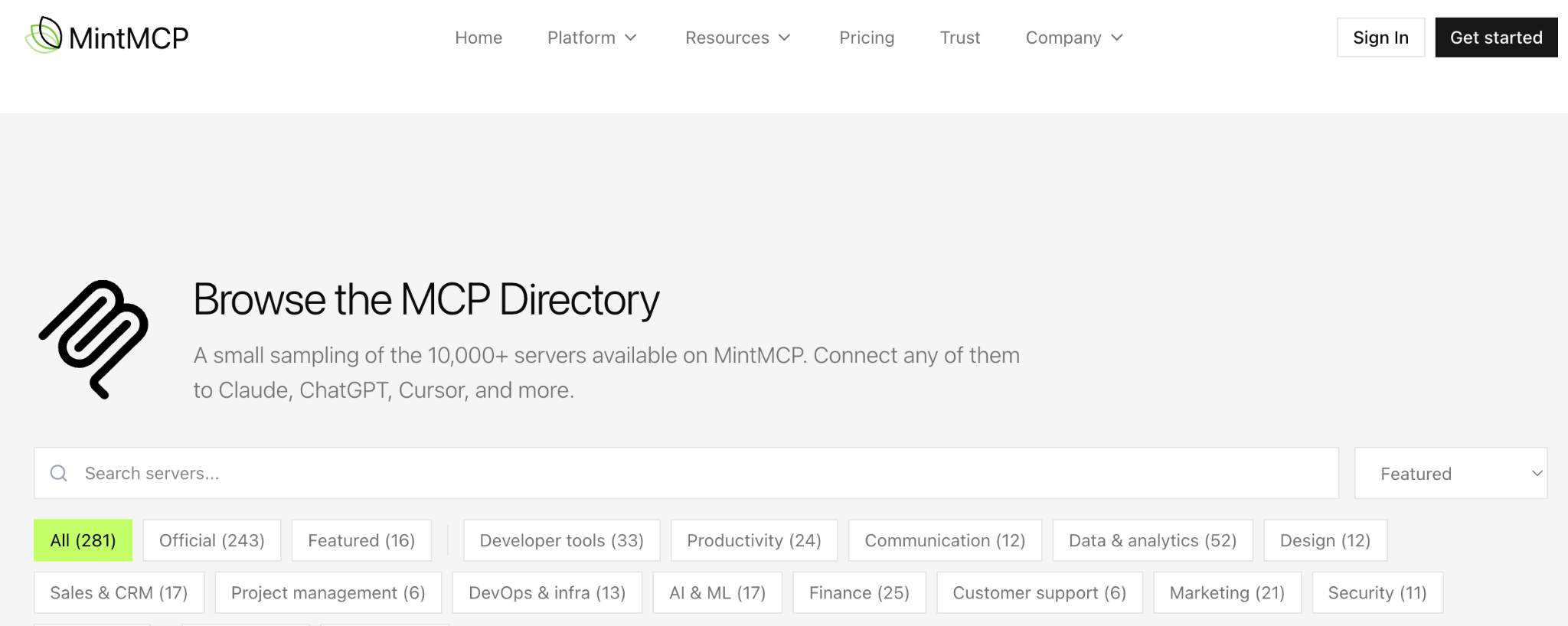
MintMCP provides an MCP governance solution that can host thousands of MCP servers, manages connections and credentials centrally, and monitors what AI agents do at runtime.
Top features
- Centralize connections through a gateway: Broker access to thousands of MCP servers and data sources through one hub, using virtual MCPs to abstract away setup and credential complexity
- Monitor coding agents: Watch tool calls from agents like Cursor in real time and apply security guardrails
- Control access and screen data: Enforce role-based permissions with OAuth or single sign-on, keep audit trails, and detect exposed secrets and personally identifiable information
Related: The top alternatives to MintMCP
When to choose MintMCP over Lasso Security
- You want to start with a free trial. MintMCP offers a free trial so you can evaluate it before committing, while Lasso forces you to schedule a demo first
- You want centralized credential and token management. MintMCP's gateway holds and brokers the auth tokens agents use so individual employees aren't managing credentials themselves. Lasso's gateway controls which users and teams can connect to which servers but doesn't manage the auth tokens
- You're rolling out coding agents and want them watched specifically. MintMCP's monitoring is built around agents like Claude and Cursor, which fits if developer AI tools are your main source of exposure
{{this-blog-only-cta}}
Jon Gitlin


Don't settle for Lasso
Learn why enterprise companies, like the leading streaming service, use Merge for Workforce to govern internal AI.


But Merge isn’t just a Unified
API product. Merge is an integration platform to also manage customer integrations. gradient text
But Merge isn’t just a Unified
API product. Merge is an integration platform to also manage customer integrations. gradient text
But Merge isn’t just a Unified
API product. Merge is an integration platform to also manage customer integrations. gradient text
But Merge isn’t just a Unified
API product. Merge is an integration platform to also manage customer integrations. gradient text