

Table of contents
.avif)
.png)
Portkey vs OpenRouter: when to choose one over the other



Jon Gitlin
As you bake LLMs into your products, you’ll need a way to use the models cost-effectively at scale.
To that end, you’ll likely end up evaluating OpenRouter and Portkey.
We’ll break down the pros and cons of each LLM routing solution, as well as an alternative worth testing (Merge Gateway), to help you land on the best decision for your product.
OpenRouter overview
OpenRouter is a hosted, OpenAI-compatible gateway. It lets you send requests to a single API endpoint, choose a model via a parameter, and handles routing/failover across underlying providers so your app keeps working when a provider degrades.
Pros
- One integration gives broad model access: You can swap models/providers by changing a parameter, which reduces integration overhead and lock-in
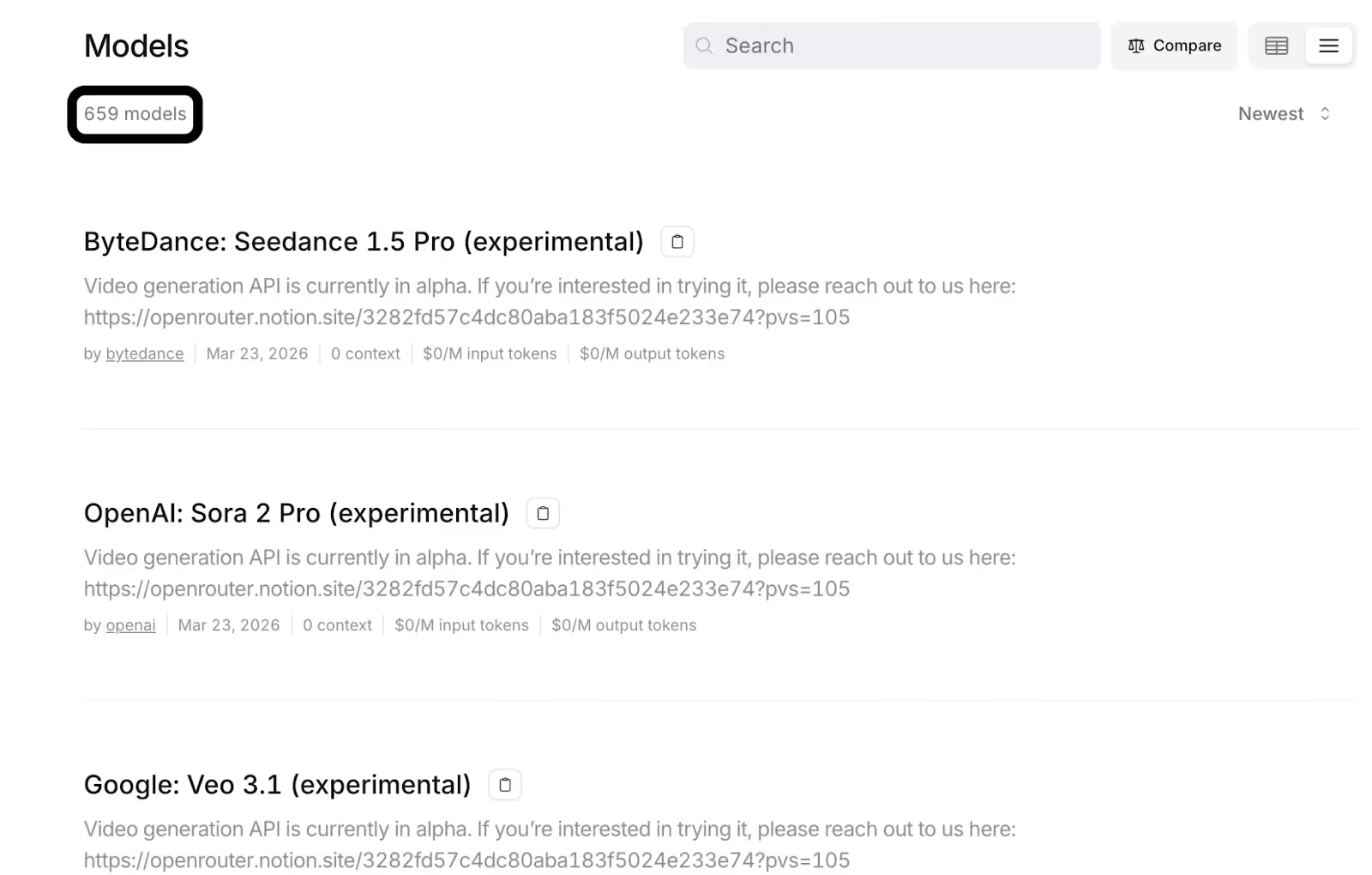
- Built-in routing/fallback behavior: This lets you improve reliability during provider/model issues (e.g., automatically trying the next option)
- Unified billing via credits: This, along with usage and cost visibility, makes spend management simpler than juggling multiple provider accounts
Cons
- Platform dependency: You’re relying on OpenRouter’s routing behavior, uptime, rate limits, and quota mechanics
- Less infra/control-plane customization: This makes strict internal requirements harder to satisfy than a self-hosted gateway
- Basic model access routing: It offers less depth on cost/security controls compared to what you’re likely looking for
Related: The top alternatives to OpenRouter
Portkey overview
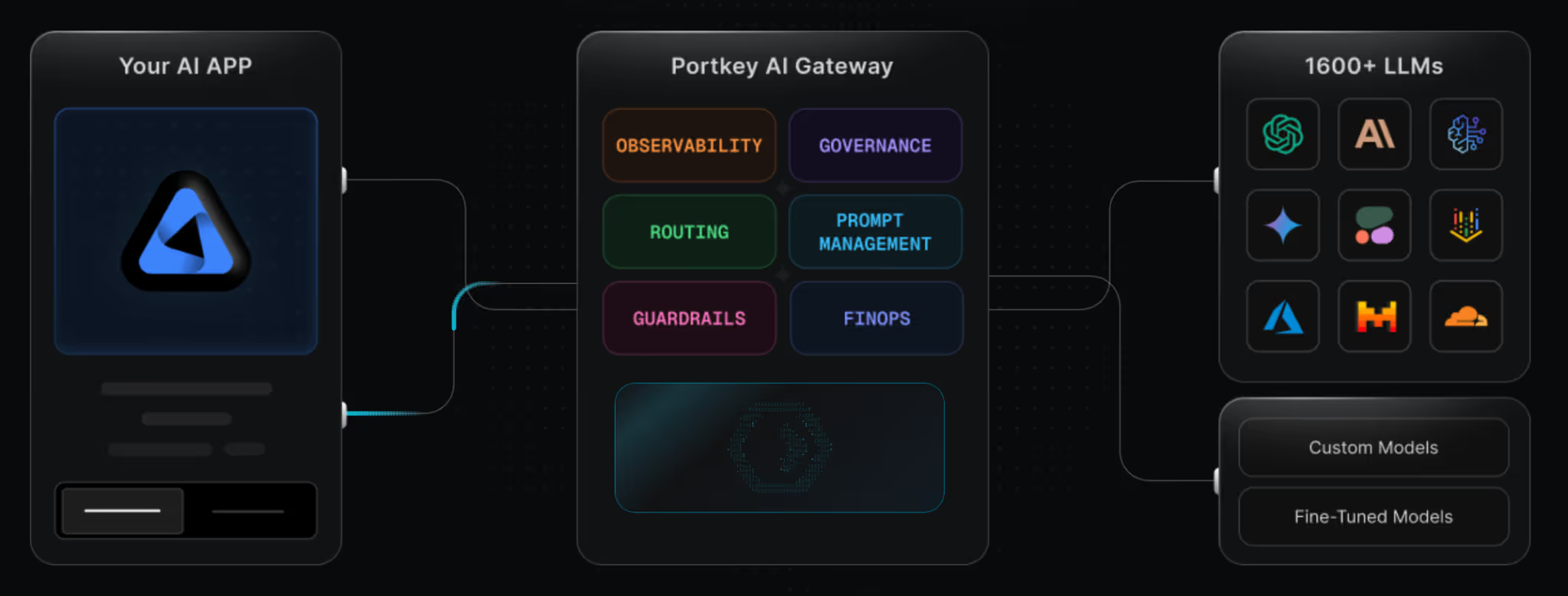
Portkey works as an “AI gateway” layer in front of LLM providers: it centralizes and standardizes how your app routes requests and tracks usage, but (unlike credit-based aggregators) you still pay the underlying model providers directly.
Pros
- Centralized observability: You’ll have a single place to monitor traffic and usage patterns
- BYO-keys billing: Keep your existing provider contracts, pricing, and billing workflows (i.e., no need to migrate spend to a new “credits” system) while still getting a centralized gateway for usage tracking and control
- Low-risk investment: Validate the gateway and observability workflow in production-like usage before committing to a paid contract
Cons
- No unified provider billing: it centralizes usage tracking, but not payment for model inference. You still manage provider spend separately
- Extra platform dependency: It adds another system you have to configure and run in production. In other words, you’re relying on Portkey’s uptime and performance in addition to your LLM providers’, and any Portkey issue can ripple out across all model traffic
- Stacked costs: Since Portkey charges for the gateway itself (even if there’s a free tier), you may pay a Portkey subscription on top of your underlying LLM provider bills, so total spend can increase even if your model usage stays the same
Related: A snapshot of Portkey alternatives in 2026
OpenRouter vs Portkey
Given all the pros and cons of each solution, it can be hard to decide which to use for a given scenario. You can use the following guidelines to make your decision more easily:
- When to use Portkey over OpenRouter: You want a gateway and observability layer but prefer to keep BYO keys and continue paying model providers directly (i.e., no unified credits billing)
- When you want to use OpenRouter over Portkey: You want one hosted, OpenAI-compatible endpoint with routing/failover, plus unified, credit-based billing across providers and models
Don’t settle for Portkey or OpenRouter
Merge Gateway is a unified API plus control plane for LLM traffic. It lets you route requests to multiple LLM providers through one endpoint, with built-in routing/fallback, cost governance, security controls, unified billing, and request-level logs/observability.
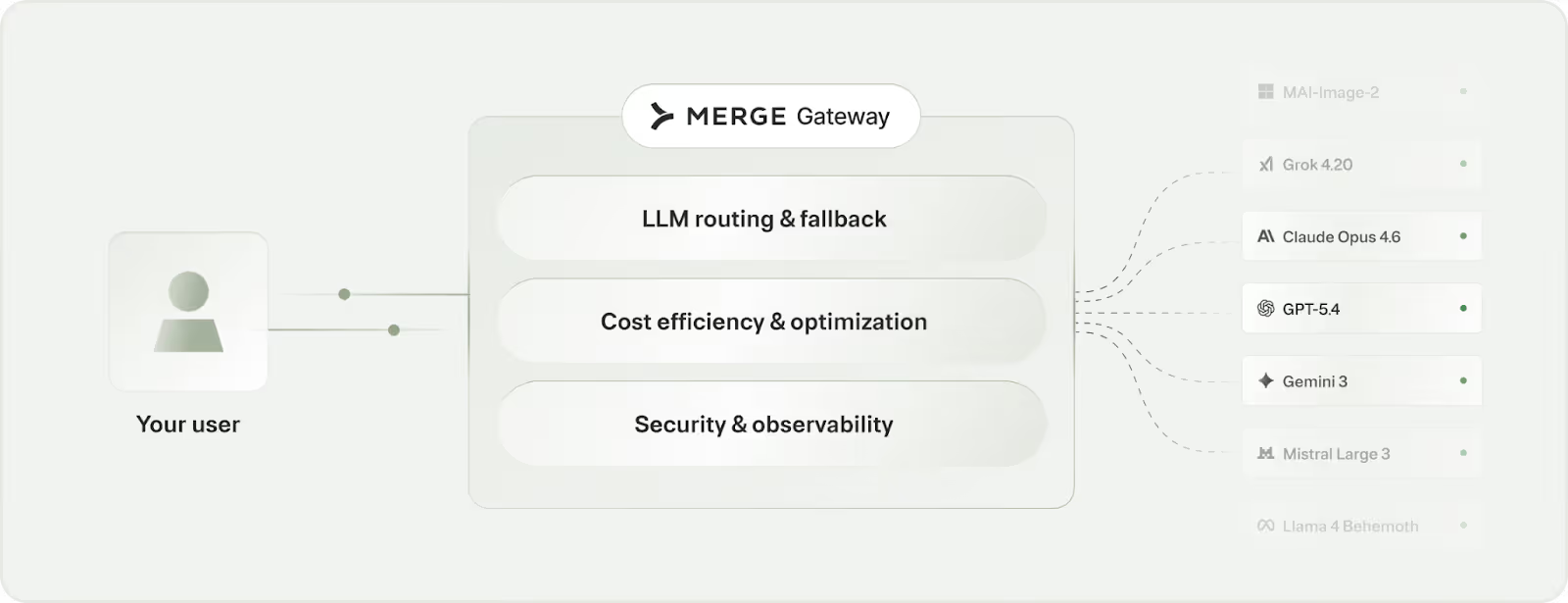
In addition to supporting all of Portkey’s and OpenRouter’s functionality, Gateway offers:
- Real-time cost governance for budgets and spend controls by project/tags
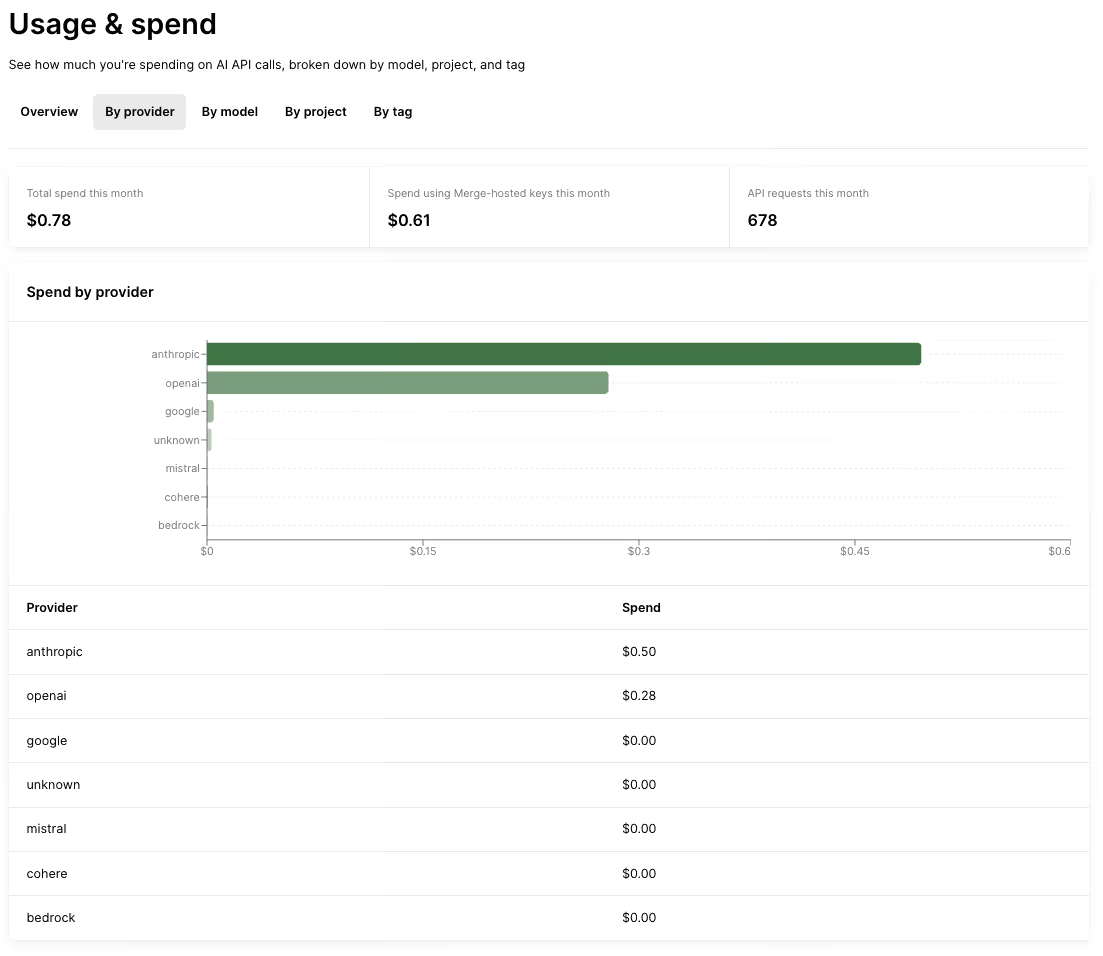
- Unified billing and attribution so you don’t have to reconcile provider-by-provider billing (Portkey) or manage spend without project-level controls (OpenRouter)
- Detailed logs that include routing decision visibility (not just generic usage), which is table stakes for debugging and auditability
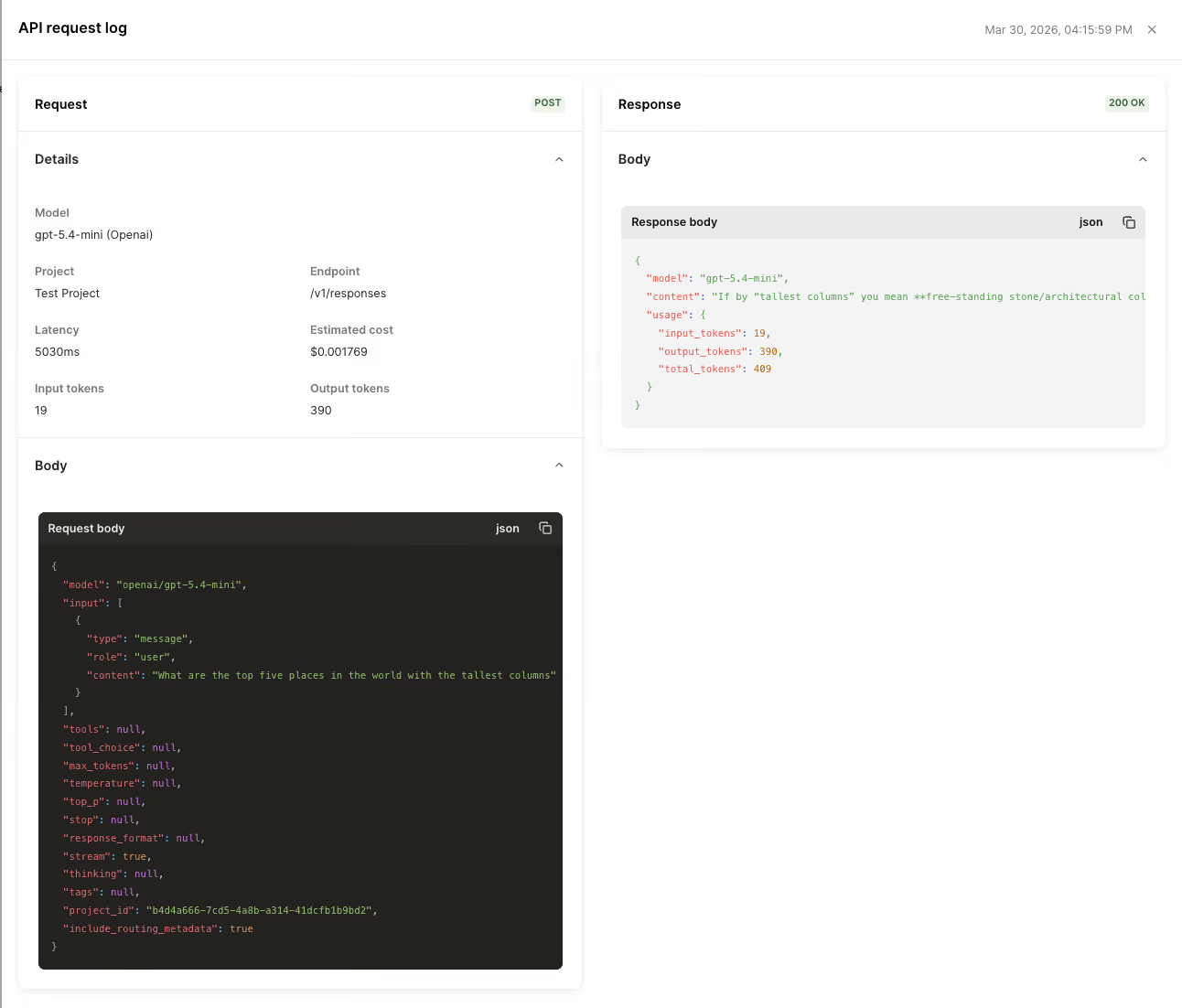
- Built-in security controls (e.g., DLP-style controls over time) rather than relying primarily on provider-level data-retention settings
Test Merge Gateway for free by creating an account in seconds!
Jon Gitlin

.png)


But Merge isn’t just a Unified
API product. Merge is an integration platform to also manage customer integrations. gradient text
But Merge isn’t just a Unified
API product. Merge is an integration platform to also manage customer integrations. gradient text
But Merge isn’t just a Unified
API product. Merge is an integration platform to also manage customer integrations. gradient text
But Merge isn’t just a Unified
API product. Merge is an integration platform to also manage customer integrations. gradient text