

Table of contents
.jpg)
.png)
4 TrueFoundry alternatives to consider in 2026



Jon Gitlin
As you put AI features into production, you'll likely route requests across multiple model providers to control cost, reliability, and performance.
TrueFoundry offers one way to do that.
It's an end-to-end machine learning platform that includes an AI gateway for unified model access, routing, governance, and observability, with strong support for in-your-cloud, VPC, and air-gapped deployments.
Before deciding whether to use TrueFoundry to manage your LLM traffic, we'll help you evaluate it against its top alternatives: Merge Gateway, OpenRouter, LiteLLM, and Portkey.
Merge Gateway
Merge Gateway is a control plane for production AI. It offers one API to every major LLM provider, with routing, cost governance, security, and observability built in.
Top features
- One API with intelligent routing and failover: route by cost, latency, or quality across providers, with automatic fallback when one degrades, so you don't rebuild integrations per provider
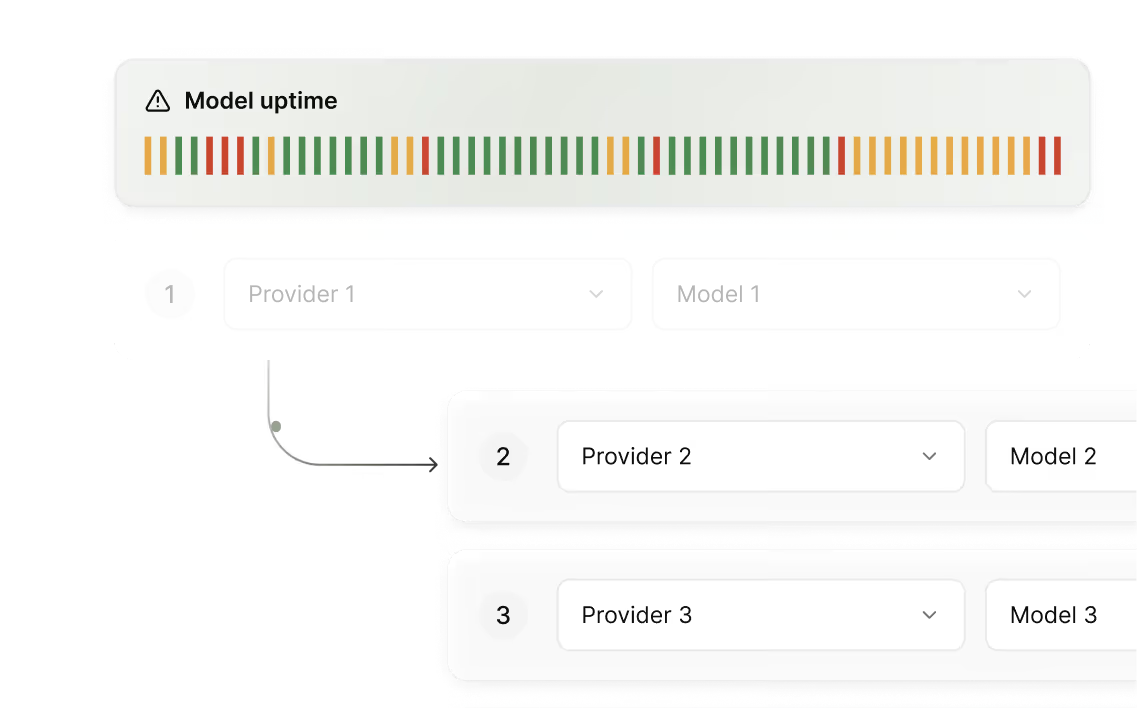
- Build Your Own Router: define "best" with your own benchmark weights, so routing optimizes on your dimensions instead of only a vendor's cost-and-latency defaults

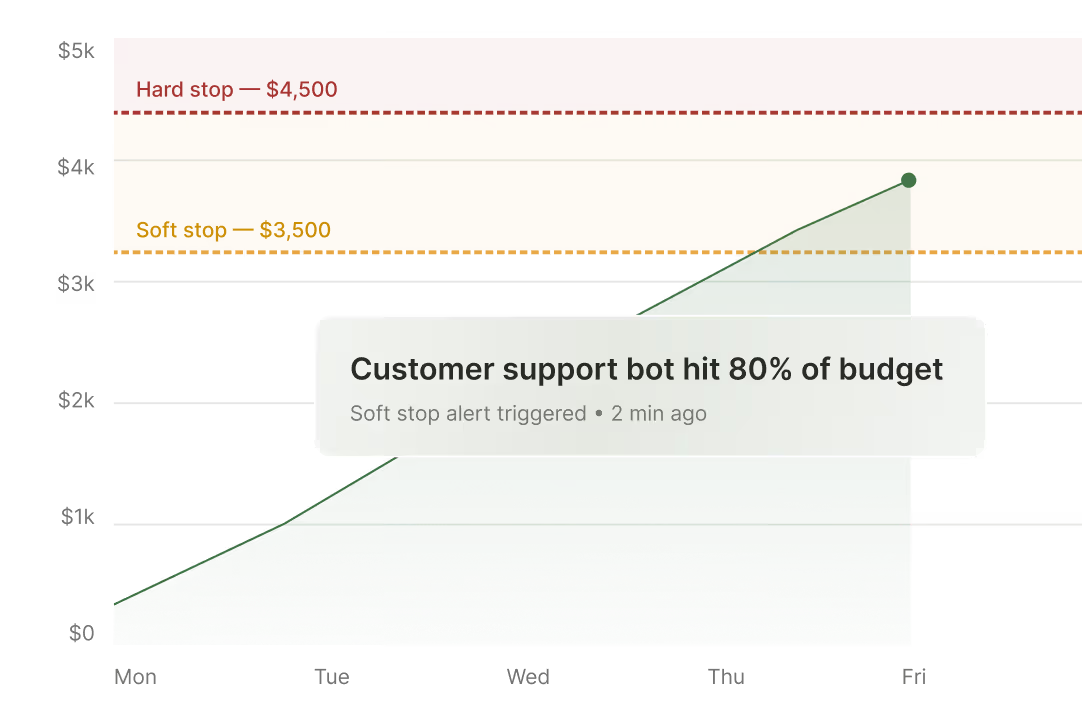
- Per-customer governance and attribution: enforce tenant-scoped routing policies and budgets, attribute cost per customer, and apply DLP and prompt-injection protection on every request
When to choose Merge Gateway over TrueFoundry
- You want a dedicated LLM control plane, not a full ML platform. Merge Gateway focuses on routing, governing, and observing LLM traffic, so you skip the overhead of adopting an end-to-end model-deployment platform you won't fully use
- You're shipping AI features to your own customers. Per-tenant routing policies, budgets, and cost attribution are native, instead of governance you have to map onto internal accounts and keys. TrueFoundry's governance is oriented around internal teams and ML workloads, so per-customer controls are something you'd have to build on top
- You'd rather not run the infrastructure yourself. Merge Gateway is a managed control plane, so you aren't standing up and operating gateway and serving infrastructure in your own cloud
{{this-blog-only-cta}}
OpenRouter
OpenRouter is a developer-focused LLM router that gives you access to hundreds of models through a single unified API, with shared org credits, usage tracking, and provider routing.
Top features
- Broad model access through one endpoint: reach hundreds of models from many providers behind one OpenAI-compatible API

- Provider routing and fallbacks: reroute around provider outages and rate limits automatically
- Unified billing and oversight: manage shared org credits, centralized API keys, spend limits, and model and provider allowlists from one place
When to choose OpenRouter over TrueFoundry
- You want the broadest possible model access through one API. OpenRouter aggregates hundreds of models from many providers behind a single endpoint, so you can try and switch between them without separate integrations
- You want to start fast with minimal ops. It's a hosted, pay-as-you-go service, so developers get immediate access without standing up or maintaining infrastructure
- You only need team-level oversight. Shared org credits, usage tracking, spend limits, and model and provider allowlists cover centralized control for an internal developer team
Related: The top alternatives to OpenRouter
LiteLLM
LiteLLM is an open-source, OpenAI-compatible gateway (plus a Python SDK) that routes requests to 100+ LLM providers with virtual keys and spend tracking. You can self-host it or use its enterprise and hosted options.
Top features
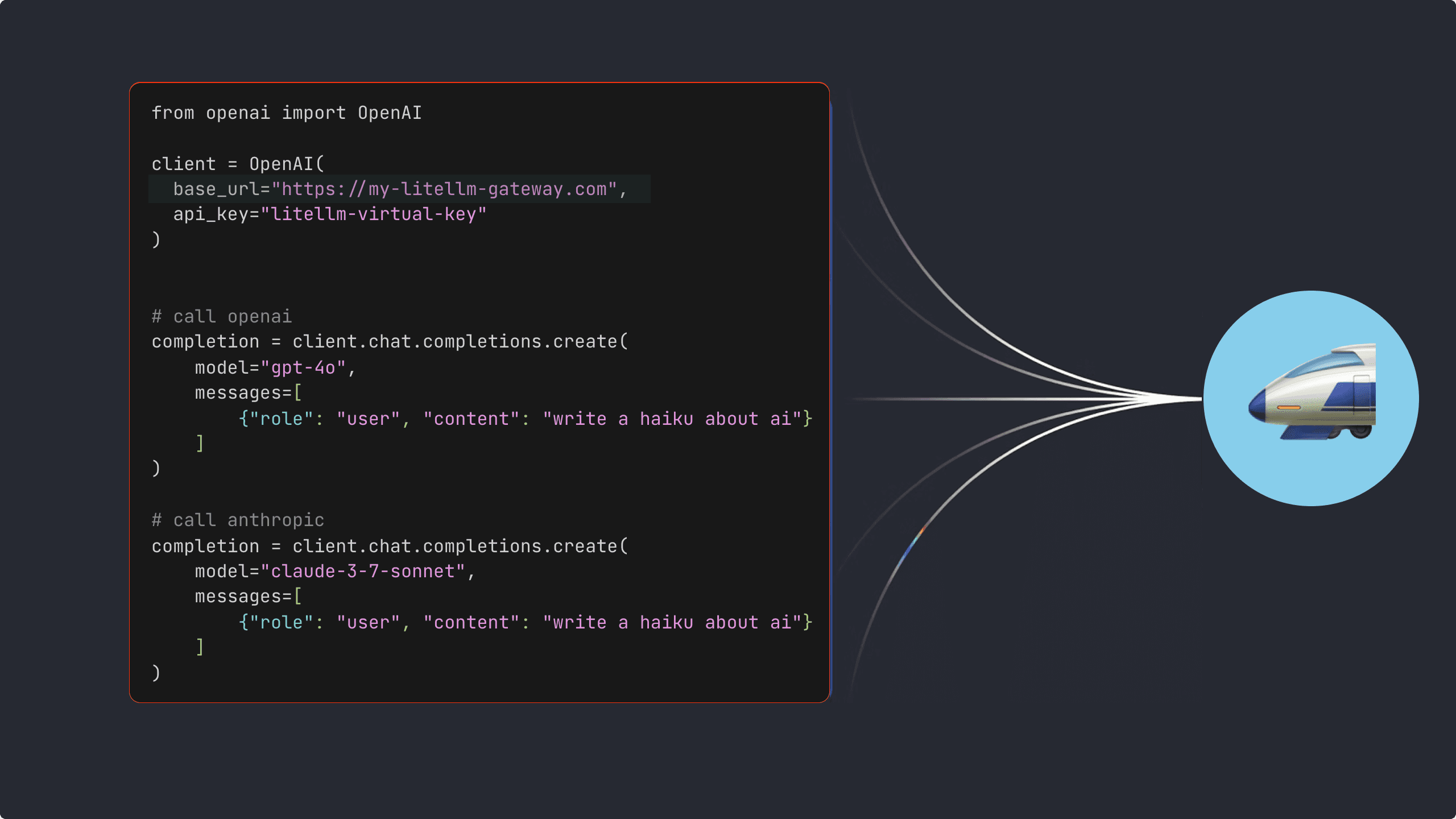
- OpenAI-compatible proxy: swap a single base URL to point existing clients at 100+ providers
- Routing and reliability primitives: implement retries, fallbacks, and load balancing through its Router
- Spend and access controls: issue virtual keys with per-key budgets and cost tracking, plus SSO and audit logs in the enterprise tier
When to choose LiteLLM over TrueFoundry
- You want an open-source gateway you can self-host and fully customize. LiteLLM runs in your own infrastructure with full control over routing, logging, and configuration. TrueFoundry can deploy in your cloud too, but it's a proprietary platform, so you don't get the source-level control and customization an open-source gateway gives you
- You want a drop-in, OpenAI-compatible proxy. A single base-URL swap points existing clients at 100+ providers, so you adopt it without rewriting integration code
- You'd rather avoid a managed gateway's markup. Running the open-source proxy yourself means paying providers directly and absorbing infrastructure cost instead of a per-request fee
Related: A guide to LiteLLM alternatives
Portkey
Portkey is an LLMOps platform that bundles an AI gateway with observability, guardrails, and prompt management. It's available as an open-source gateway, and includes managed and self-hosted enterprise options.
Top features
- AI gateway with routing and caching: combine fallbacks, retries, load balancing, conditional routing, and both simple and semantic caching behind a universal API
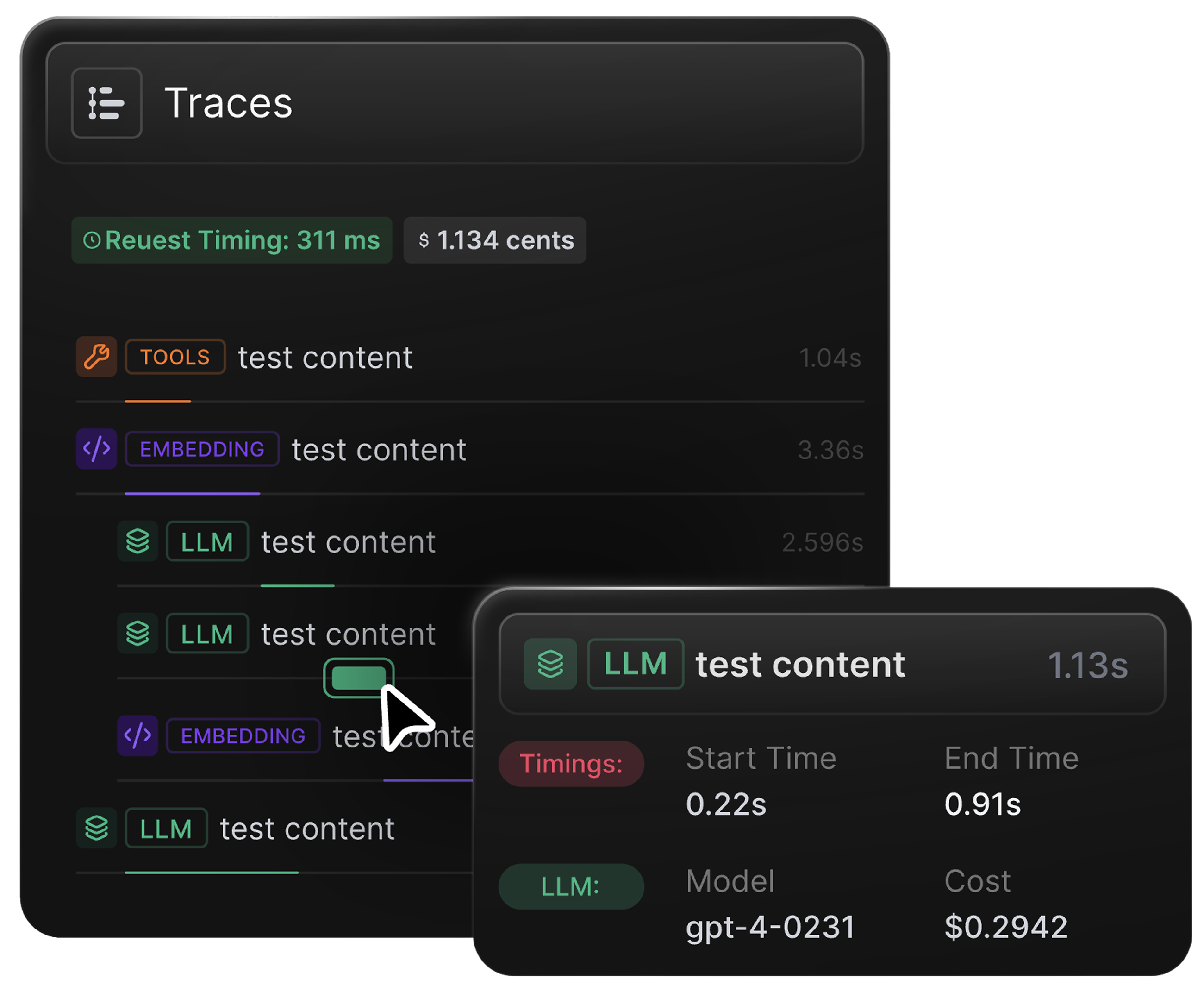
- Observability and guardrails: trace requests with logs and cost visibility, and run a large library of inline guardrails like PII redaction
- Prompt management: version prompt templates and manage them with analytics for AI teams
When to choose Portkey over TrueFoundry
- You want an all-in-one LLM operations stack. Portkey bundles the gateway with observability, guardrails, and prompt management, so AI teams standardize on one tool instead of stitching several together
- You need deep observability and guardrails. Access tracing, cost visibility, and a large library of inline guardrails like PII redaction that run on each request
- You want prompt management built in. Prompt templates, versioning, and analytics live alongside the gateway, so teams iterate on prompts in one place
{{this-blog-only-cta}}
Jon Gitlin
.png)
.png)

Don't settle for TrueFoundry
Integrate once with Gateway to get access to every major model. You'll also access built-in routing, cost controls, and request-level visibility.


But Merge isn’t just a Unified
API product. Merge is an integration platform to also manage customer integrations. gradient text
But Merge isn’t just a Unified
API product. Merge is an integration platform to also manage customer integrations. gradient text
But Merge isn’t just a Unified
API product. Merge is an integration platform to also manage customer integrations. gradient text
But Merge isn’t just a Unified
API product. Merge is an integration platform to also manage customer integrations. gradient text