

Table of contents
.avif)
.avif)
MCP Gateway: overview, benefits, and solutions
.avif)


As you look to integrate your agents with 3rd-party apps via MCP servers, you’ll need to use either “official” MCP servers or MCP Gateways.
MCP Gateways let your engineers avoid spending significant time building and maintaining agentic integrations, enabling them to focus on core agentic development work. But these gateways aren’t created equal.
To help you pick the best MCP Gateway provider, we put together a shortlist of your best options.
But first, let’s align on how they work and when you should use one.
MCP Gateway overview
An MCP gateway is a managed layer that aggregates MCP servers and handles authentication and access controls out of the box.
.avif)
An MCP Gateway typically offers:
- Authentication management: they support OAuth 2.0, handle token storage and refresh, and enforce tenant-level isolation and permissions
- Pre-built connectors: they provide ready-to-use integrations and a consistent interface across tools, including pagination, retries, and connector-specific edge cases
- Observability: they capture logs, traces, and metrics for tool calls so teams can debug failures, monitor performance, and set alerts
As you’ll see later in this article, MCP Gateway solutions offer varying levels of support across these areas.
Why you should use an MCP Gateway
We recently surveyed hundreds of AI leaders who are building agents with MCP servers (as part of our state of agentic integrations report).
They told us about the top reasons they outsourced their connectors to an MCP Gateway:
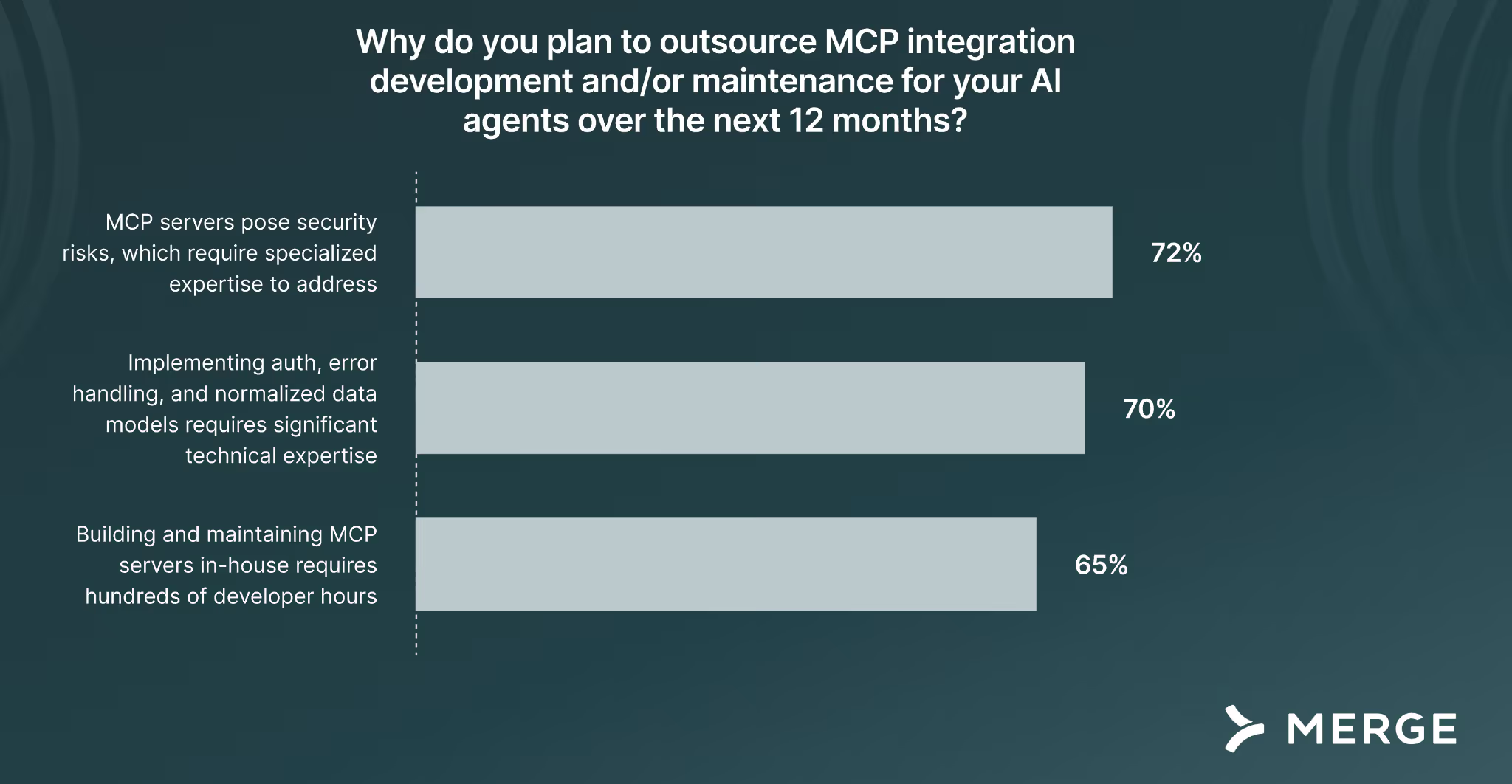
MCP servers pose security risks
Official MCP servers were largely launched for marketing purposes; they weren’t built for production use cases.
This can lead to all kinds of security issues for your agents. For example, if the servers’ tool descriptions are poorly written, your agents can call the wrong tool for a given input, leading it to expose sensitive information.
Since MCP Gateways force agents to authenticate, and many include battle-tested tools, your agents’ tool calls are significantly safer.
Implementing authentication requires significant engineering resources
Building authentication across MCP connectors requires a meaningful amount of time and level of effort from your engineers.
For each connector, you need to build and maintain the full auth flow, including token exchange, refresh, revocation, scope handling, and secure credential storage, while also dealing with provider-specific edge cases. You’re then responsible for ongoing maintenance as API providers evolve their requirements, policies, and integrations.
MCP Gateways handle authentication out of the box for each connector, letting your devs avoid this work altogether.
Building MCP servers is extremely complex and time intensive
If you can’t find an official MCP server for a given application, or if it doesn’t support the tools you need, you also have the option of building the server yourself.
But this work is even more difficult to execute successfully.
Your team needs to build out each and every tool, keep them updated as underlying APIs evolve, and handle authentication, rate limits, and provider-specific quirks. On top of that, you’ll need to implement safeguards against prompt injection and tool misuse, and build out your own monitoring, logging, and debugging functionality for observing tool calls.
Best MCP Gateways in 2026
Here's a breakdown of your top options.
Merge Agent Handler
Merge Agent Handler is a comprehensive agentic integration platform that offers 100+ MCP connectors, an eval suite, and a full suite of observability capabilities.
Pros
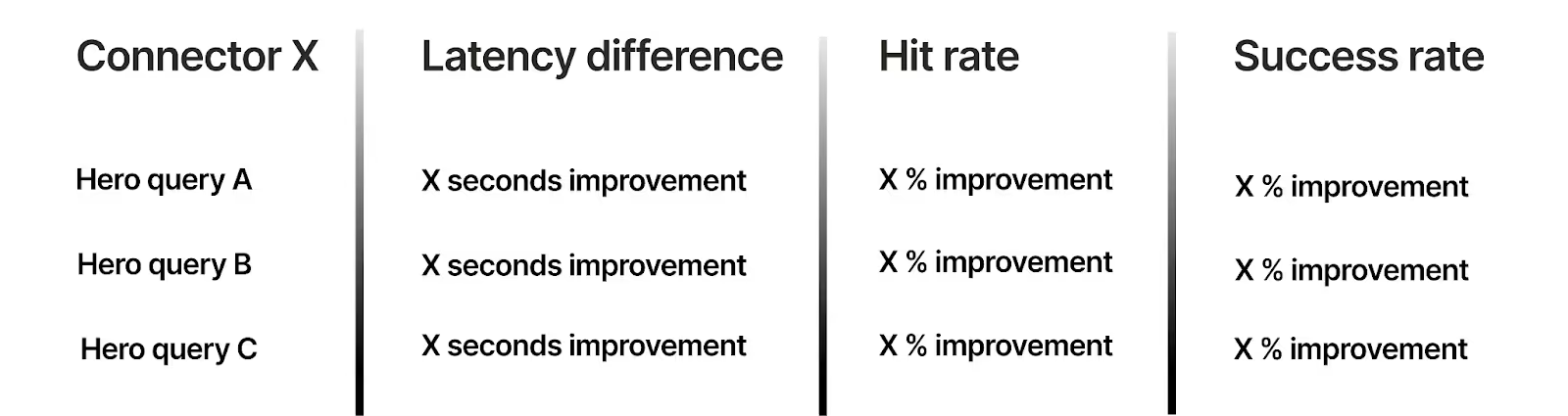
- Enterprise-grade MCP connectors: Each connector is carefully designed and developed, ensuring its tools’ hit and success rates are as close to 100% as possible
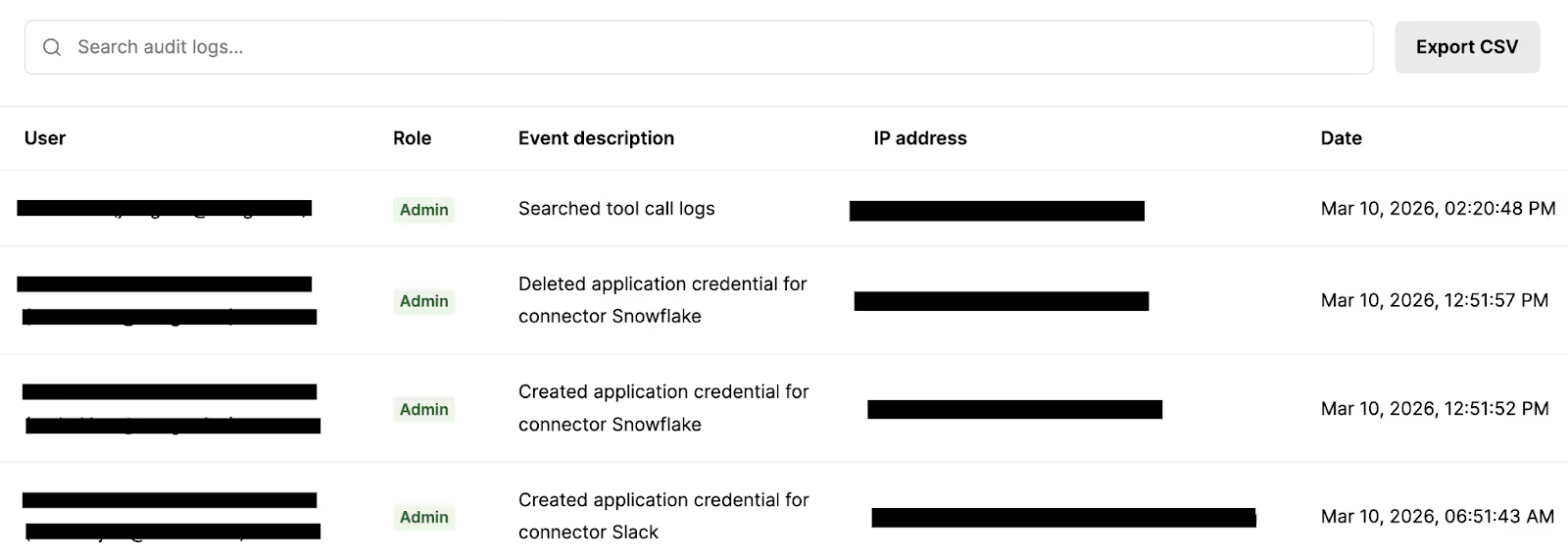
- Robust observability: Track every agent’s tool calls via fully-searchable logs and audit trails. You can use both to quickly debug and address issues
- Data loss protection: You can set guardrails on your agents’ behaviors, such as blocking agents from sharing social security numbers. If one of your agents violates a rule, you can get alerted and receive relevant context, like the time the rule was violated, by whom, the connector and tool involved, and more

- Customer proof points: A wide range of companies use Merge Agent Handler and have documented success with it. For example, Telnyx, which offers voice AI agents, was able to launch dozens of MCP connectors with Agent Handler within weeks of adopting the platform
Composio
Composio is an AI tool-calling platform that connects AI agents to a large catalog of pre-built apps and tools.
Pros
- Wide range of connector support: Composio offers several hundreds of MCP connectors, making it useful when connector and tool breadth is your main requirement
- Developer-friendly SDK: This can speed up implementation for supported frameworks, including LangChain, CrewAI, and OpenAI
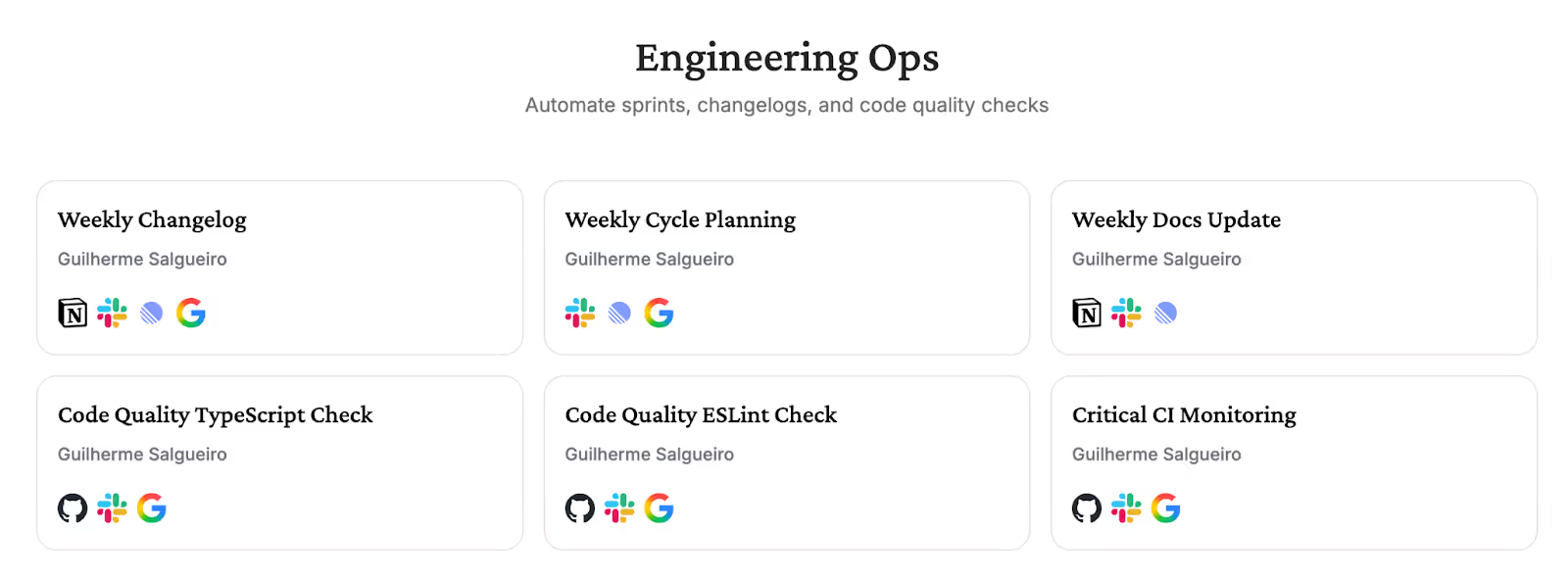
- Recipe library: Composio highlights several use case templates across categories like engineering ops, content and social, and competitive intel. You can use these templates as is or customize them to meet your agentic use cases
Cons
- Vague pricing model: Their pricing plans only mention tool call ranges per month and support models. You can’t see other critical details, like the level of security features available on a given plan or whether all tool calls are treated the same
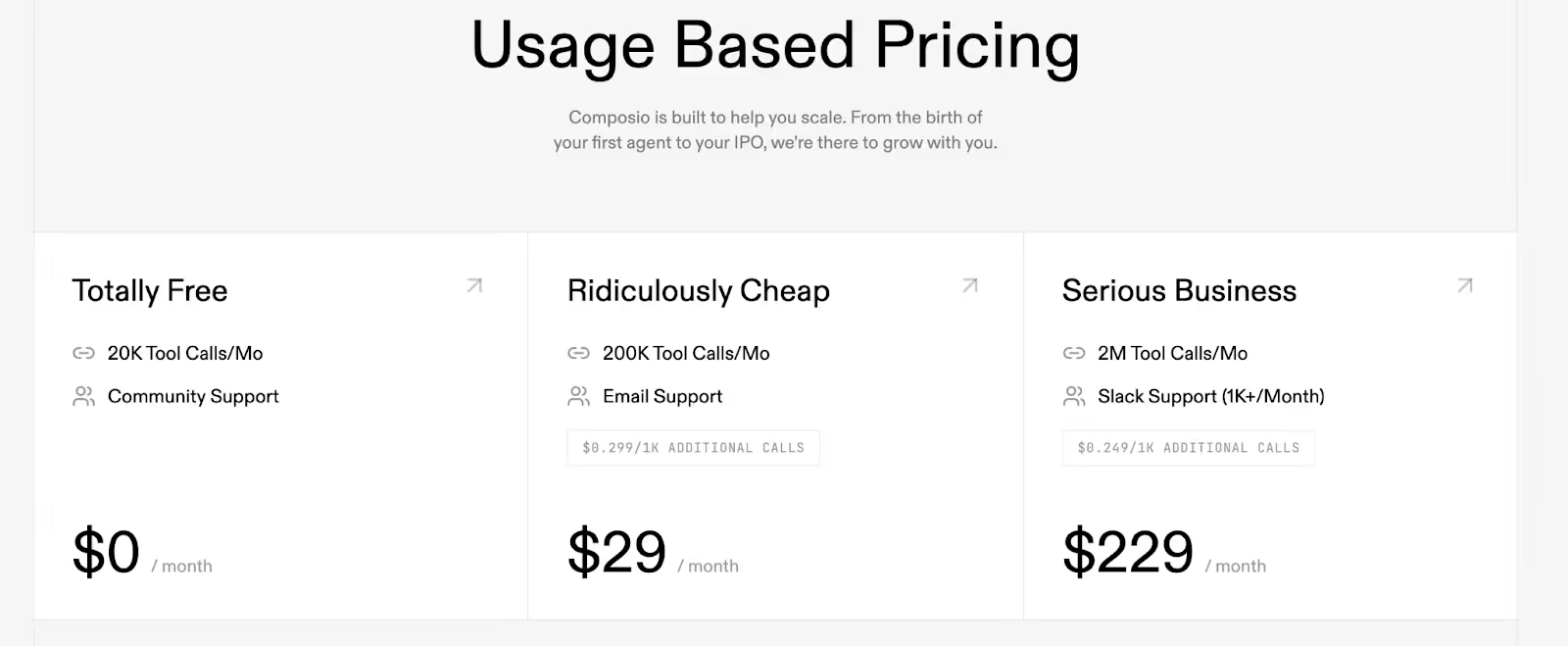
- Limited agent observability functionality: There are few mentions of their agent observability features and data loss protection functionality. This hints that these capabilities are underdeveloped and lacking
- Unreliable connectors: Composio launched hundreds of connectors within months of being founded. As a result, their connectors aren’t heavily tested and optimized. This can lead to security risks and performance issues
Related: Composio’s top competitors in 2026
Arcade.dev
Arcade.dev, or simply Arcade, is another fast-growing, agent tool-calling platform.
Pros
- Vibrant Discord community: Arcade has a free Discord community with hundreds of members. They can help you troubleshoot any issues on the platform and use it effectively, regardless of the plan you’re on
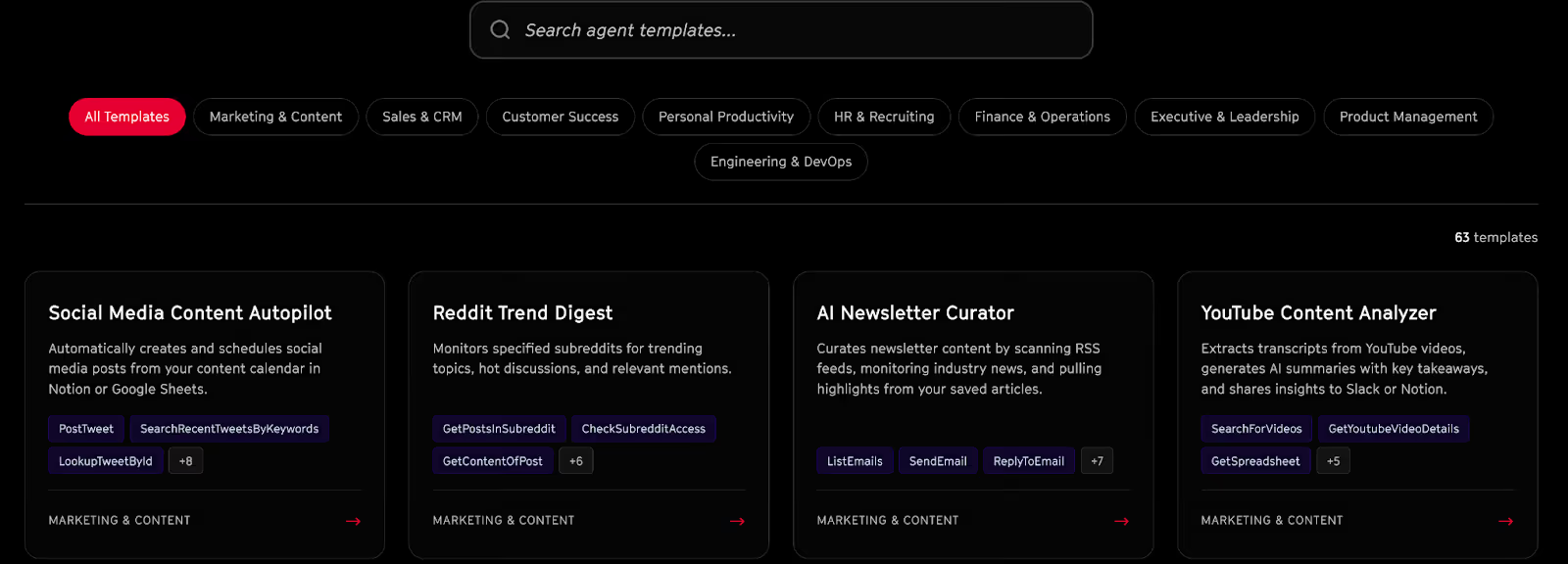
- Use case templates with LangFlow: Arcade offers dozens of cross-category agentic use case templates that pair their servers with LangFlow’s agent builder. Each use case offers clear set up instructions (both in Arcade and in LangFlow) for your agents
- Special pricing options for startups: Arcade has a “Startup Program” that enables startups under 100 employees, non-profit organizations, and educational institutions to access pricing plans that better meet their businesses’ needs
Cons
- Complex pricing model: There’s Arcade-specific terminology throughout their pricing plans, such as “user challenges” and “Arcade-hosted workers.” This makes it hard to assess each plan accurately
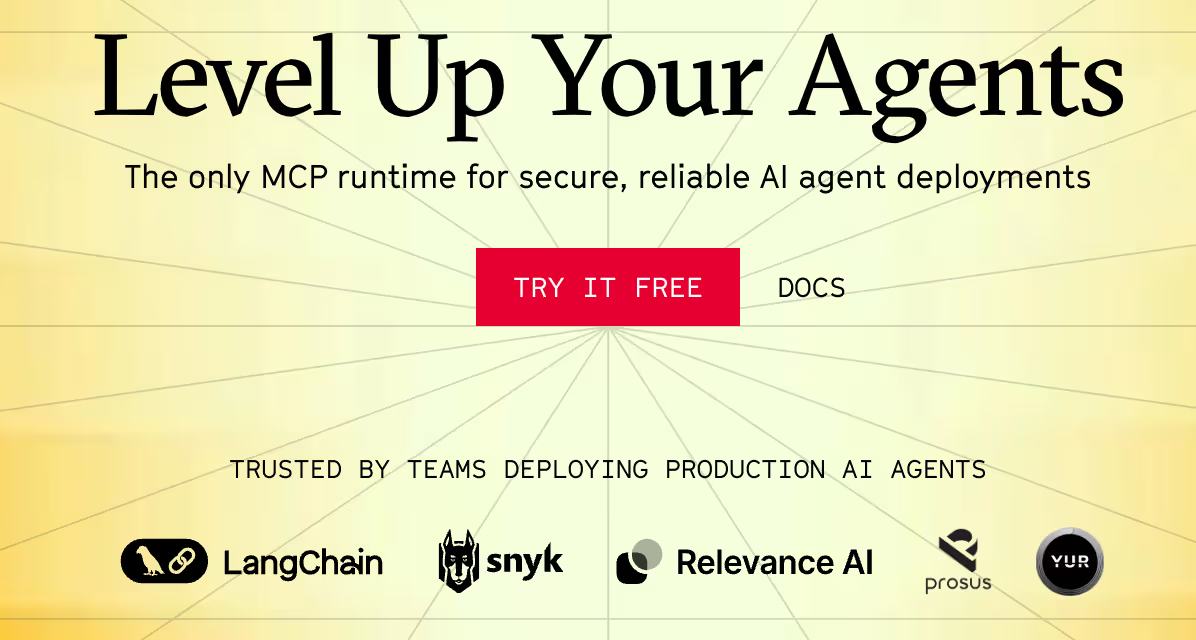
- Misleading customer proof: Arcade highlights credible logos on their homepage but uses vague language to lead users into thinking they’re customers (at least some of them are likely partners)
- Gated security features: Features like SSO, RBAC, and audit logs aren’t available on their “Hobby” or “Growth” plans. This can force you into their “Enterprise” plan when you otherwise wouldn’t need it
{{this-blog-only-cta}}
.png)
.avif)


