

.avif)

How we build the most reliable MCP connectors

Nour Eldifrawy
Faulty connectors can prevent your agents from executing actions, or worse, cause them to execute the wrong actions.
This makes your agents hard to trust.
With this in mind, we’ve taken a uniquely comprehensive approach to building each Model Context Protocol (MCP) connector for Merge Agent Handler. And the results have been overwhelmingly positive.
Our customers, which include the leading AI-powered answer engine, the most popular streaming platform, and a publicly-traded project management platform, say our connectors are the most reliable ones they’ve tested.
Here’s what differentiates our connectors.
Connector-specific evaluations run on every integration we ship
Every connector has different user expectations, object models, and error patterns. The test cases need to reflect that.
For example, a Slack evaluation might prioritize choosing the correct channel or thread and handling pagination correctly, while a Jira evaluation might prioritize selecting the correct project and issue type, satisfying required fields, and recovering gracefully from permission errors.
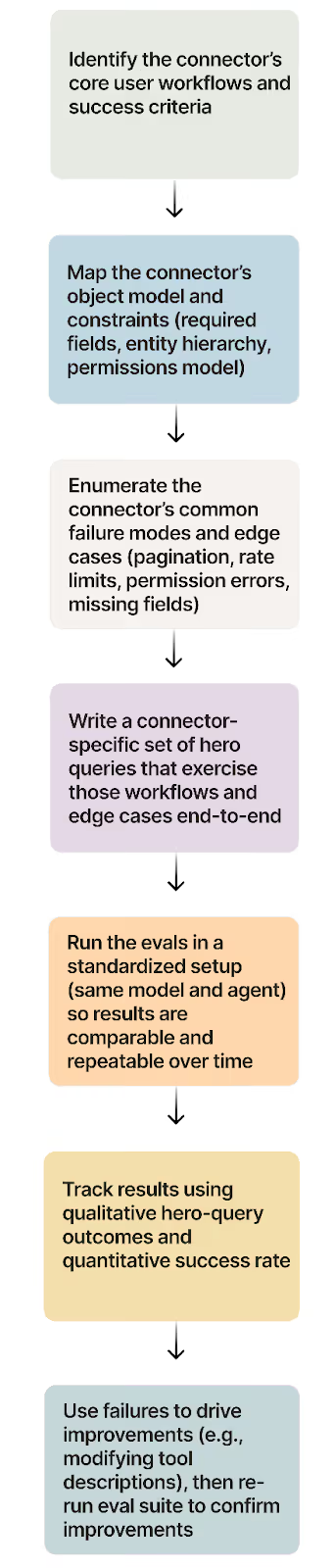
To ensure evals are effective for every connector, here’s the general process we follow:
Related: A guide to using MCP connectors
Eval results and real deployments drive continuous improvements
After launch, we continuously improve connectors through a feedback loop between real-world usage and evaluations.
Production feedback fills in what the initial controlled tests miss, like tenant-specific configurations, permission constraints, and which tool metadata or descriptions are causing agents to choose the wrong action.
Once we make changes to address this feedback, we use our evaluation suite to run the standardized, connector-specific “hero query” scenarios outlined earlier to ensure behavior improved and we catch regressions.
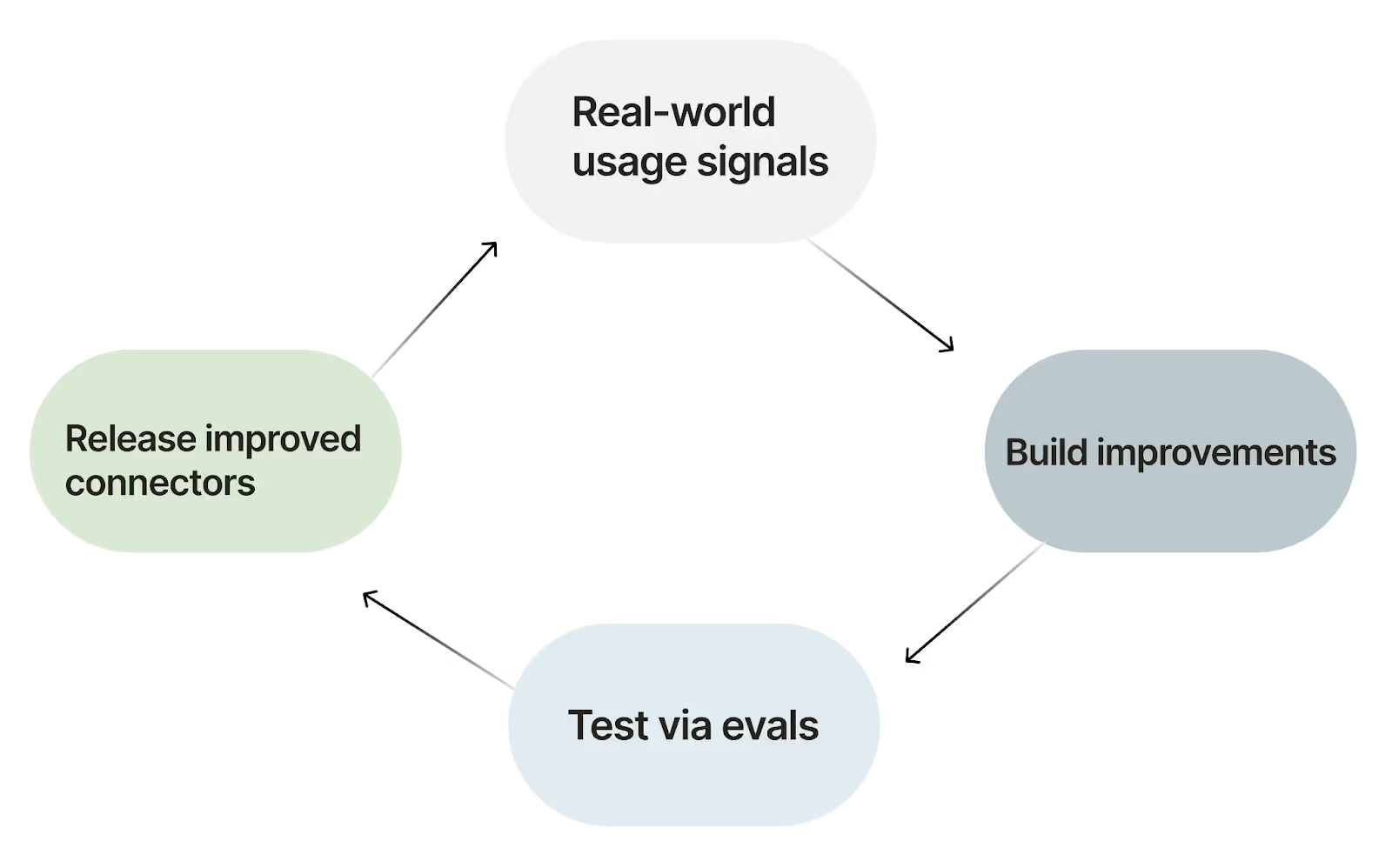
This approach allows us to make connector quality an ongoing, measurable engineering practice rather than one-off debugging.
Benchmarking against official MCP servers
To better understand how much better our connectors are, we test them against the “official” MCP servers.
In practice, we run the same representative workloads against those official servers and our implementation, measuring end-to-end latency, and hit and success rates across repeated runs.
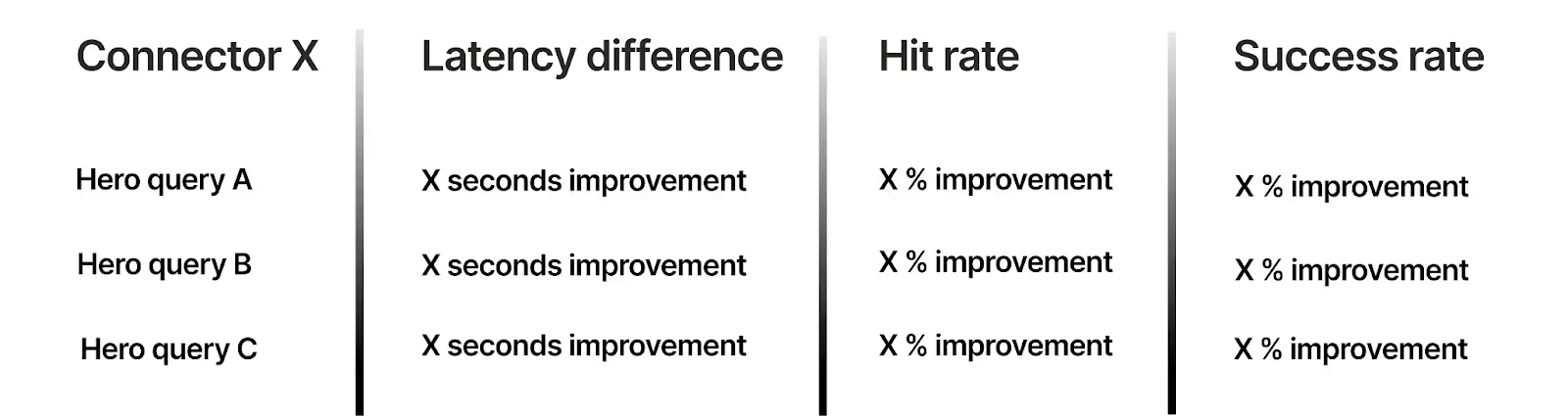
This approach helps us identify additional areas of improvement and have confidence that we’re actually building connectors that are meaningfully more reliable and secure.
Related: The top MCP Gateway providers in 2026
Real user permissions are baked into every connector
Every Agent Handler connector uses explicit, user-granted permissions instead of static API keys or shared service credentials. In other words, actions are constrained by granted scopes, making it easier to enforce least-privilege access and understand exactly why an agent was able to perform a specific operation.
Since this permission model is standardized across our 100+ connectors, agents inherit the same permission boundaries users already have in each system, regardless of their use cases.
For example, Telnyx offers voice AI agents that help users create help desk tickets, submit candidates for open roles, update sales opportunities, and more.
Using our connectors, their agents only perform actions that align with the user’s permissions in the underlying system. So if a user asks the agent to reject a candidate, the agent will only do so if that user has permission to reject candidates in the ATS.
Related: How Telnyx launched enterprise-grade agentic integrations in days with Merge
Final thoughts
We understand why our competitors released thousands of connectors from the get-go. It’s effective marketing and it converts prospects into early customers quickly.
But these early customers will unfortunately get burned.
Their agents will call the wrong tools and expose sensitive information. They won’t execute an action and leave end-users hanging. And they’ll silently drift from the underlying APIs as those APIs change, breaking agentic workflows in production.
We’ll continue to launch several connectors every week, and we’ll make sure they’re as good as the agents you’re building.
Nour Eldifrawy



But Merge isn’t just a Unified
API product. Merge is an integration platform to also manage customer integrations. gradient text
But Merge isn’t just a Unified
API product. Merge is an integration platform to also manage customer integrations. gradient text
But Merge isn’t just a Unified
API product. Merge is an integration platform to also manage customer integrations. gradient text
But Merge isn’t just a Unified
API product. Merge is an integration platform to also manage customer integrations. gradient text