

Table of contents
.avif)

Nango vs Composio: how to evaluate them for your AI agents


Jon Gitlin
As you look for solutions to connect AI agents to 3rd-party software, you’ll likely end up evaluating Nango and Composio.
Each platform comes with unique benefits and drawbacks, so one isn’t necessarily better than the other for your agents.
To help you find the better fit, we’ll evaluate each platform and then compare them directly. We’ll then walk through why Merge Agent Handler is the better alternative to both.
Nango overview
Nango started as a unified API platform that lets companies add hundreds of cross-category integrations to their products. They’ve since expanded to agentic integrations, where they’ve made their API endpoints available as MCP tools.
Pros
- Multi-product support: If you need to support both product and agentic integrations, it can be more convenient and cost-effective to use Nango
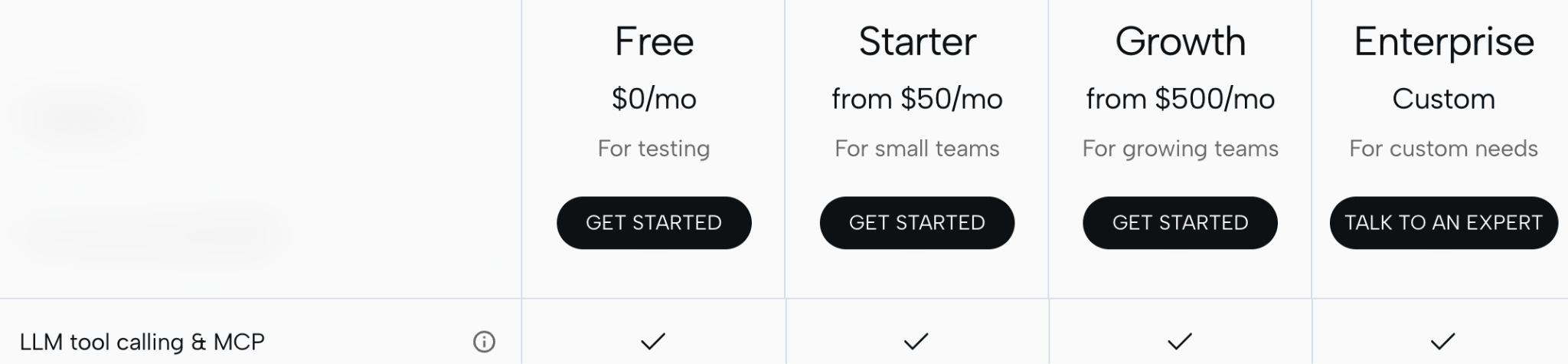
- Easy access: You can test Nango’s MCP connectors and tools for free and then upgrade once you’re ready to scale usage
- Compliant and secure platform: Nango offers 99.9% uptime, and complies with GDPR, HIPAA, and SOC 2 Type 2
Cons
- Lack of customer proof: All of Nango’s current case studies are for their unified API platform, signaling that their agentic integration offerings are less developed and robust
- Small startup with minimal funding: Nango has only raised a small seed round and has just over a dozen employees. Given its size and financial standing, it can be risky to outsource your agentic (and product) integrations to the company
- Limited documentation on their connectors: There’s only one page in Nango’s docs that covers their MCP connectors and tools. The rest is dedicated to their core unified API solution, which is another example of their relatively limited support for agentic integrations
Related: A guide to Nango alternatives
Composio overview
Composio is an integration platform for AI agents. It offers prebuilt connectors and tools so agents can authenticate to, and take actions in, third party services through a unified interface.
Pros
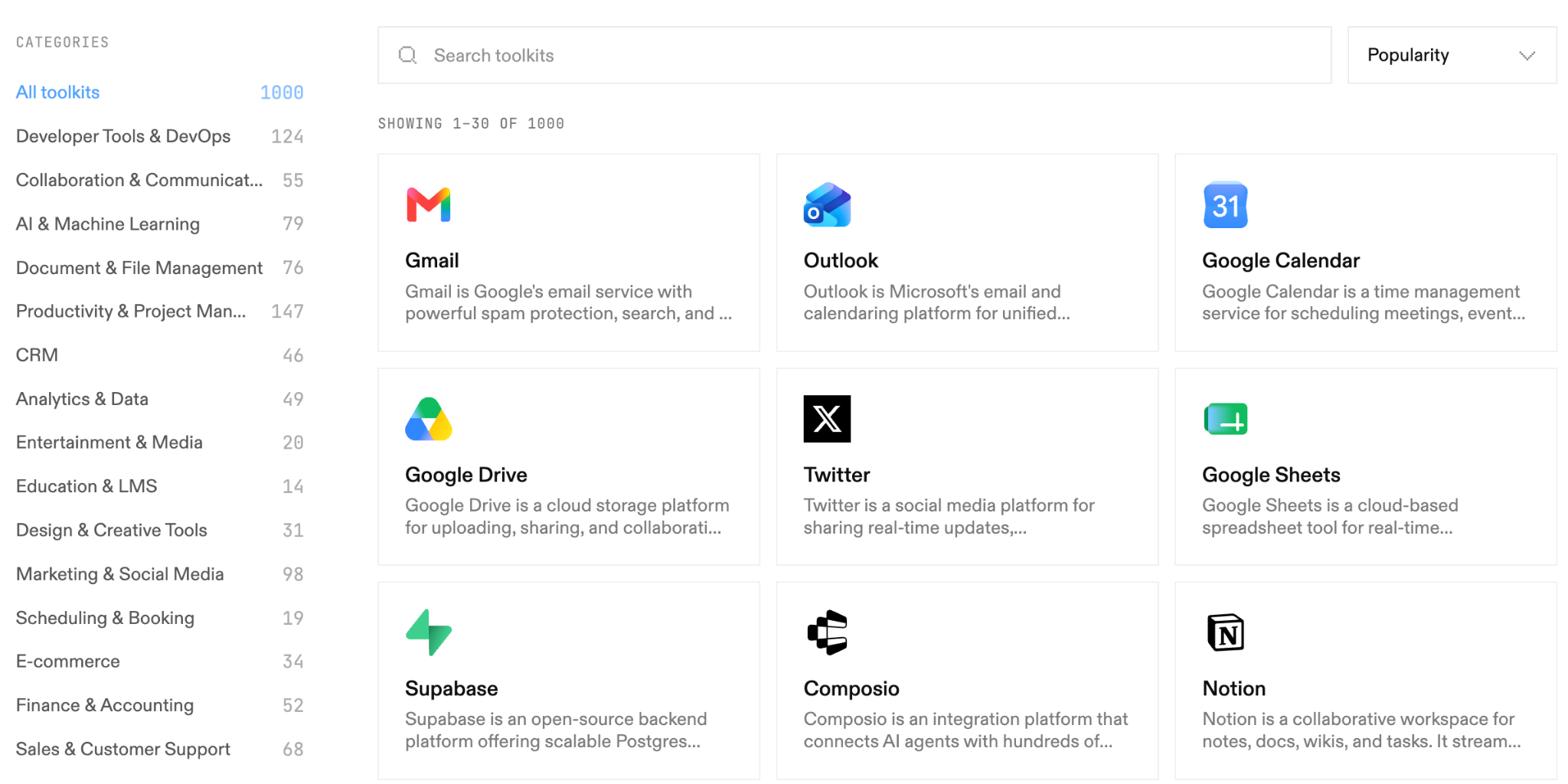
- Broad connector catalog: If you need your agents to take actions across many third party apps, Composio can reduce build time and maintenance versus building each integration yourself
- Agent-friendly tooling: You can quickly set up Composio and its supported connectors in whatever AI coding tools you use, whether that’s Claude Code, Codex, Cursor, etc.
- Significant funding and growth: Composio has raised roughly 4X more than Nango ($29M vs $7.5M) and is growing the team at a faster rate, signaling that it’s the healthier integration platform for the long run
Cons
- Security vulnerabilities: Composio recently disclosed a security incident that resulted in the likely exposure of thousands of customer-related secrets, including about 5,000 GitHub OAuth grants and 5,241 cached API keys. While the issue is resolved, given its recency and scale, it’s worth factoring into your assessment

- Single product support: Composio only offers MCP connectors. If you need other AI infrastructure products, like an LLM router, you’ll need to work with additional vendors
- Shallow security enforcement: Composio highlights logged calls and certifications (e.g., SOC 2 Type II), but it’s unclear how robust their actual enforcement is. For example, it’s unclear if they provide rule-based allow/deny functionality and alerting based on rule violations
Related: The top alternatives to Composio
Composio vs Nango
Given all the pros and cons of each platform, it can be hard to choose one over the other. Here are a few simple rules of thumb to simplify your decision:
- Use Composio when you want a large connector catalog, a better-funded, faster-growing vendor, and you're comfortable with its recent security incident and single-product scope
- Use Nango when you need to support both product and agentic integrations from one platform, want connectors available on every plan, can work around minimal documentation, and are willing to partner with a small team
Related: How Arcade and Composio differ
Why Merge Agent Handler is the best agentic integration platform
Merge Agent Handler provides managed MCP connectors plus the enterprise plumbing around them: auth and credential lifecycle, enterprise-grade governance, and comprehensive observability. Together, they let your agents safely take real actions in third-party systems.
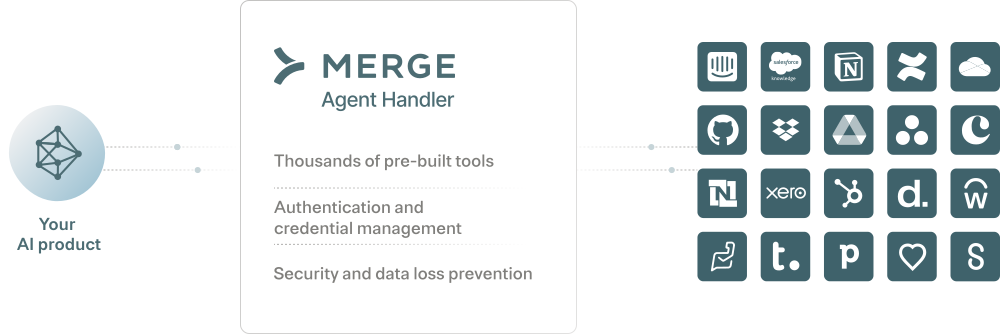
With Merge Agent Handler, you'll get:
- Governance-first enforcement: Central policies with DLP-style security rules that block, redact, and log sensitive data across tool inputs and outputs, plus alerting when a rule is violated
- Full observability and audit trail: Fully-searchable logs across every tool call and API request, so you can debug issues and satisfy security and audit requirements
- Enterprise auth and identity lifecycle: Managed authentication and credential lifecycle, so you can roll out agents securely at scale
- Stronger enterprise proof: Public customer proof points from a wide range of companies. For example, Telnyx saved hundreds of engineering hours by outsourcing MCP connector development and maintenance to Agent Handler
{{this-blog-only-cta}}
Jon Gitlin
.png)
.png)
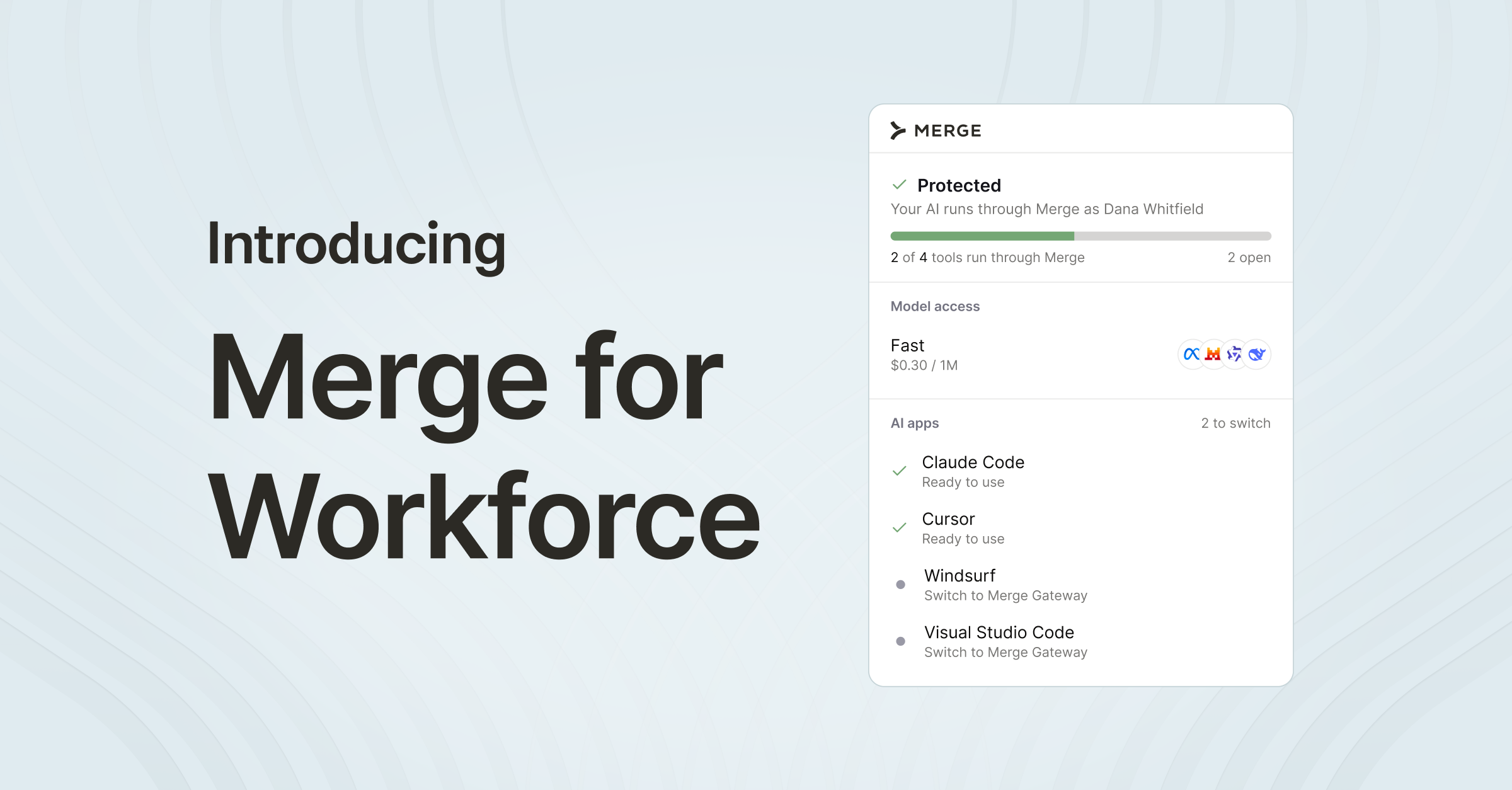

Don’t settle for Composio or Nango
Leading AI companies like Perplexity use Agent Handler to securely connect their agents to thousands of tools.


But Merge isn’t just a Unified
API product. Merge is an integration platform to also manage customer integrations. gradient text
But Merge isn’t just a Unified
API product. Merge is an integration platform to also manage customer integrations. gradient text
But Merge isn’t just a Unified
API product. Merge is an integration platform to also manage customer integrations. gradient text
But Merge isn’t just a Unified
API product. Merge is an integration platform to also manage customer integrations. gradient text