

Table of contents
.jpg)
3 AI agent observability platforms to consider in 2026


Jon Gitlin
Before pushing your AI agents to production, you’ll need the right tooling in place to monitor their activities and diagnose and triage any issues on time.
To that end, we’ll break down 3 leading agent observability solutions and highlight their pros and cons to help you pinpoint the best option.
Note: This article was written on 1/8/2026. The information below is subject to change.
Merge
Merge Agent Handler lets you not only monitor and manage your agents but also connect them to thousands of tools across dozens of MCP connectors.
Top features
- Tool call logs: See when a tool was invoked, the arguments that get passed, the API requests that are made, and more
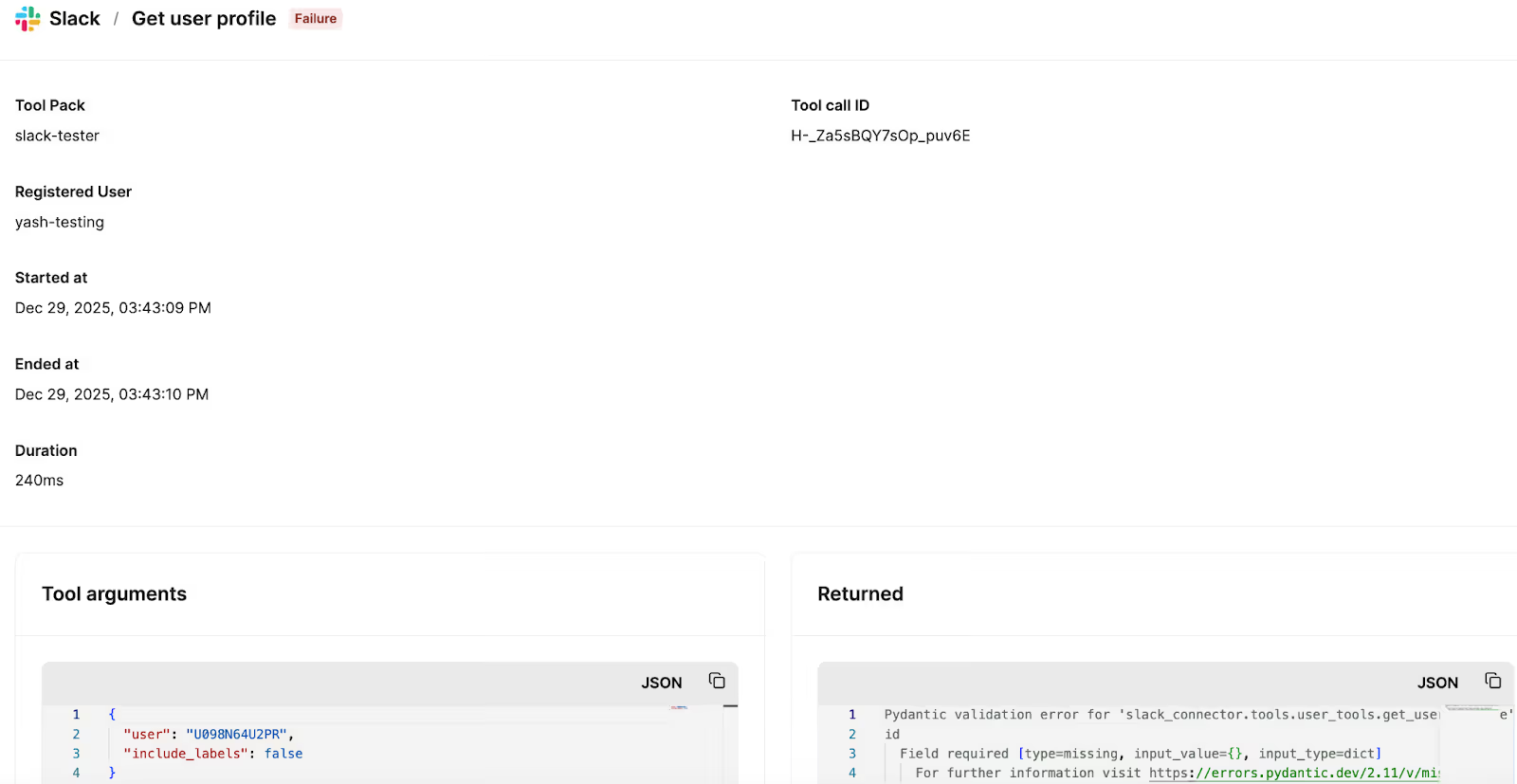
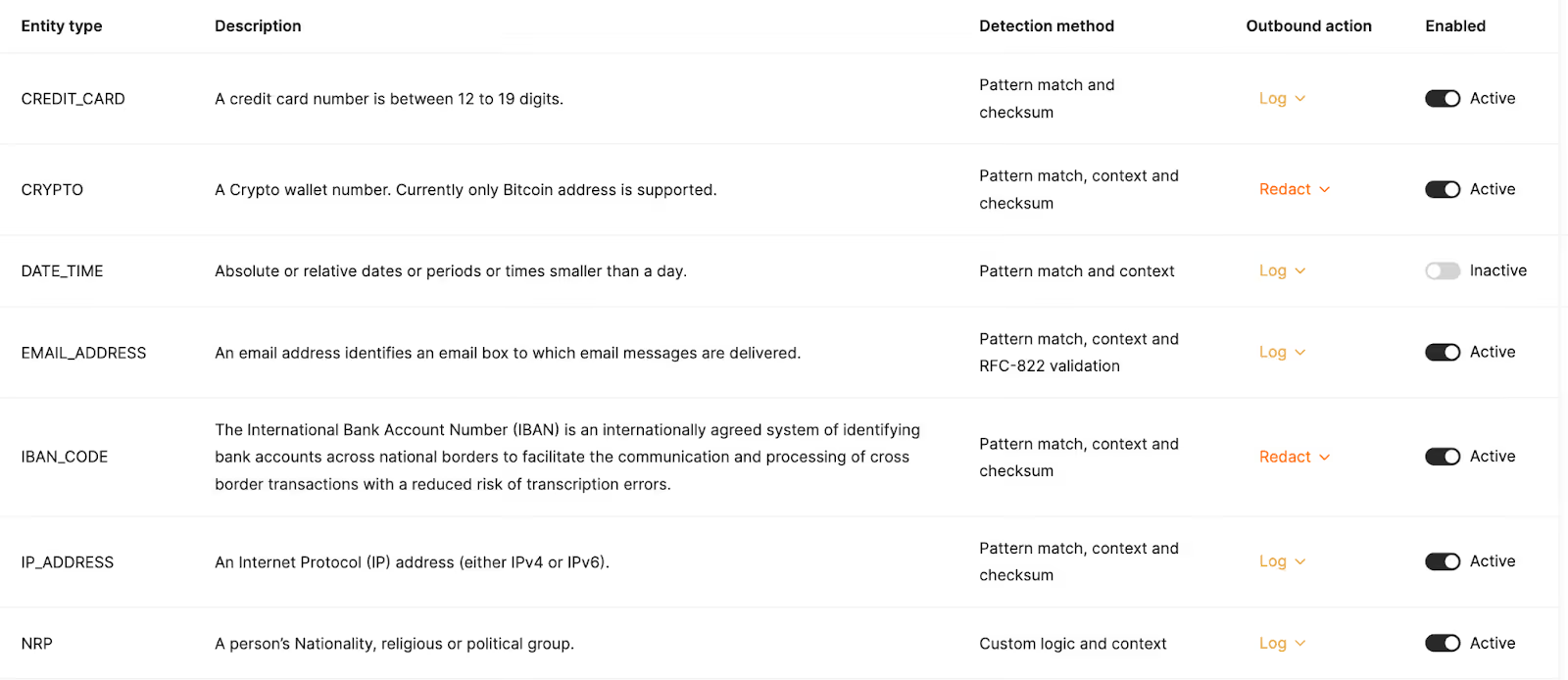
- Customizable rules: Set rules that define how your agents can access and share certain data types. This can include blocking your agents from accessing credit card numbers, logging when they share someone’s location, and so on
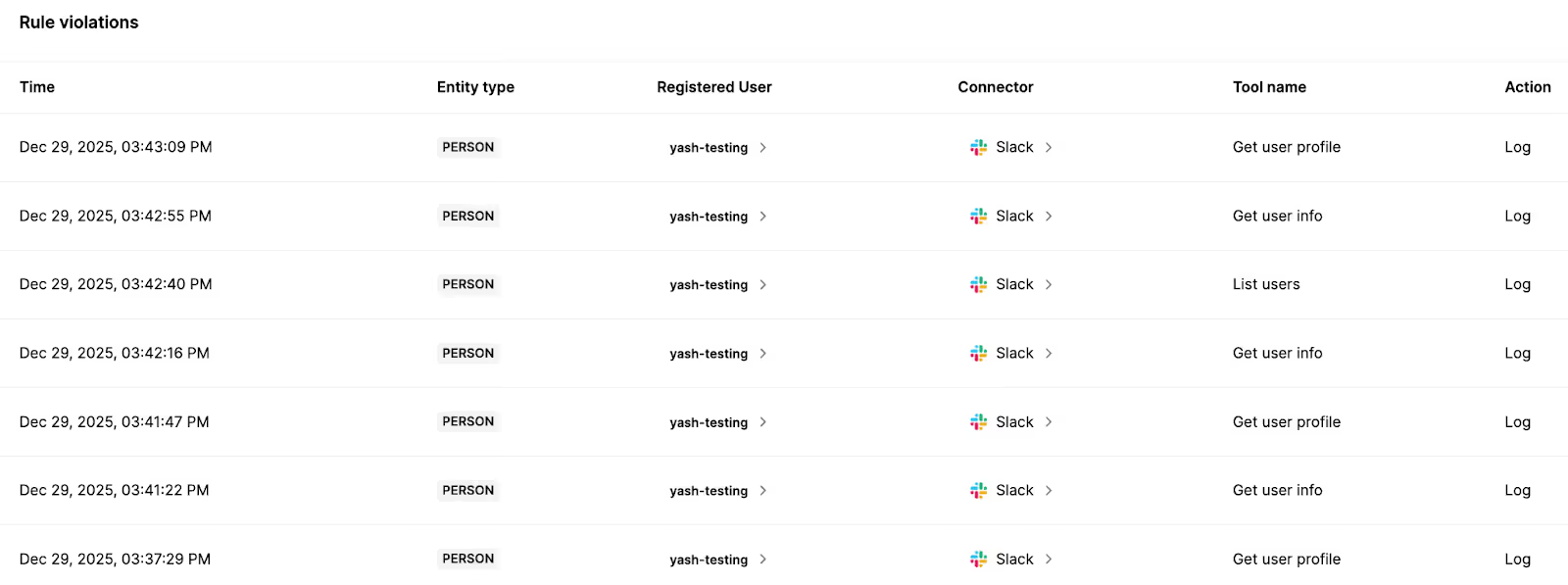
- Rule violation alerts: Receive notifications any time your agents violate a rule and get key details on these violations, such as when it happened, who or what caused it, the tool that was involved, etc.
Pros
- Comprehensive capabilities: Beyond helping you observe your agents, Merge Agent Handler offers enterprise-grade MCP connectors, an evaluations feature to pressure test your agents’ tool calls, and other features and functionality that enable you take your agents to market successfully
- Proven success: A wide range of AI companies use Merge Agent Handler and have experienced success with its observability features. For example, the COO of Telnyx, which uses Agent Handler for its Voice AI agents, shared the following:
“With Merge Agent Handler’s searchable logs, we can quickly and reliably verify tool calls and responses. This helps us deliver a smoother and more dependable experience for our customers.”
- Fast innovation: Merge Agent Handler is constantly improving, from adding a better feature for testing specific agentic workflows to enriching the context used across its logs
{{this-blog-only-cta}}
Maxim AI
Maxim offers a robust evaluation and observability solutions for agents.
Top features
- Traces: See any agent interaction with users and 3rd-party systems, including the inputs they receive, the tools they invoked, and the resulting outputs
- Real-time alerts: Set up notifications when your agents fail to meet a certain performance threshold. This can be anything from failing to execute a tool call within a certain timeframe to sharing certain types of sensitive information (e.g., social security numbers)
- Human annotation: Loop in people, whether internal or external, to review the agent’s inputs and outputs and determine whether there’s inherent bias
Pros
- Integrates with leading orchestration frameworks: This lets teams incorporate observability, evaluations, and monitoring relatively easily while developing their agents
- Robust testing functionality: Your team can set up any number of simulation environments and see whether your agents pass or fail them
- Flexible pricing model: Their free plan lets you evaluate their logs, email support, and other facets before moving forward
Cons
- Little funding: The company has only raised $3 million dollars from a seed round. This modest level of funding can make the company risky to invest in
- Lack connector support: If you need to integrate your agents with 3rd-party applications, you’ll need to look for another solution or build the connections in-house
- No documented success stories: Maxim doesn’t have any publicly-available case studies, which can point to potential product issues/a lack of happy customers
Related: Popular agent management platforms in 2026
Langfuse
Langfuse is an observability and analytics platform for AI systems, especially those built with large language models (LLMs) and AI agents.
Top features
- Observability and tracing: Langfuse provides robust visibility across tool calls, including the prompts used, tools invoked, corresponding outputs, among other execution details
- Prompt management: To give your agents a strong foundation and avoid cluttering your codebase, Langfuse lets you centrally store, version, and organize prompts
- LLM evaluation: Automatically score agent outputs and use those insights to improve the prompts, models, and agents’ behaviors
Pros
- Enterprise customer adoption: Widely-known companies across industries—such as Twilio, Intuit, and Samsara—use Langfuse to manage their agents, demonstrating that it offers the features and functionality required to support enterprise-scale agent operations
- Community validation: Langfuse has more than 20k GitHub stars, highlighting the platform’s strong popularity and trust within the developer community
- Comprehensive free plan: Their “Hobby” plan includes 50k observation units and full agent tracing, giving your team a meaningful opportunity to test and evaluate their observability capabilities
Cons
- Doesn’t support connectors: Like Maxim AI, Language doesn’t offer MCP connectors, forcing you to build them or outsource them from another vendor
- Lack critical security features on lower-tier plans: Many of the core features you need to manage your agents, like audit logs, are only available on their higher-tier plans
- Limited compliance support on lower-tier plans: Similar to the previous point, lower-tier plans do not include guarantees for certain data protection and security standards—such as HIPAA—that your customers and/or employees may need and want
{{this-blog-only-cta}}
Jon Gitlin
.png)
.png)

Observe your agents effectively with Merge Agent Handler
Merge Agent Handler lets you monitor and manage all your agents with ease through fully-searchable logs, an Evaluation Suite, customizable security rules, and more.


But Merge isn’t just a Unified
API product. Merge is an integration platform to also manage customer integrations. gradient text
But Merge isn’t just a Unified
API product. Merge is an integration platform to also manage customer integrations. gradient text
But Merge isn’t just a Unified
API product. Merge is an integration platform to also manage customer integrations. gradient text
But Merge isn’t just a Unified
API product. Merge is an integration platform to also manage customer integrations. gradient text