

Table of contents
.avif)
Best RAG tools to improve accuracy and personalization

Cornellius Yudha Wijaya
While LLMs are incredibly helpful, they’re imperfect and can generate incorrect or misleading information.
Retrieval-augmented generation (RAG) offers a promising way to solve the accuracy problem of LLMs.
RAG is guided by a simple question: How can we improve the accuracy of LLM outputs and further personalize the results without fine-tuning the entire model? The answer is to use an external knowledge base that the LLM can query; this retrieval mechanism is the foundation of RAG.
When you integrate data retrieval with LLMs, RAG can cost-effectively enhance the accuracy and personalization of AI systems. This is why RAG is quickly gaining traction in various industries.
However, implementing RAG isn't as simple as just plugging it in. To help you leverage it effectively, we’ll explore a range of RAG tools, including their features and use cases, to help you figure out which one's right for you.
How RAG works and why it matters
RAG helps improve LLM outputs by retrieving relevant information from external knowledge bases. Here's the basic structure:
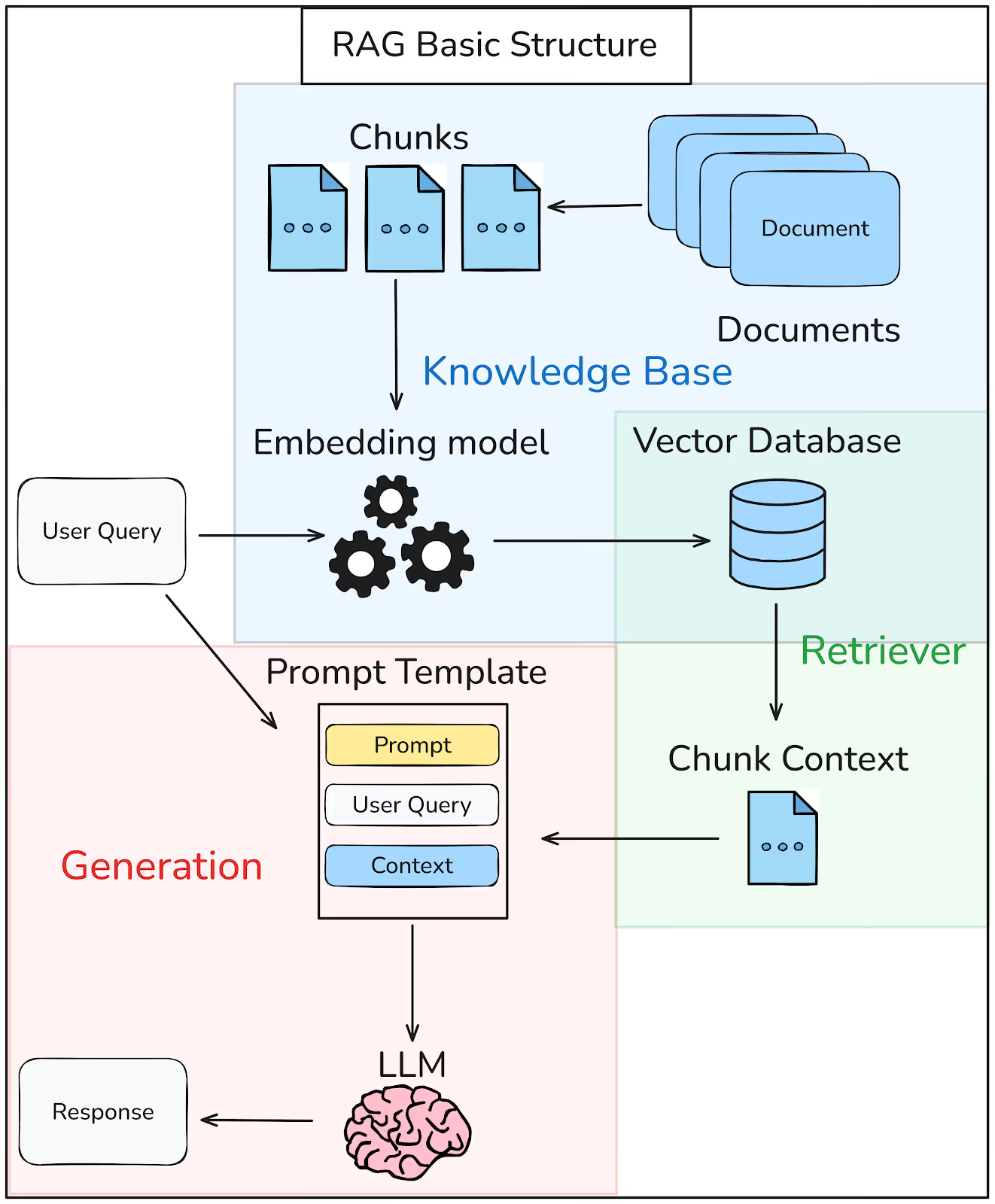
The RAG system can be divided into three components:
- Knowledge base: A central repository of information, often stored in a vector database. It can contain structured data (like tables), unstructured content (such as free-text or multimedia), or semistructured data (using metadata or tags). The system searches this content to find relevant data in response to user queries
- Retriever: This component retrieves the relevant context based on the user query from the knowledge base
- Generation: The retrieved information is sent to the LLM, which uses it, along with a prompt template (containing instructions and the user's query), to create a final response
These components don't form a single off-the-shelf solution, but their integration creates what’s referred to as a RAG tool.
https://www.merge.dev/blog/rag-examples?blog-related=image
The best RAG tools for improving accuracy and personalization
Since RAG tools are a combination of components, the accuracy and personalization of their outputs rely heavily on the effective implementation of these components.
Choosing the right tools starts with understanding what each one brings to the table. In the following sections, we'll explore a range of options—from experimental and developer-friendly RAG libraries to integration-ready APIs and enterprise-grade vector databases.
Experimental and developer-friendly RAG libraries
RAG libraries are developer tools that help build and fine-tune each part of a RAG system—from loading documents into a knowledge base to generating answers with an LLM.
RAG libraries are characterized as follows:
- Flexible and modular: They give you control over the components in your RAG pipeline. This allows users to design the pipeline as needed
- Supportive of quick experimentation: Users can test and iterate on their RAG setup without destroying the existing system
- Open source: Most RAG libraries are open source and community-driven
RAG libraries are ideal for AI researchers who require quick prototyping to test their hypotheses, developers who need to customize AI solutions according to project requirements, and start-ups that want to validate their ideas for market fit, with minimal overhead, rapidly.
Let's take a look at a few RAG libraries.
LangChain

LangChain simplifies building RAG systems with its modular components (like Agents, Tools, Memory, and Chains) and chain-based architecture. This allows developers to easily orchestrate steps—like data retrieval, prompt templating, and response generation—within flexible, customizable pipelines.
LangChain's strength is its flexibility. You can compose modular RAG workflows using the LangChain Expression Language (LCEL), which facilitates the creation of a complex, multistep system declaratively. Its extensive integrations with over a hundred tools and LLMs make it easy to test and swap components, which is why LangChain is well-suited for experimentation and tool-rich RAG setups.
https://www.merge.dev/blog/agentic-rag?blog-related=image
LlamaIndex
LlamaIndex is an open source library for building LLM applications. It focuses on connecting private and domain-specific data sources through the RAG system.
It uses various indexing structures (e.g. list index for sequential data access, tree index for hierarchical summarization and aggregation, and hybrid models) to optimize retrieval.
To streamline workflows, LlamaIndex offers Llama Hub, a collection of data connectors that make it easy to ingest and process information. This ensures LLMs receive relevant, well-structured content for more accurate responses.
With its flexible indexing and integration capabilities, LlamaIndex is especially useful for document-heavy RAG systems that rely on rich, domain-specific context.
Haystack
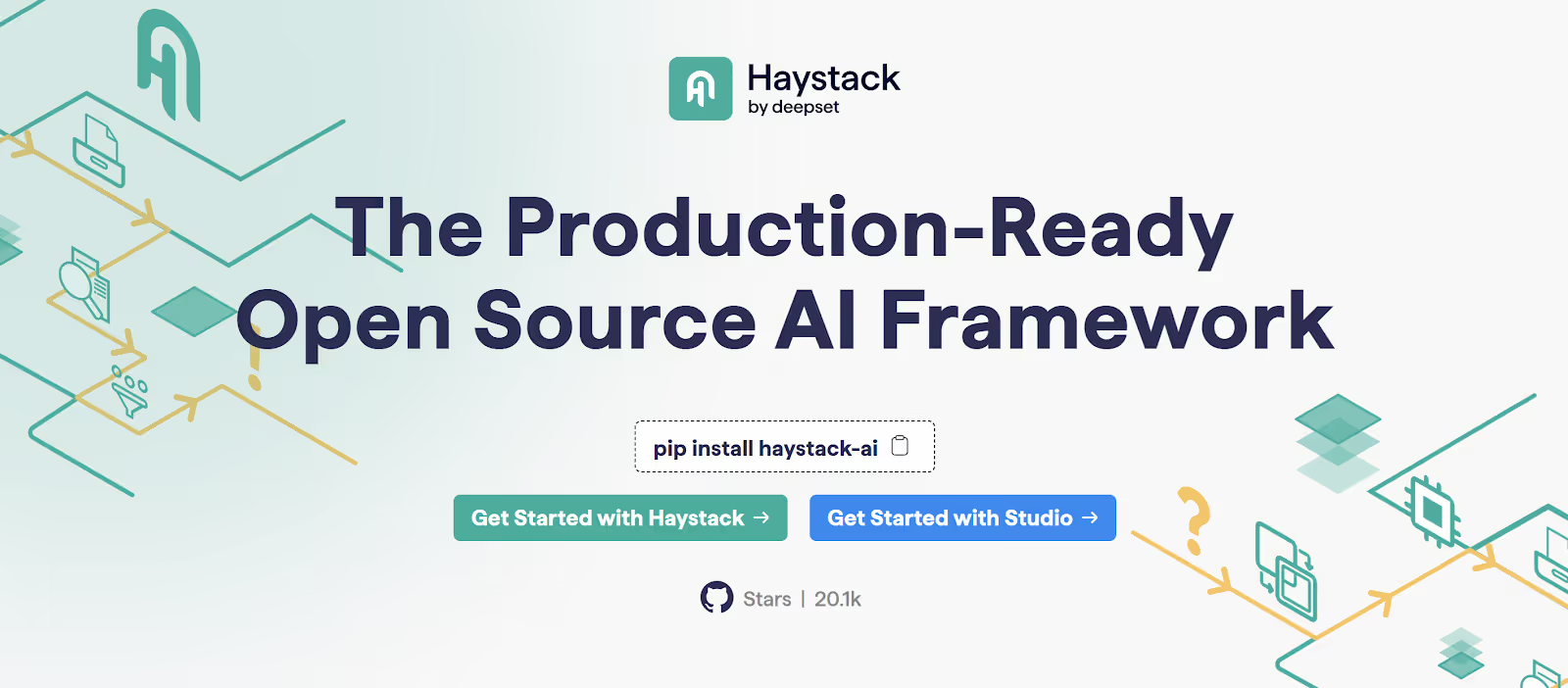
Haystack is an open source library lauded as a production-ready AI framework for building LLM applications.
The library is designed for production, enabling users to create customizable RAG pipelines aligned with MLOps principles. It supports end-to-end deployment, monitoring, and continuous iteration in real-world environments.
Key features include scalable components like REST API endpoints via Hayhooks, real-time inference capabilities, and monitoring hooks. The library also features structured workflows with modular components for building the RAG system, encompassing document ingestion and retrieval to output generation via LLMs.
Haystack's strength lies in its production readiness as a RAG tool. It offers built-in features, like YAML-based pipeline serialization, OpenTelemetry/Datadog-compatible logging and monitoring via Langfuse integration, and deployment-ready architectures using Docker and Kubernetes.
These capabilities allow users to deploy and monitor RAG systems in real time while aligning with MLOps principles for reproducibility, observability, and continuous integration, continuous delivery (CI/CD). This makes Haystack great for enterprise and large-scale RAG system use cases.
https://www.merge.dev/blog/rag-vs-ai-agent?blog-related=image
API and integration-driven RAG platforms
While each RAG library provides granular control over the RAG system, API and integration-driven RAG platforms prioritize simplicity.
These platforms offer a complete, preconfigured RAG system, bypassing the manual setup of libraries and enabling quick connections to user applications and data.
API and integration-driven RAG platforms can offer the following advantages:
- Security and scalability: They have built-in security features that can handle growing data volumes during integration
- Prebuilt integration: They have ready-to-use connectors that make it easy to link with other systems and tools
- Data normalization: They normalize data from multiple sources for consistency and output accuracy
API and integration-driven RAG platforms are ideal for business cases requiring multiple data synchronization sources and reliable data flows, such as product teams building customer-facing AI experiences.
The following are a few companies that offer API and integration-driven RAG platforms:
Merge
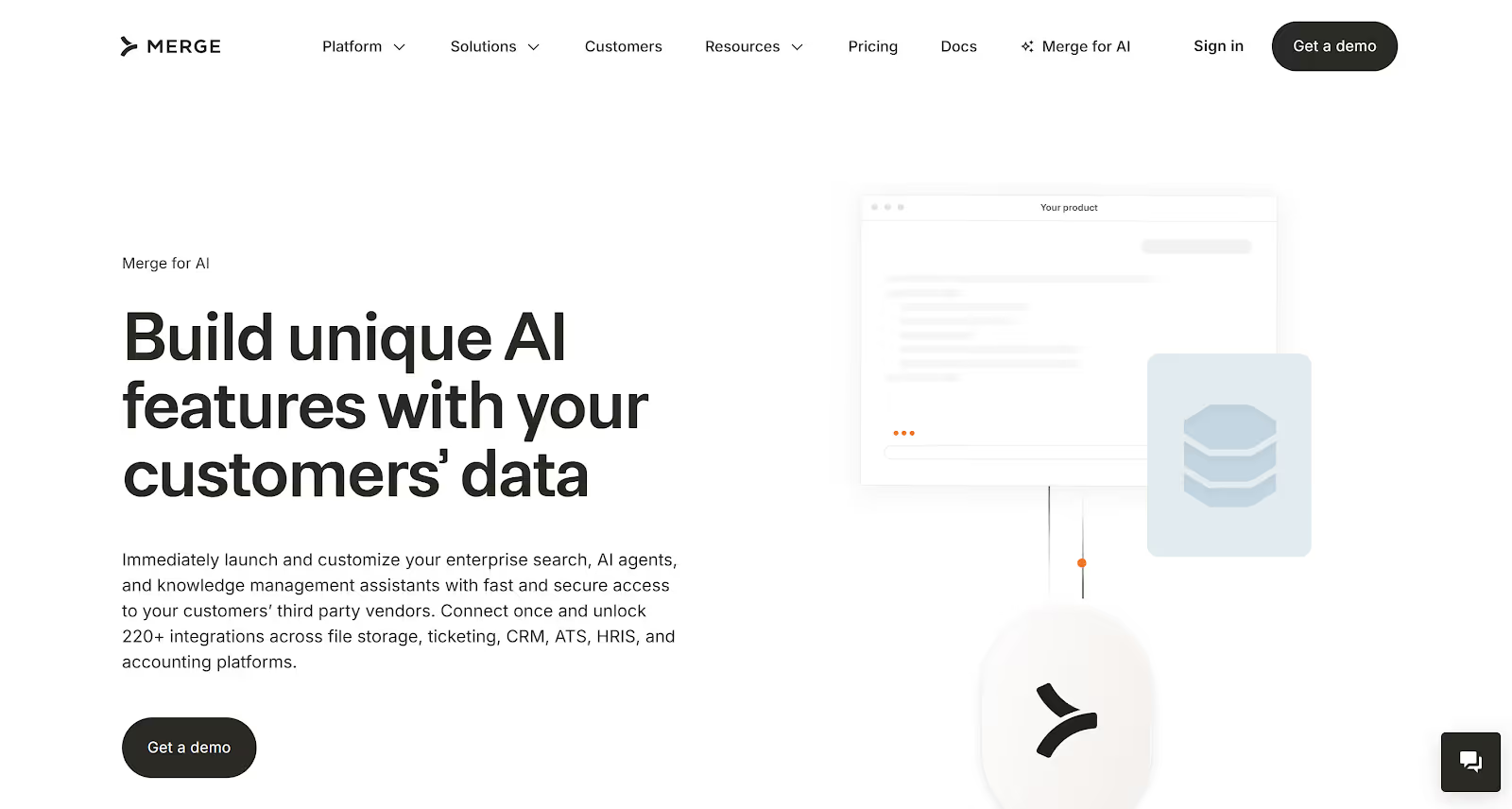
Merge offers a unified API that lets you connect your product to over 220 SaaS applications, like customer relationship management (CRM), human resources information system (HRIS), applicant tracking system (ATS), and file storage solutions.
For RAG applications, Merge functions as a data integration layer. It provides a single API to access and retrieve data from varied sources for use within the RAG system. This facilitates the use of organization-specific data.
Merge excels at unifying and normalizing data through a single API with its Common Models. This ensures consistent inputs and more accurate RAG outputs.
Moreover, using the Merge Model Context Protocol (MCP), AI Agents can take actions, such as updating records or closing tickets, automatically.
{{this-blog-only-cta}}
FinchAI
FinchAI is a platform that connects to user or third-party data sources via API and uses RAG to enhance its outputs with relevant context. These data integration and RAG capabilities are incorporated alongside FinchAI's text analysis and visualization tools to generate comprehensive reports and insights based on the connected data.
FinchAI takes an analyst-centric, entity-first approach to RAG.
From the moment data is ingested, it's transformed into structured, entity-aware knowledge using FinchAI's massive knowledge base of over 44 million entities, enriched with sentiment analysis, keyphrase extraction, and topic/event mapping. This results in more accurate retrieval.
FinchAI is especially well-suited for use cases where understanding relationships between data is critical, such as intelligence analysis or financial risk assessment.
Enterprise-ready vector databases and infrastructure
Enterprise-ready vector databases and infrastructure are RAG tools built to store and retrieve embeddings at scale. These tools can perform fast searches and retrievals across massive amounts of data, making them ideal for industries like healthcare and finance, where speed and accuracy are critical.
Their key characteristics include:
- High-performance vector search: They can efficiently retrieve and index vector embeddings for fast and accurate results
- Real-time similarity retrieval: They enable low-latency search to quickly surface similar documents or content
- Robust security measures: They’re designed to comply with security measurement standards, such as SSL/TLS Encryption and General Data Protection Regulation (GDPR) compliance
The following are a few tools that fall into this category.
Chroma
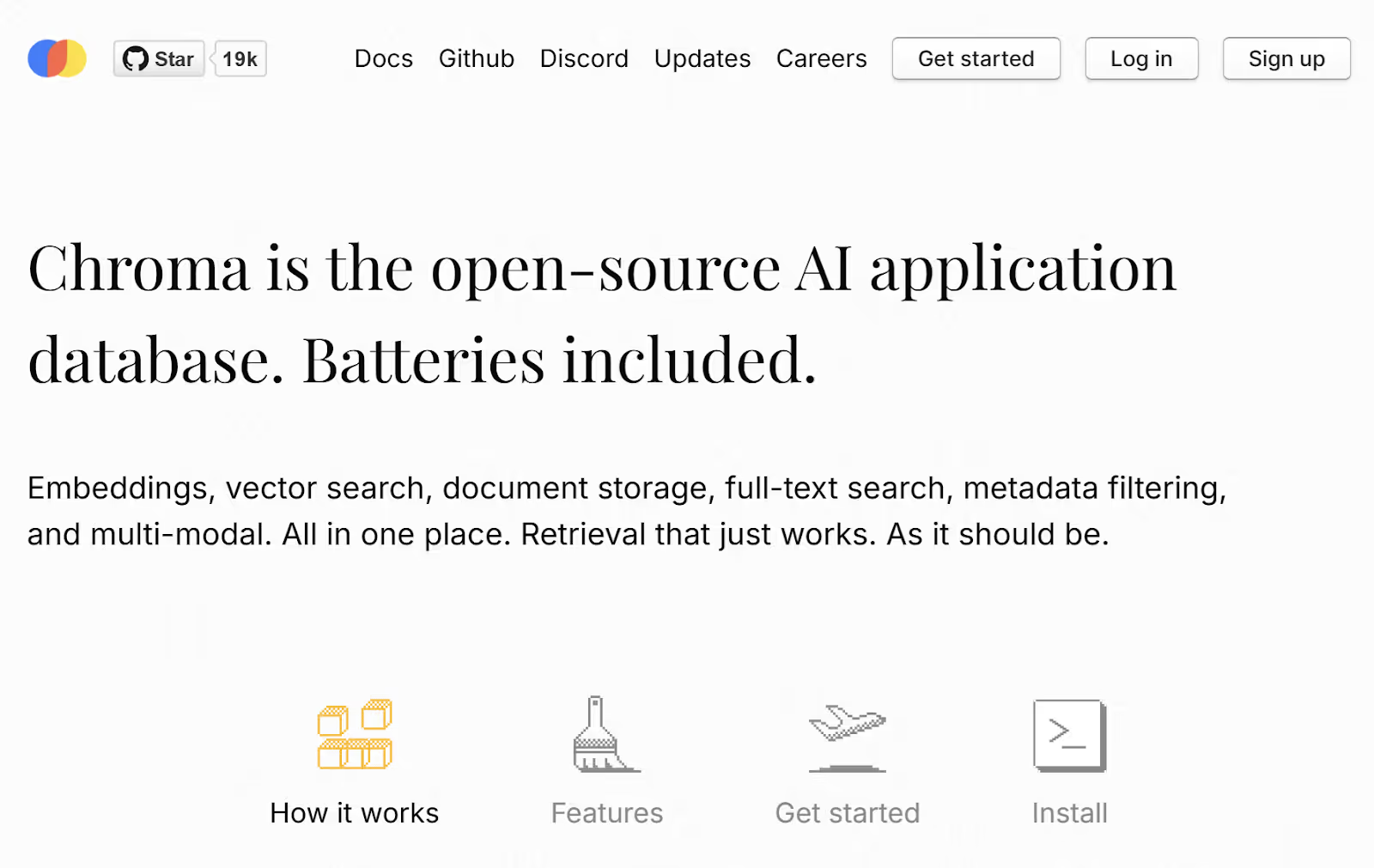
Chroma is an open source vector database designed for RAG systems. It stores embeddings and supports nearest-neighbor search to surface relevant context. What sets Chroma apart is its strong, active developer community.
Chroma makes it easy to get started with RAG development. It takes only a few lines of code to launch an in-memory vector database, which is perfect for fast prototyping.
Optimized for low-latency searches and high RAM environments, Chroma performs well at mid-scale. It also integrates seamlessly with frameworks like LangChain and LlamaIndex.
With an active open source community driving quick iterations and feature requests, Chroma is a great choice for on-premise and enterprise RAG solutions.
Pinecone
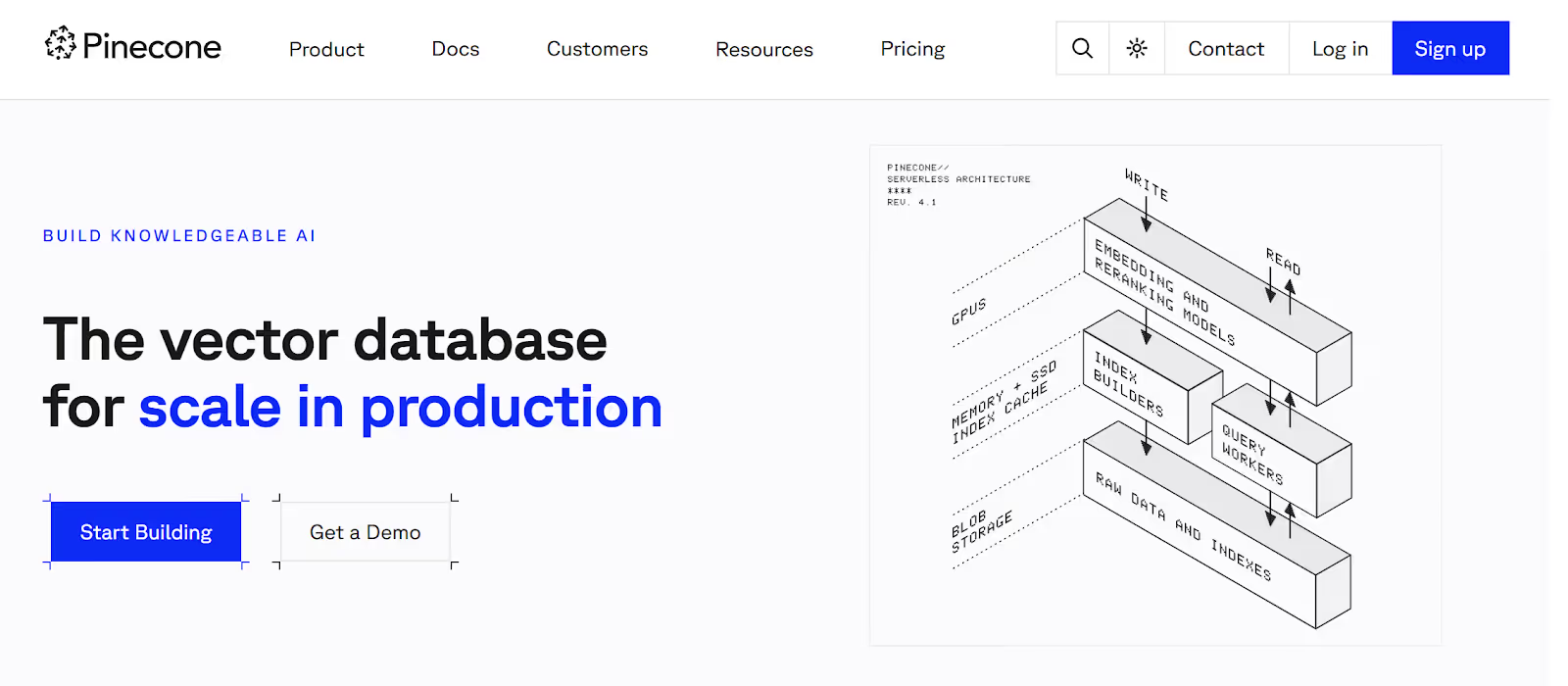
Pinecone is a cloud-based vector database that enables low-latency similarity search through a simple API. As a fully managed service, it handles infrastructure and configuration behind the scenes.
Pinecone excels at ultrafast, high-performance similarity searches at scale, making it ideal for real-time, large-scale RAG applications. Pinecone also scales seamlessly without sacrificing performance, even with massive data growth.
Fully-managed RAG platforms
Unlike the other RAG tools, fully-managed RAG platforms are cloud-based and provide RAG implementation or the components as a service. The cloud provider handles all the necessary infrastructure and complexity while still allowing the user to control some parts of the system.
This type of RAG tool is ideal for businesses that handle dynamic data sets and require real-time responses, as well as enterprises looking for a powerful RAG system without the burden of infrastructure management.
Technical characteristics of fully-managed RAG platforms include:
- Security and scalability: They can manage increasing workloads while incorporating built-in security measures that adhere to regulatory standards, such as role-based access control (RBAC) and Health Insurance Portability and Accountability Act (HIPAA) certification, ensuring performance and compliance
- Plug-and-play integration: They can easily connect to existing systems and data sources with minimal configuration
- Cloud-hosted solution: They can be delivered through cloud services that manage the entire infrastructure, so there's no need to worry about what's happening behind the scenes
The following are some notable fully-managed RAG systems.
Azure AI Search
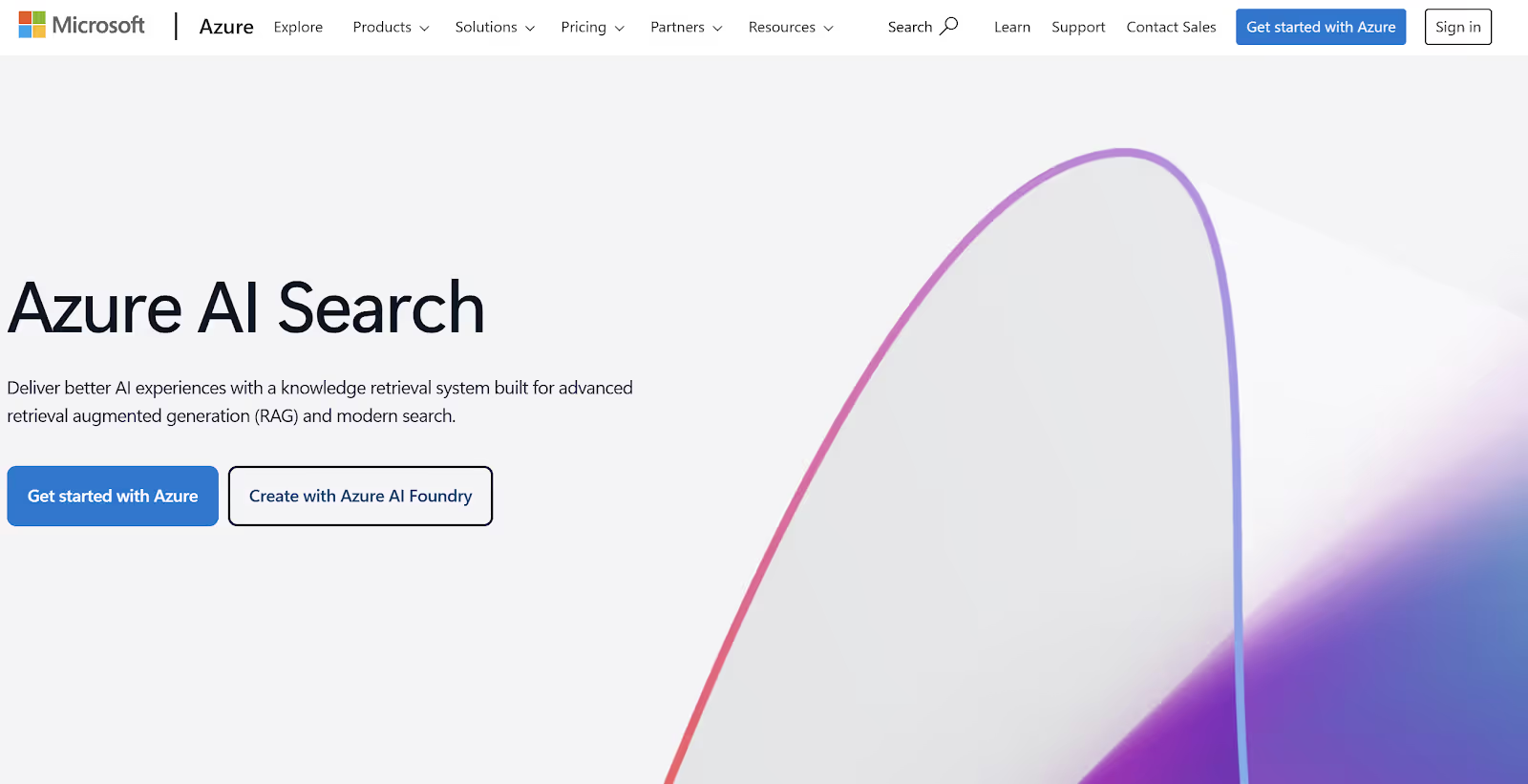
Azure AI Search is a fully-managed cloud search and indexing service with Microsoft Azure that optimizes the RAG system. It acts as a retriever that works cohesively with other Azure services.
Azure AI Search's strength lies in its integration with the Azure service ecosystem, enabling users to build a high-quality RAG system on one managed platform.
It supports seamless data ingestion from the Azure Blob Storage, applies Azure OpenAI embeddings, and generates outputs using Azure OpenAI models.
As a cloud-based solution, it offers enterprise-grade security and high availability.
Azure AI Search is an ideal choice for enterprises already embedded in Azure that are looking for a secure, scalable, all-in-one RAG solution.
Vertex AI Search
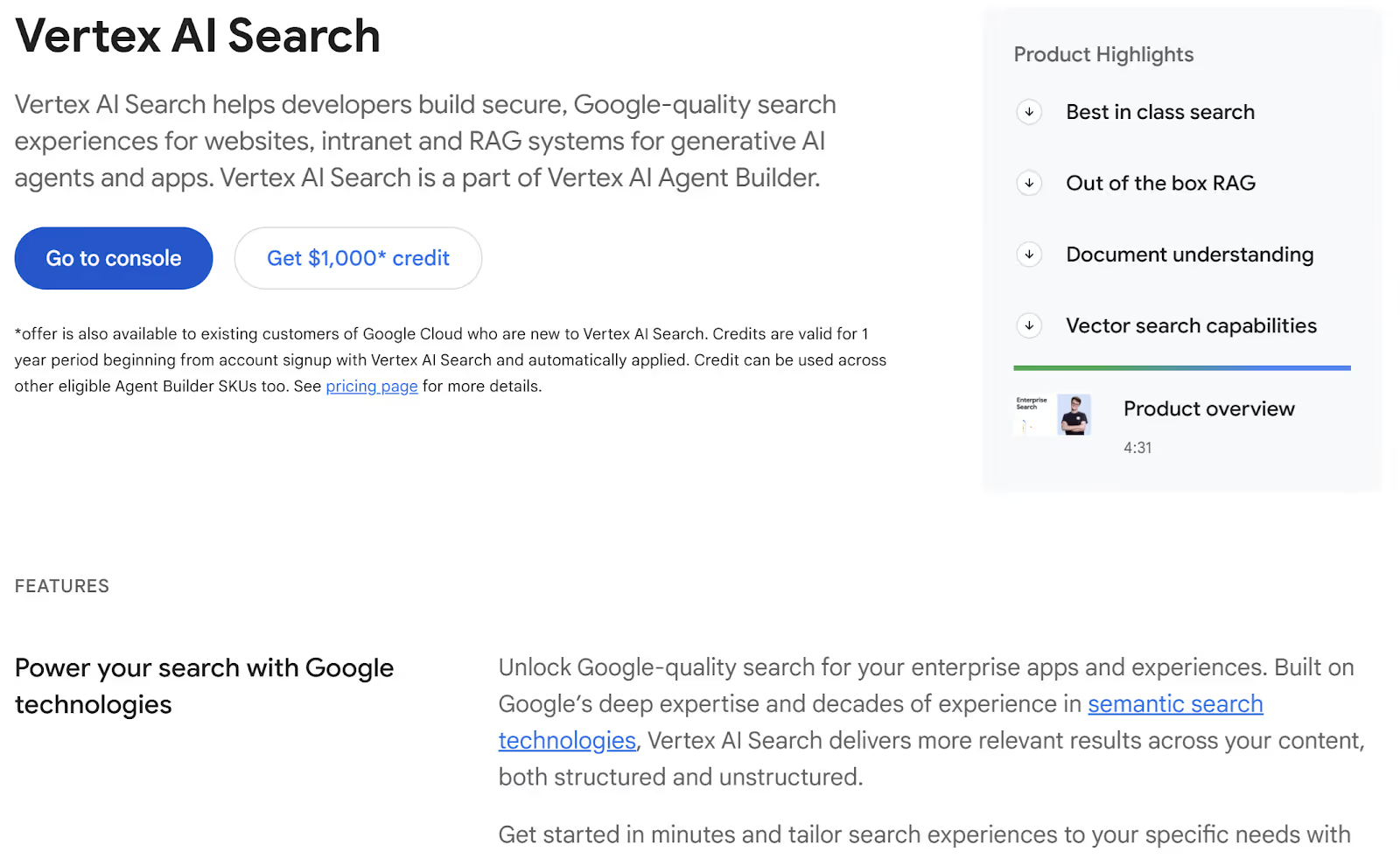
As a retriever service, Vertex AI Search can connect with various data sources and automatic indexes, as well as perform similarity searches over stored data.
The Vertex AI Search has a deep integration with the Google Cloud system, connecting seamlessly with services like BigQuery, Workspace, and Vertex AI's multimodal models (like Gemini) to process various data types. Built on top of Google Spanner, it offers strong scalability and consistency for real-time, large-scale applications. It also provides enterprise-level security with fine-grained access controls, Virtual Private Cloud Service Controls (VPC SC), and compliance guarantees.
Like Azure AI Search, Vertex AI Search is best for users looking to build a secure, end-to-end RAG system within a single platform.
Composable solutions for custom AI workflows
A composable approach to custom AI workflows involves building custom RAG systems by assembling modular, interoperable components (like data loaders, embedders, retrievers, and LLMs) from various libraries and frameworks. This allows developers to tailor solutions to unique application needs, rather than use a single, predefined tool.
Here are a few features that this type of RAG tool has:
- Modular and interoperable components: It has the flexibility to combine components from various sources to create custom AI solutions
- Integration capabilities: It facilitates integrating the custom-built RAG system within existing application frameworks
- Deep customization: It enables fine-grained control and optimization over each step of the RAG workflow
This approach is ideal for companies developing proprietary AI services or tackling complex RAG challenges that require more tailored solutions and optimized workflows than standard tools typically provide.
A few examples of this type of RAG tool include the following:
LangChain + Chroma + GPT-4
The LangChain serves as the RAG workflow orchestrator, Chroma handles semantic search as the vector database, and GPT-4 acts as the LLM for generating contextual answers.
LangChain enables modular chaining of components, like document retrieval, prompt templates, and output parsing. Chroma stores vector embeddings and performs in-memory similarity searches, integrating seamlessly with LangChain. Then, GPT-4 generates answers based on the retrieved context.
This stack is ideal for lightweight prototypes that need flexibility and control.
Haystack + LlamaIndex + Gemini
Haystack orchestrates the RAG pipeline, LlamaIndex connects and indexes data sources, and Gemini serves as the multimodal LLM for output generation.
Haystack's modular design supports production-grade RAG systems, while LlamaIndex improves data ingestion and retrieval. Gemini enables personalized, context-rich outputs across text and image inputs.
This stack is ideal for high-context use cases like AI assistants or research copilots.
How to pick the right RAG tool
With all the types of RAG tools available, how do you pick the right one? Let's break it down.
Figure out what your organization wants to build
Here are a few questions to guide your decision:
- Do you need rapid prototyping or experimentation? If so, lightweight RAG libraries like LangChain are great for quick iteration and testing
- Are you prepared to build the RAG system from scratch? Haystack is a good choice since it's a production-ready RAG library
- Do you need to integrate with third-party data systems? If yes, consider API and integration-driven RAG platforms, like Merge, which simplify connectivity with external tools and services
- Are you building a scalable, RAG-powered product? Enterprise-ready vector databases and infrastructure, like Pinecone, offer greater control over embeddings and support for high-performance retrieval
- Do you want to avoid managing infrastructure? Fully managed platforms like Azure AI Search provide end-to-end services and maintain flexibility
- Do you need to create complex internal workflows? Look into composable RAG solutions, which allow you to customize your pipeline
Apply selection criteria
Once you know what you want to build, it's time to evaluate RAG tools against the following criteria:
- Project goals: Are you aiming for a quick prototype or a long-term solution? A short-term prototype benefits the most from using a RAG library, while a fully-managed RAG platform like Azure AI Search or Vertex AI Search may be a better option for a long-term solution
- Integration needs: Does your application require integration with other sources? If so, API and integration-driven RAG platforms offer the most value
- Available resources: What's your team's capacity in terms of budget, skills, and manpower? Fully-managed platforms can ease the technical load, but they come at a higher cost
- Scale: Does your use case involve large-scale data movement or high-performance demands? Enterprise-ready vector databases and infrastructure are better suited for environments where scale and speed are critical.
Keep in mind that every RAG tool choice has a trade-off. Here are a few you should be aware of:
- Flexibility vs. simplicity: For maximum flexibility, select experimental libraries like LangChain. If simplicity is important, choose fully managed platforms like Azure AI Search
- Customization vs. speed to market: To prioritize customization, create a composable solution (for example, Haystack + LlamaIndex + Gemini); for rapid deployment, choose API-driven platforms, such as Merge
- Long-term scalability vs. short-term convenience: For long-term scalability, use enterprise-ready vector databases like Pinecone. For short-term convenience, explore lightweight RAG libraries like LangChain or simple vector databases like Chroma
- Internal control vs. vendor dependency: For internal control and customized workflows, use either the RAG library or the composable solution. If vendor dependency is fine, fully managed platforms such as Vertex AI Search provide a whole system. If you need some internal control while depending on a vendor, API-driven platforms could work
Once you map your use cases, apply the selection criteria, and consider the trade-offs, you should have a better idea of which RAG tool best fits your use case.
Leverage AI and RAG in your product with Merge

Building powerful, customer-facing AI experiences relies on secure, real-time access to third-party data.
That's where Merge comes in.
It helps connect your AI models to external systems so you can power smarter, more dynamic applications.
Merge also offers:
- Faster AI integration: Connect to hundreds of cross-category integrations within days via Merge's Unified API
- Fewer bugs, less maintenance: By normalizing data across connected systems, Merge creates a consistent structure that's easy to work with. This leads to more scalable AI outputs and reduces the burden on engineering teams
- Improved customer experience: With seamless access to live, business-critical data, applications built with Merge deliver more trustworthy, relevant, and personalized results
{{this-blog-only-cta}}

Cornellius Yudha Wijaya
.png)
.png)

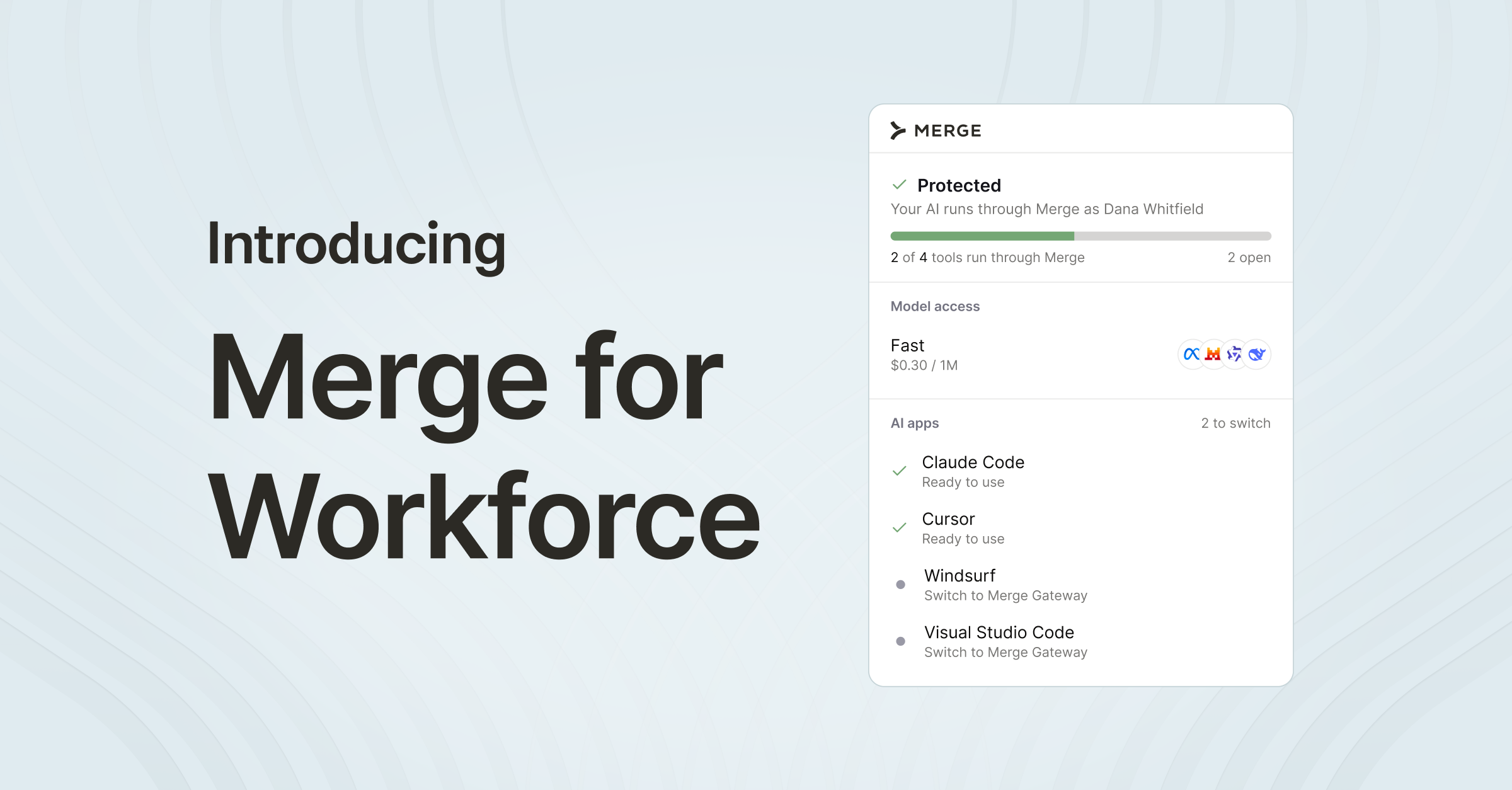
Ready to build powerful RAG pipelines in your product?
Learn how Merge's Unified API can help by scheduling a demo with one of our integration experts.

But Merge isn’t just a Unified
API product. Merge is an integration platform to also manage customer integrations. gradient text
But Merge isn’t just a Unified
API product. Merge is an integration platform to also manage customer integrations. gradient text
But Merge isn’t just a Unified
API product. Merge is an integration platform to also manage customer integrations. gradient text
But Merge isn’t just a Unified
API product. Merge is an integration platform to also manage customer integrations. gradient text