

Table of contents
Claude Fable 5 vs GPT-5.6 Sol: how they compare on coding



Jon Gitlin
Anthropic and OpenAI each shipped a flagship model within a month of each other this summer, and neither is priced or positioned like the mid-tier options most teams reach for by default.
This raises the question: what does that premium actually buy you on a coding task?
We'll answer this question and compare the models directly by running our own coding experiment with both.
Overview on Claude Fable 5 and GPT-5.6 Sol
Claude Fable 5 is Anthropic's most capable model and was released on June 9, 2026.
It's a proprietary model built for the hardest agentic and long-running work, with a 1,000,000-token context window and premium pricing at $10 per million input tokens and $50 per million output.
GPT-5.6 Sol is the flagship tier of OpenAI's GPT-5.6 family (above the lighter Luna and mid-tier Terra), and it came out on July 9, 2026.
It's also proprietary, with a slightly larger 1,050,000-token context window. It's priced at $3.75 per million input tokens and $22.5 per million output, which are well under half of Fable 5's rates.
Related: How Caude Sonnet 5 compares to GPT-5.6 Terra
Claude Fable 5 vs GPT-5.6 Sol (based on our research)
GPT-5.6 Sol launched too recently to appear on Artificial Analysis' Coding Agent Index, so there's no clean third-party head-to-head to point at.
Rather than lean on a one-sided benchmark, we ran our own build test:
1. We wrote one identical prompt for both models: "Build the marketing homepage for a fictional company, Northwind Logistics, a freight-tracking platform. It should include a single self-contained HTML file with a dynamic hero section, a nav bar, features, social proof, a pricing or CTA section, and a footer."
2. We routed that same prompt to each model through Merge Gateway at high reasoning effort, one generation each, and recorded the input tokens, output tokens, total response time, and estimated cost Gateway reported.
3. Then we rendered both results and looked at how the sites actually turned out.
On the numbers, it's a split result. Fable 5 finished faster (126.7 seconds vs 175.9) and used fewer output tokens (12,882 vs 15,913), but its premium per-token pricing still made it the pricier generation overall: $0.6467 vs $0.3587, roughly 80% more than Sol despite doing less work.

Here's Claude Fable 5's hero:

And GPT-5.6 Sol's:

The two builds didn't converge on the same visual template. Fable 5 leaned into a dark navy hero with an animated constellation of connected dots and a live stat row; Sol built a lighter, mint-accented page anchored by a "Command Center" product mockup showing a live shipment map, a delay-prevented alert, and status chips.
It's also worth noting that Fable 5 shipped an actual three-tier pricing table below the fold, while Sol uses a demo-request CTA but never shows pricing at all on the homepage.

Netting it out: Fable 5 is the faster, more complete self-serve page (real pricing, no rendering quirks beyond its randomized stats), at a real cost premium. Sol is slower and less complete on pricing, but far cheaper per generation and told a richer product story.
Related: How Claude Sonnet 5 compares to Grok 4.5
Final thoughts
Claude Fable 5 is the better choice when you want Anthropic's most capable model for the hardest, longest-running agentic work and can absorb the premium pricing; while GPT-5.6 Sol is the better option when you want frontier-tier reasoning at a meaningfully lower cost and don't need the first generation to be perfect.
To reap the benefits of each model (and any other), you can use Merge Gateway to route each request to the model that best fits your requirements.
Merge Gateway lets you:
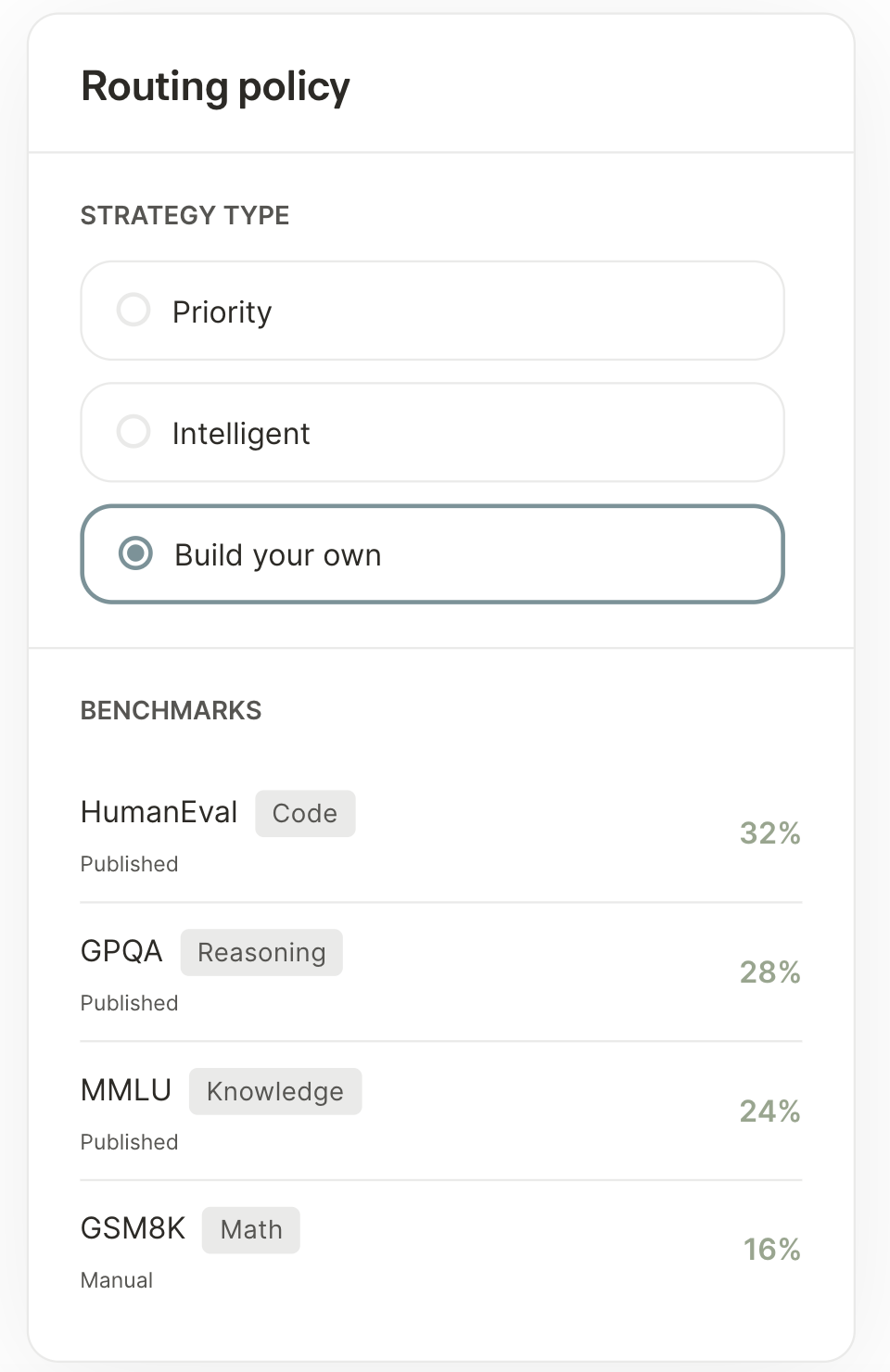
- Use Build Your Own Router (BYOR) to route on your own benchmark or eval scores, not just cost or latency
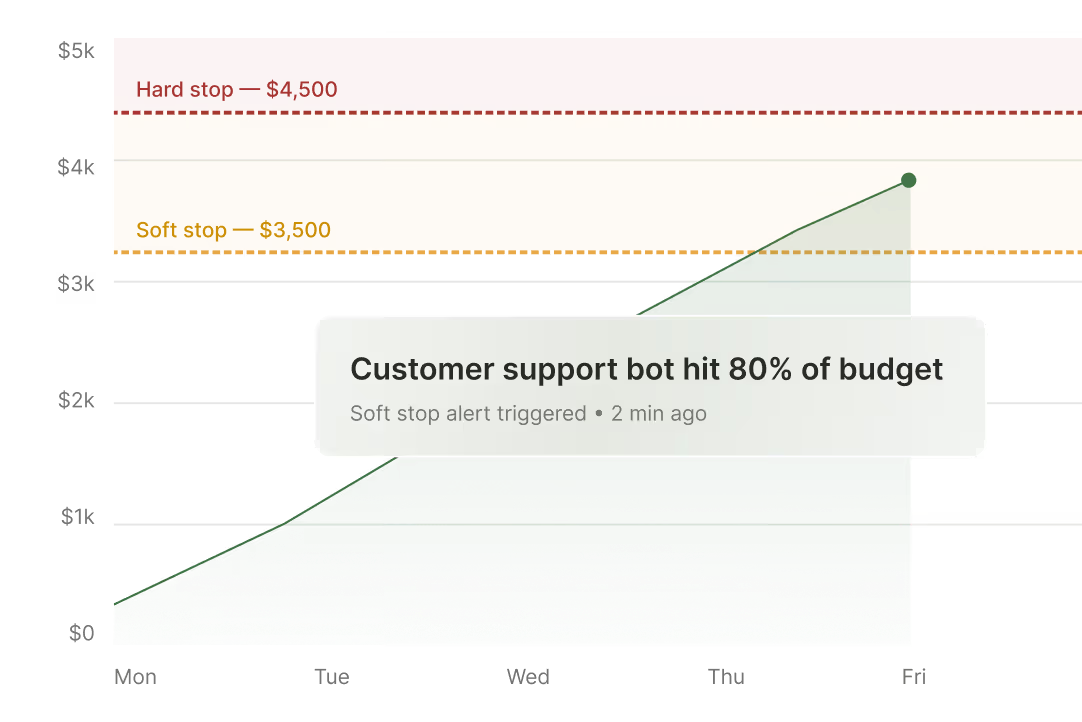
- Set budgets, spend limits, and per-project cost visibility so a high-volume workload can't quietly blow past plan
- Get per-request logging and tracing across every model and provider
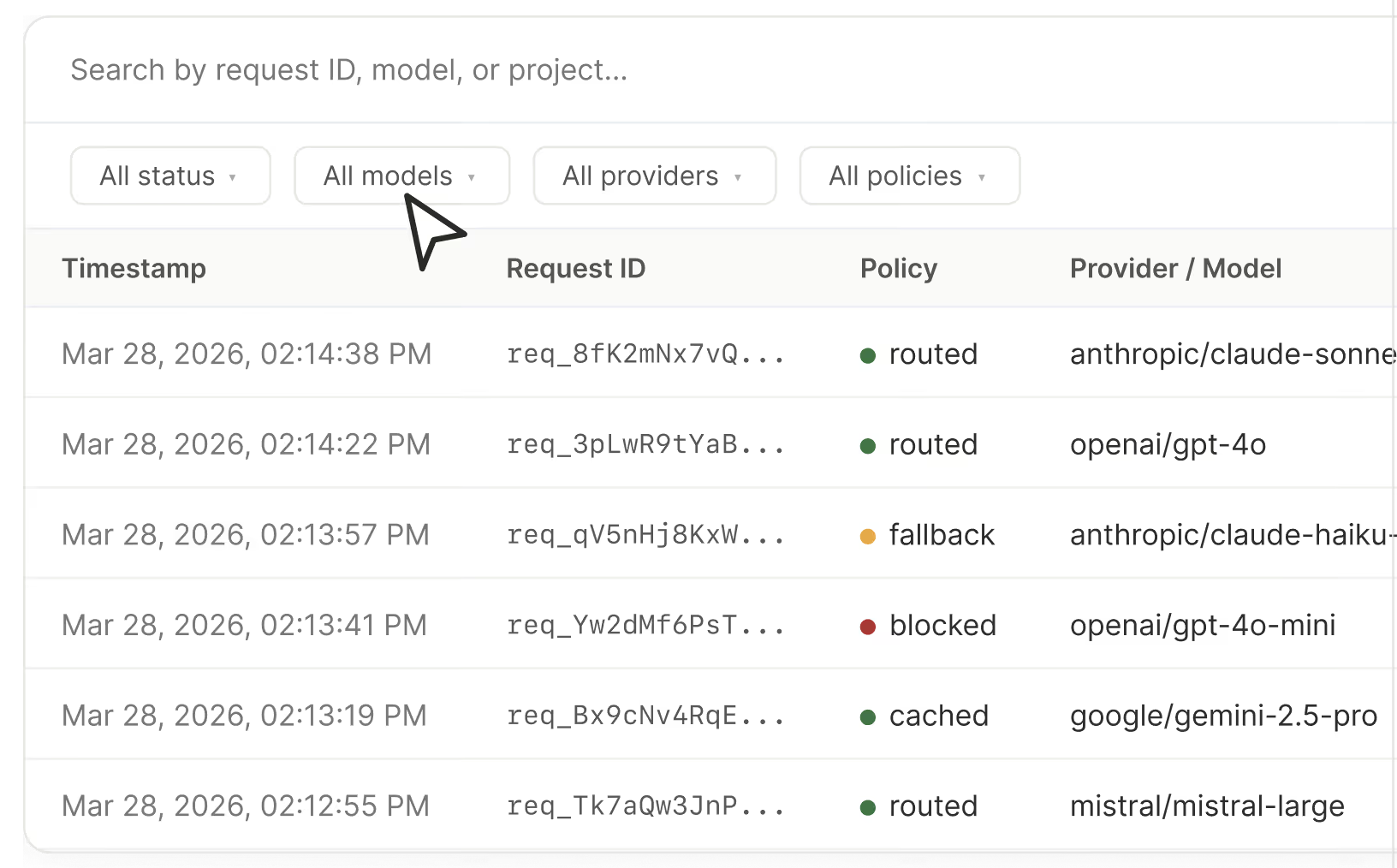
- Fall back automatically when a provider errors or rate-limits, so a single outage doesn't take your feature down
{{this-blog-only-cta}}
Claude Fable 5 vs GPT-5.6 Sol FAQ
In case you have any more questions on either model, we've addressed several more below.
What is the context window for Claude Fable 5 and GPT-5.6 Sol?
Claude Fable 5 has a 1,000,000-token context window with a 128,000-token maximum output (300,000 on the Message Batches API), per Anthropic's model documentation. GPT-5.6 Sol has a slightly larger 1,050,000-token context window, also with a 128,000-token maximum output, per OpenAI's model documentation.
The two are effectively matched here. Both windows are large enough to hold a substantial codebase, long specs, and multi-file context in a single request, and both can return equally long single responses.
What other models should I consider besides Claude Fable 5 and GPT-5.6 Sol?
A few others are worth evaluating depending on your priorities:
- Claude Opus 4.8: Anthropic's everyday-value flagship, for teams that want strong agentic coding without Fable 5's top-end price
- Gemini 3 Pro: the long-context pick, best when a task means reasoning over a whole repo or a long spec in one pass before editing
- DeepSeek V4 Pro: an open-weight model that competes hard on cost. It's a fit for high-volume or batch code generation where per-token price matters most
What are the most common coding use cases for Claude Fable 5 and GPT-5.6 Sol?
Claude Fable 5 fits the hardest agentic and autonomous work: long-running multi-step tasks, large refactors, and cases where the cost of a wrong answer outweighs the model's premium price.
GPT-5.6 Sol fits teams that want frontier-tier reasoning without paying flagship-Anthropic prices: complex feature work and one-shot builds like the site test above, where it delivered a strong result for a little less than half of Fable 5's cost.
Jon Gitlin
.png)

Start routing requests to any model through Merge Gateway
Try Merge Gateway for free and route your next coding task to the model that fits it best.


But Merge isn’t just a Unified
API product. Merge is an integration platform to also manage customer integrations. gradient text
But Merge isn’t just a Unified
API product. Merge is an integration platform to also manage customer integrations. gradient text
But Merge isn’t just a Unified
API product. Merge is an integration platform to also manage customer integrations. gradient text
But Merge isn’t just a Unified
API product. Merge is an integration platform to also manage customer integrations. gradient text