


Dayforce
Integrate Dayforce with your product, along with any otherATS
HRIS
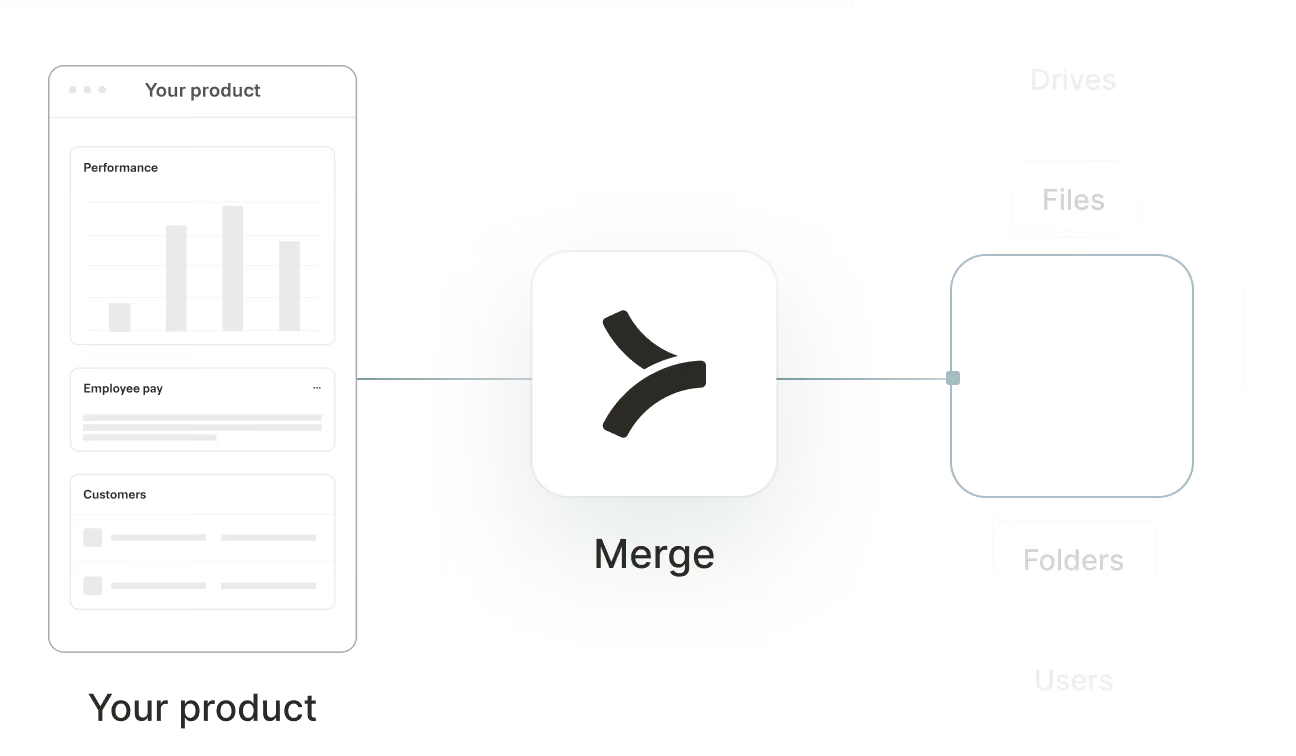

Sync Dayforce data
Employment
The Employment object is used to represent a job position at a company. If an integration supports historical tracking of employments, it will be reflected in the data. If not, a new Employment object will be created whenever there is a change in job title or pay. The effective_date field should be used to order Employment objects, with the most recent date corresponding to the latest employment record for an employee.
FAQ on integrating with Google Drive’s API
Heading
What data sync frequencies are available for Dayforce through Merge?
Dayforce data can be synced at different frequencies depending on the sync frequency you set (Daily, Standard, High, and Highest) as well as the Common Model you’re interested in syncing. That said, you can typically sync Dayforce data every hour, 3 hours, 6 hours, or daily.
Learn more about the sync frequencies Merge supports for Dayforce.
How does Merge interact with Dayforce endpoints?
Merge interacts with several Dayforce endpoints, allowing you to access and sync employee, time-off, team, location, compensation data, and more. Merge also supports GET requests across these endpoints, enabling you to fetch a wide range of employee data for your product.
Learn more about the Dayforce endpoints Merge can access.
How does Merge log Dayforce data, and how long does it retain data?
Merge retains API request logs based on your plan. Logs are retained for 3 days on the Launch plan, 7 days on the Core plan, 30 days on the Professional plan, and 90+ days on the Enterprise plan. Webhook logs follow a similar retention policy, ensuring visibility into integration activities across all customer accounts.
Can Merge access and sync custom Dayforce data?
Merge lets you sync custom Dayforce data through features like Field Mapping, Remote Data, and Authenticated Passthrough Requests. Here’s more on each feature:
- Field Mapping lets customers map custom data fields to Merge’s Common Models
- Remote Data provides access to the original, unaltered data format
- Authenticated Passthrough Request supports direct requests to Dayforce’s API for any data not available through standard Merge requests
What organizations use Merge’s HRIS integrations?
Thousands of organizations use them. This includes companies like Ramp, Snappy, BILL, AngelList, Electric, 15Five, and Navan.
What other HRIS integrations does Merge support?
In addition to Dayforce, Merge supports 70+ HRIS integrations. This includes platforms like ADP Workforce Now, BambooHR, Workday, SAP SuccessFactors, Gusto, Namely, Paylocity, and Rippling, among many others. This extensive list allows our customers to integrate with HRIS systems at scale, quickly.
Learn more about the HRIS integrations Merge supports.
How can I start using Merge to add the Dayforce integration?
To get started, you can sign up directly here. From there, you can explore the self-serve Launch plan, which includes up to three Production Linked Accounts for free.
After signing up, you can also access Merge’s comprehensive API documentation, set up authentication, and begin testing integrations in sandbox environments.
For larger implementations or to access advanced features, like single-tenancy, custom field mapping, and passthrough requests, you can reach out to Merge’s sales team and explore the Professional or Enterprise plans.
Learn more about Merge’s pricing plans.
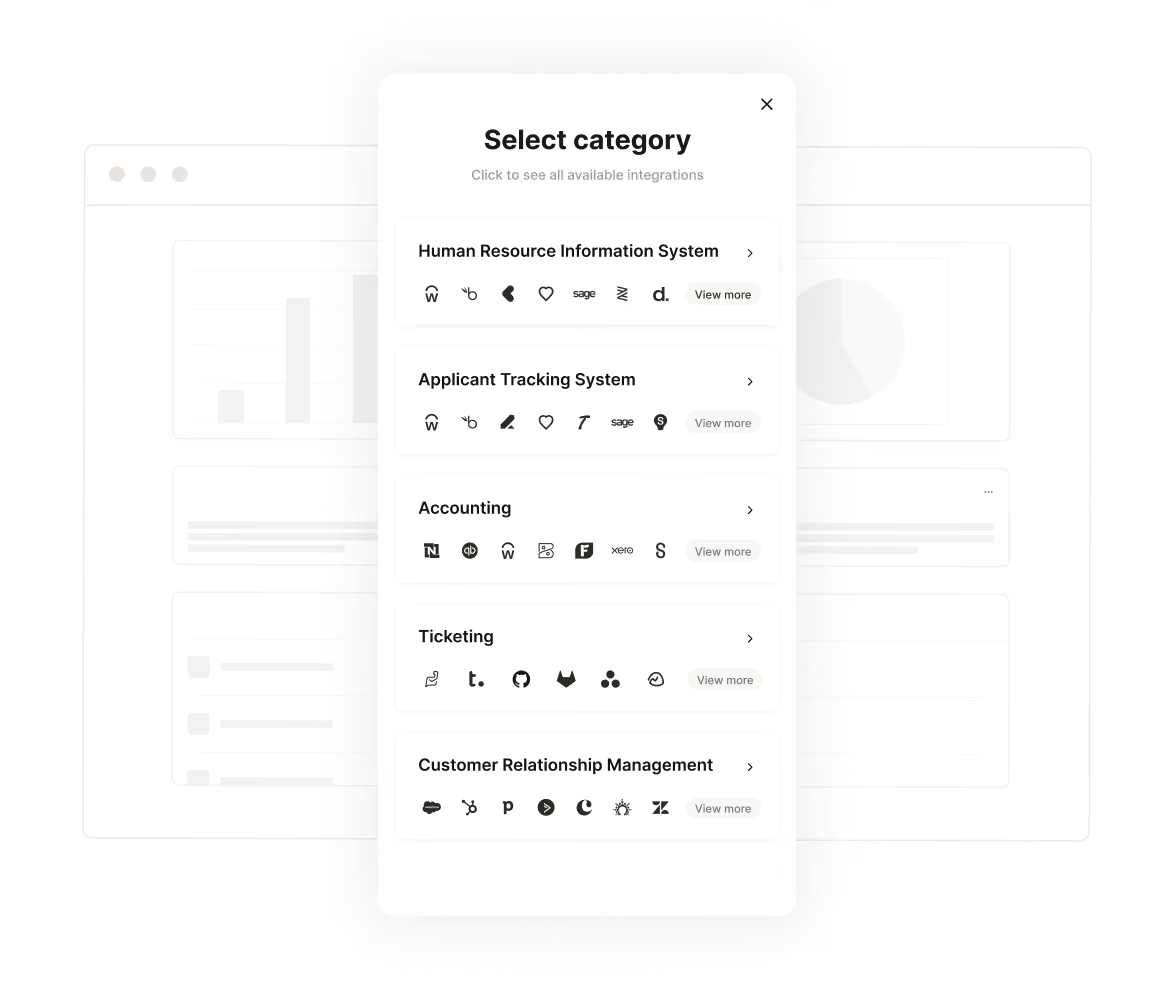
Seamless account linking
Integration authentication that feels like magic
Merge seamlessly manages authentication and authorization on behalf of your customers. Offer account linking and permission controls to your users with Link for a customizable frontend or with Magic Link for URL-based authorization
View Docs
APIs made simple
The toolkit for all your integration needs
We make integrations painless with accessible API design, dead-simple SDKs, and beautiful documentation that we agonize over.
View Docs
Get Employee Data



1from merge import Merge
2
3client = Merge(
4    account_token="YOUR_ACCOUNT_TOKEN",
5    api_key="YOUR_API_KEY",
6)
7client.hris.employees.list()
import { MergeClient, Merge } from '@mergeapi/merge-node-client';
const merge = new MergeClient({
apiKey: 'YOUR_API_KEY',
accountToken: 'YOUR_ACCOUNT_TOKEN',
});
employee = await merge.hris.employees.list()
ApiClient.instance.authentications.tokenAuth = {
  type: 'bearer',
  accessToken: 'API_KEY',
};
new EmployeesApi().employeesList('ACCOUNT_TOKEN', {}, (data) => {
  console.log(data);
});
import (
"context"
"fmt"
merge "github.com/fern-api/merge-go"
mergeclient "github.com/fern-api/merge-go/client"
"github.com/fern-api/merge-go/hris"
)
client := mergeclient.NewClient(
mergeclient.ClientWithAuthApiKey("<YOUR_API_KEY>"),1ApiClient client = Configuration.getDefaultApiClient();
2client.setBasePath('https://api.merge.dev/api/ats/v1');
3ApiKeyAuth tokenAuth = client.getAuthentication('tokenAuth');
4tokenAuth.setApiKey('API_KEY');
5CandidatesApi apiInstance = new CandidatesApi(client);
6apiInstance.candidatesList('ACCOUNT_TOKEN');import com.merge.api.MergeApiClient;
import com.merge.api.resources.hris.employees.requests.EmployeesRetrieveRequest;
import com.merge.api.resources.hris.types.Employee;
MergeApiClient mergeClient = MergeApiClient.builder()
.accountToken("ACCOUNT_TOKEN")
.apiKey("API_KEY")
.build();
Employee employee = mergeClient.hris().employees().list(
EmployeesRetrieveRequest.builder()
.includeRemoteData(true)> {
"id": "0958cbc6-6040-430a-848e-aafacbadf4ae","remote_id": "19202938","employee_number": "2","company": "8d9fd929-436c-4fd4-a48b-0c61f68d6178","first_name": "Dirna","last_name": "Emanuel","display_full_name": "Dirna Emanuel",
"username": "dirnaemanuel",
"groups": [
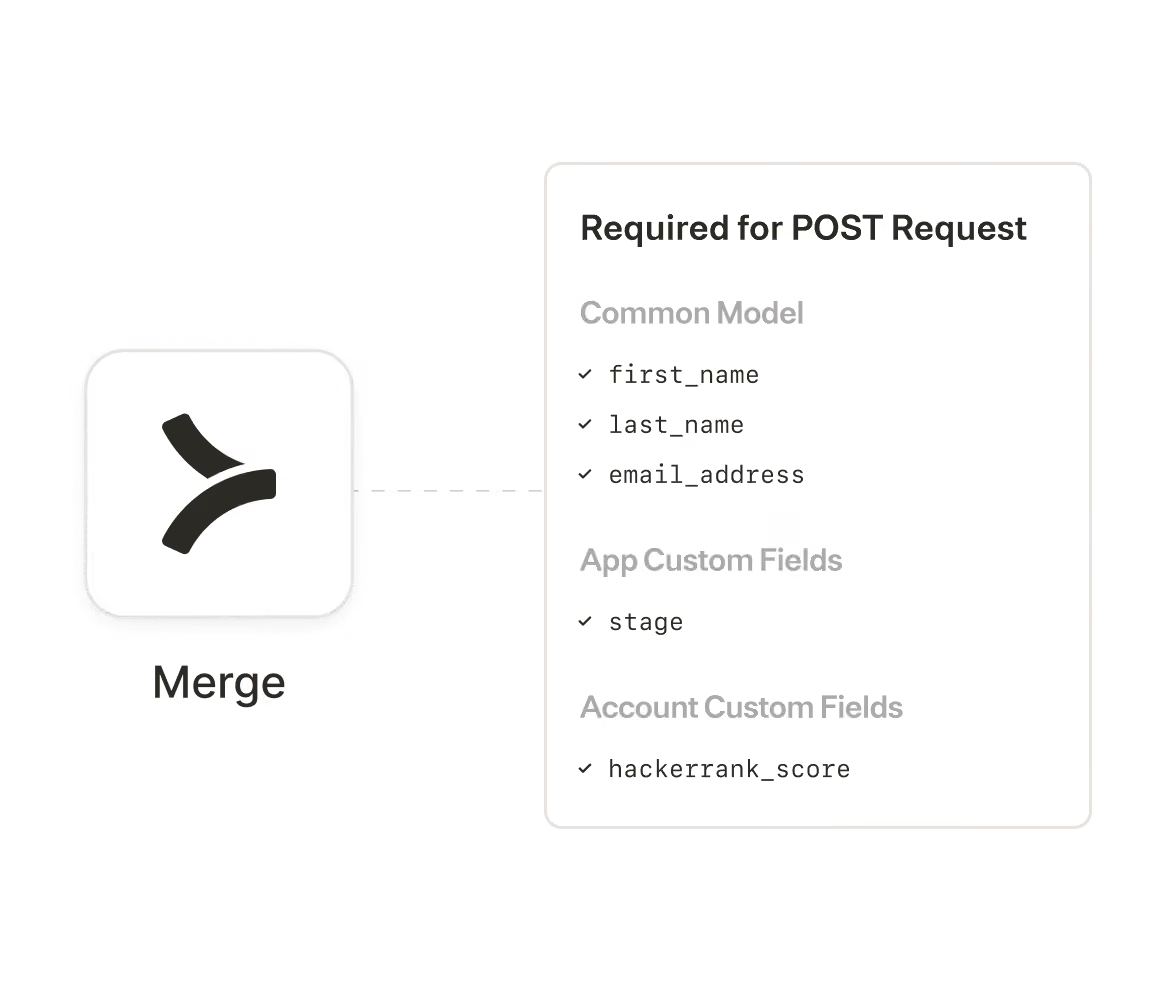
Meta endpoint
Programmatically access required schemas
Third-party providers require specific (and often different) fields to write data to their APIs, making your code a mess.
Dynamically fetch required data schemas from Merge’s /meta endpoint to make POST or PATCH requests that just work.
View Docs
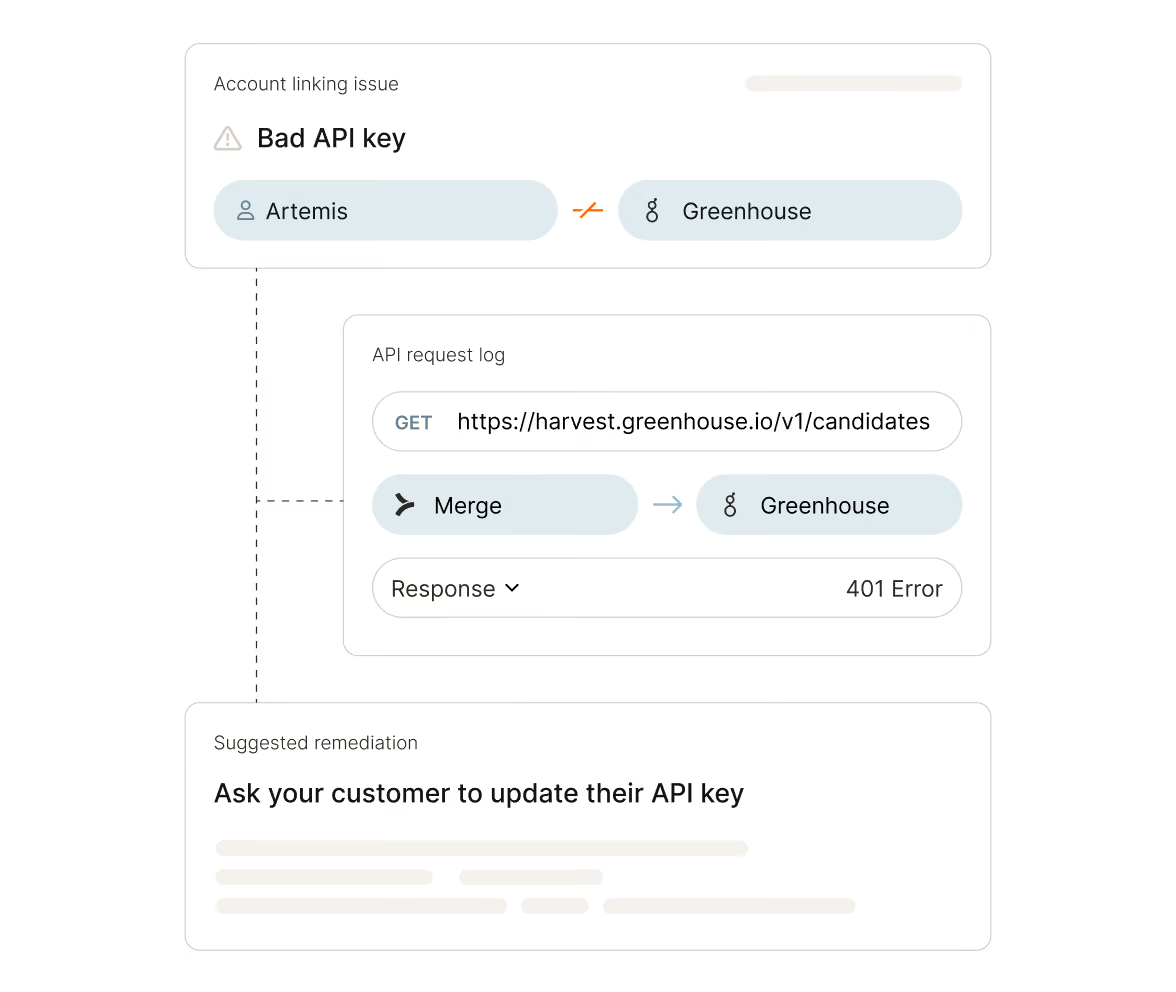
Beyond building
Rely on the best integration observability system
Let our logs, issue detection, and automated alerts save your customer success team time, money, and headaches.
Forget maintenance - let your developers focus on building!
Learn more
Supported ATS platforms
Supported HRIS platforms








Make integrations your competitive advantage
Stay in touch to learn how Merge can unlock hundreds of integrations in days, not years
