Route to Claude Haiku 5.5, and to Claude Sonnet 5.5 through deepinfra
Claude Haiku 5.5 by Anthropic is in the catalog, and deepinfra is a new model vendor serving Claude Sonnet 5.5 with zero data retention. Read more in the Gateway model catalog docs.
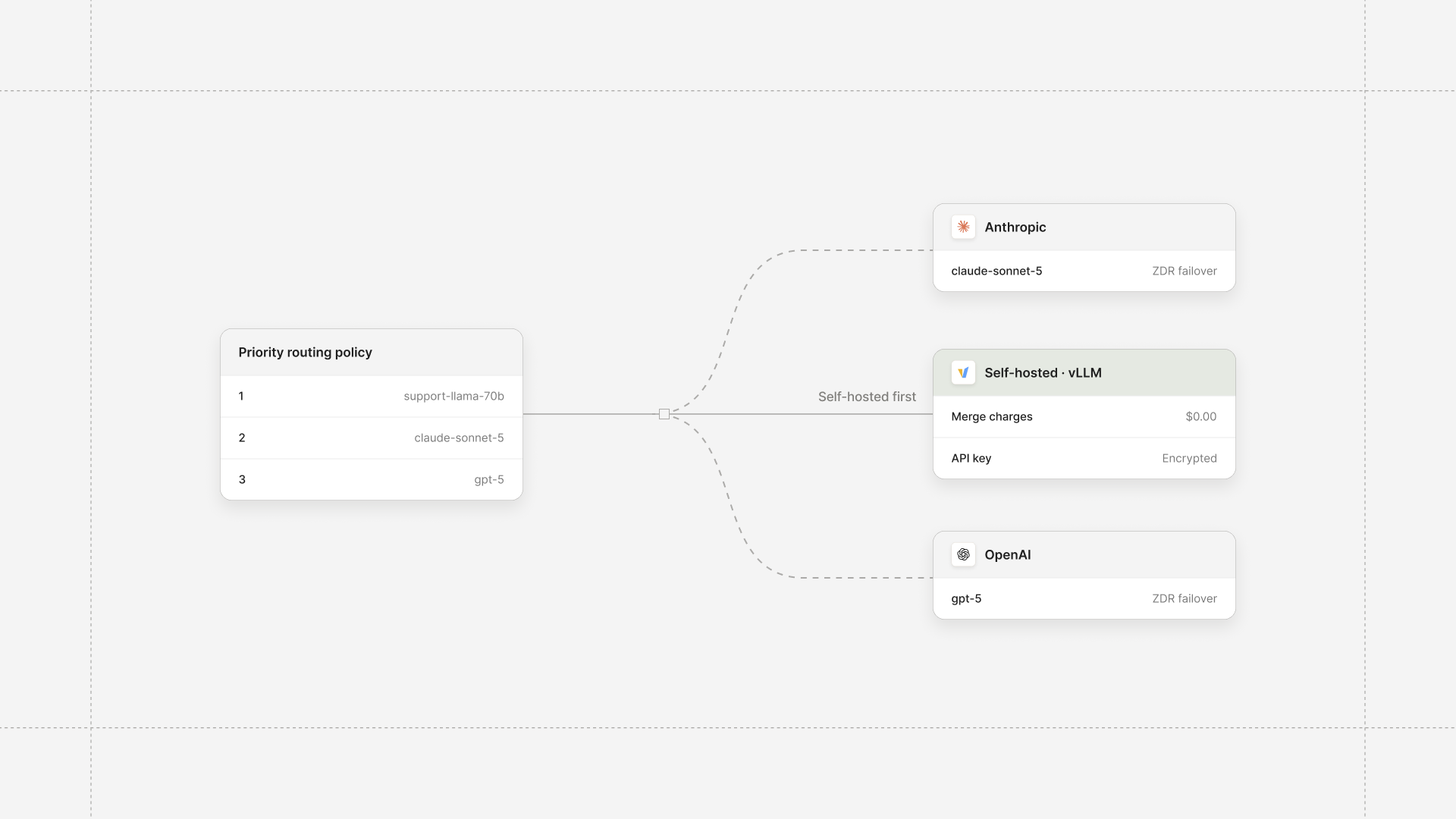
Priority routing policies filter and rank models by measured throughput and latency
A Performance section in the policy editor and the API sets thresholds on each Priority policy.
A minimum throughput and a maximum time to first token
Model ordering by measured latency or throughput
Per-request min_throughput and max_latency overrides
The routing reason explains how each threshold applied
Read more in the Gateway product page (docs link TBD - link to product page for now).
X-Merge-Customer-Origin-Id names the customer on each request with your own ID
Send your own customer ID in the header, and Gateway creates the customer on first use. You can also create or update customers in batches, mint customer API keys by origin ID, and read per-request customer usage records. Read more in the Gateway customer API keys docs.
Improvements
Audio transcriptions - Usage reports cover SRT and VTT formats and GPT-4o transcribe models
Billing - Bring-your-own-key web searches and enterprise auto-pay invoices updated to bill once, at the expected rate
Embeddings endpoints - Key model allowlists, organization blocklists, and vendor access rules extend to the OpenAI, LangChain, and AI SDK compatible embeddings endpoints
Gemini - Text-to-speech accepts an explicit audio format
Logprobs - Requests with logprobs complete on vendors that do not support them
Management API keys - /v1/keys adds expiry dates, spend limits, project scoping, and list filters
Management keys - Scopes cap at the permissions of the user who created the key
MiniMax
Voice settings such as emotion, language boost, and pronunciation dictionaries reach the provider
Adds native image generation and image-to-video from first frame, last frame, and reference images
Public models API - Each model adds measured latency, throughput, uptime, and a popularity rank, with a performance history endpoint
Routing policies
Fail over to the next model when a vendor safety filter blocks a response
Requests combining tools and JSON schema output reach every vendor that supports structured outputs
Failover covers models a vendor retires
Token counting - Compression and the token count endpoints estimate documents, files, audio, and images
Refined tool-call handling, prompt caching, and batch request parameters across Amazon Bedrock, Anthropic, DeepSeek, and Gemini.
Thank you! Your submission has been received!
Oops! Something went wrong while submitting the form.