

.avif)
How Sandstone closes six-figure deals with Merge's cross-category integrations
How Sandstone closes six-figure deals with Merge's cross-category integrations
100%
retention rate when customers adopt 3+ integrations
30+
ticketing, CRM, file storage, and knowledge base integrations added within a week
4
six-figure deals closed in months with the help of Merge's integrations

Sandstone fact sheet
Product
Knowledge orchestration platform
HQ
New York, NY
Industry
Artificial Intelligence
Merge category
No items found.
Merge Common Models
For mid-market and enterprise prospects, integrations are table stakes. The ability for us to offer integration as quickly as we could on Merge helped us close several six-figure deals in just a few months.

Nick Fleisher
Problem
Paragon's auth support, integration quality, and CX weren’t meeting their expectations
Sandstone is a knowledge orchestration platform that captures, centralizes, and applies legal knowledge the way your team would. It helps you work faster with clearer insight into business impact and risk across the systems where legal work gets done.
To surface the right context for a legal request, such as counterparty history or existing agreements, Sandstone needs to pull live data from the systems where that information already lives: CRMs like Salesforce, file storage tools like Google Drive, ticketing systems like Jira, and knowledge bases like Confluence.
Sandstone initially used Paragon to manage these integrations, but ran into consistent friction: limited flexibility around authentication methods, integration quality that didn't account for edge cases, and support response times that averaged a full day.
After testing Merge in parallel and seeing a clear difference, they migrated all of their integrations to Merge.
Sandstone’s co-founder and CEO, Nick Fleisher, offers a specific example,
"I could ask the same question in the Paragon Slack channel and the Merge Slack channel. Paragon’s team would take a day to respond, and Merge’s would take less than 10 minutes.”
He goes on to explain that “integrations underpin major parts of our product. We needed someone we could fully invest in, and Merge was the obvious choice.”
Solution
Adding 30+ cross-category integrations in less than a week
Once Sandstone built to Merge’s Unified API, they were able to add dozens of integrations across file storage, ticketing, knowledge base, and CRM.
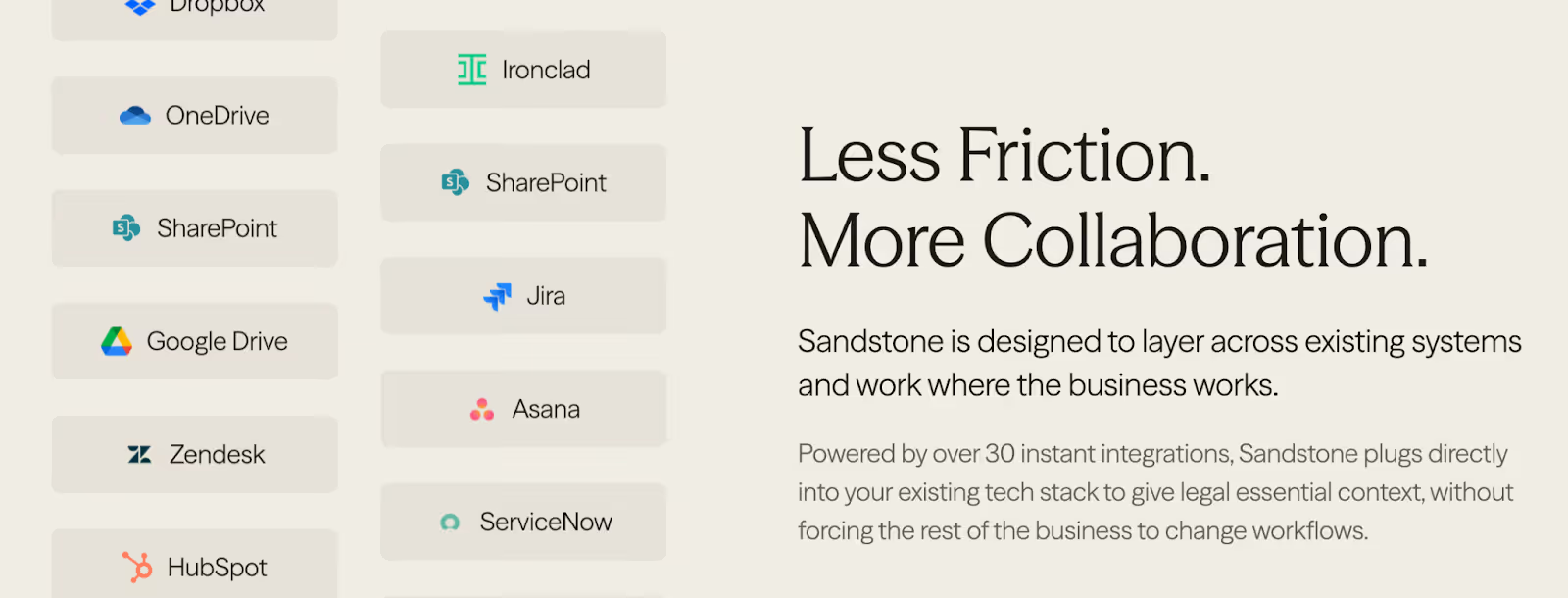
Here’s how their integrations work:
1. A logged-in user navigates to settings and then integrations in Sandstone. From there, they can see all of the available integrations.
2. Once the user selects a specific integration, Merge Link, a UI component embedded in Sandstone, appears. The user can follow the steps provided to authenticate to the application.
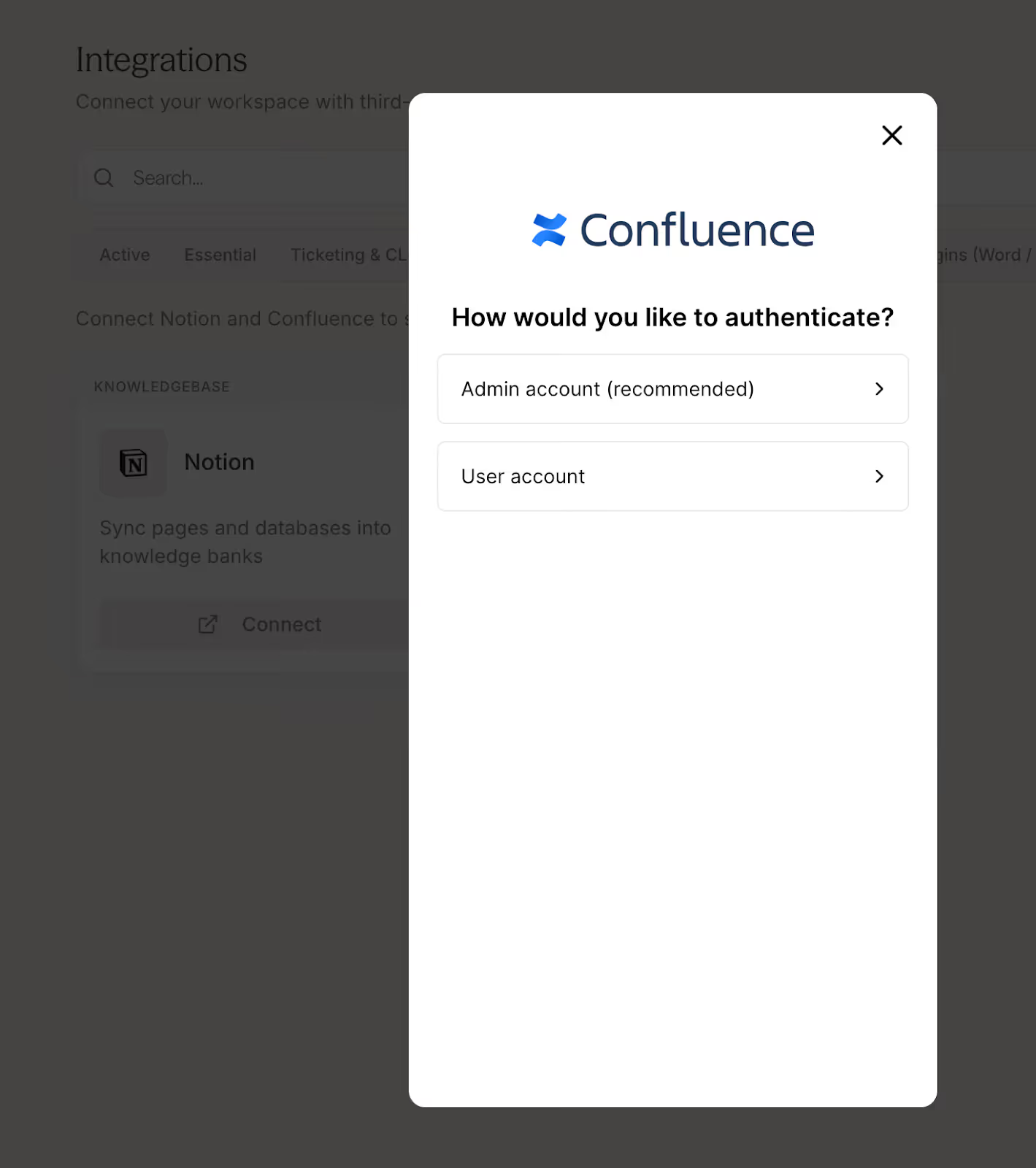
3. Once authenticated successfully, an initial sync pulls the relevant data into Sandstone.
Here’s how this looks across integration categories:
- Ticketing & CLM: assignees, attachments, priorities, labels
- CRM: accounts, notes, activities/engagements
- File Sharing: documents, folders, and file permissions
- Knowledge base: pages, articles, spaces
The integrated data is often auto-synced (<15 min intervals) and can be bidirectional. That means changes made in Sandstone, like a resolved ticket or an updated agreement field, are reflected back in the source system automatically.
Sandstone’s users can leverage these integrations in several ways. Here are just a few common use cases:
1. Turn tickets into automated legal workflows. When a product or legal team tags a ticket as a legal request, Sandstone automatically ingests it for analysis. And once the legal team completes their review, comments and status updates are automatically written back to the original ticket.
2. Give lawyers the full picture before they open a contract. When a lawyer opens a contract in Sandstone, the platform pulls account records, deal data, and custom fields from the CRM to surface full counterparty context: prior agreements, relationship history, and deal status.
3. Keep legal knowledge current across the organization. When a legal team updates guidance in Sandstone, it's pushed back to the knowledge base application automatically so that everyone at the company has access to the most accurate, up-to-date information.
Outcome
Winning more deals, retaining more customers, and building with confidence
Merge’s integrations have enabled the Sandstone team to close meaningful business within months.
Nick adds more context:
“For mid-market and enterprise prospects, integrations are table stakes. The ability for us to offer integration as quickly as we could on Merge helped us close several six-figure deals in just a few months."
The impact on retention is just as clear: "When we have clients who have more than three or four of Merge’s integrations, they don't churn," says Nick.
Integration quality has also reduced onboarding friction. Edge cases that typically require debugging against each vendor's API are handled before Sandstone encounters them.
Nick offers a specific example:
"When we tested Merge’s Linear integration internally, it synced on the first try perfectly. We were like, 'that's crazy.'”
Finally, permissioning is critical for Sandstone's customers. File storage systems, for example, hold tens of thousands of sensitive legal documents.
Clients need to know exactly what data is being accessed, by whom, and under what conditions.
"Merge's integrations handle permissions automatically. This means data like contracts, counterparty records, deal terms, and legal documents are kept secure.”
So what’s next in Sandstone’s integration journey with Merge?
"We're planning to expand deeper into HRIS to give legal teams visibility into employee data that's relevant when reviewing agreements or managing access. We'll also continue to add integrations as Merge releases them. If it's on Merge, we know we can ship it quickly,” says Nick.
Sandstone is just getting started, and we're excited to keep building alongside them.
Customer stories
.webp)

.svg)


Make integrations your competitive advantage
Stay in touch to learn how Merge can unlock hundreds of integrations in days, not years

But Merge isn’t just a Unified
API product. Merge is an integration platform to also manage customer integrations. gradient text
But Merge isn’t just a Unified
API product. Merge is an integration platform to also manage customer integrations. gradient text
But Merge isn’t just a Unified
API product. Merge is an integration platform to also manage customer integrations. gradient text
But Merge isn’t just a Unified
API product. Merge is an integration platform to also manage customer integrations. gradient text