


How TeamOhana uses Merge’s HRIS and ATS integrations to power AI agents for headcount management
How TeamOhana uses Merge’s HRIS and ATS integrations to power AI agents for headcount management

TeamOhana fact sheet
Product
Headcount Management Platform
HQ
San Francisco, CA
Industry
Employee Management
Merge Common Models
Merge’s integrations enable us to pull in all the employee and candidate data we need and at the frequency we need it. The integrated data is also always accurate and complete. Taken together, we can support truly differentiated AI agents for users in finance, talent, and HR.

Tushar Makhija
Problem
Adding HRIS and ATS integrations at scale with limited developer resources
TeamOhana, an enterprise headcount management platform, empowers finance, HR, and talent teams to make critical decisions—from hiring to compensation to organizational planning.
Their vision for building the single source of truth for headcount involved accessing up-to-date hiring and employee data. And this required integrating with their customers’ HRIS solutions and ATS tools.
TeamOhana chose not to build these integrations in-house for two key reasons: they wanted to keep engineering focused on their core product, and they wanted to launch their integrations quickly, which meant avoiding the necessary partnerships with individual API providers, like Workday and UKG.
That led them to evaluate two unified API solutions—Merge and Finch.
Tushar Makhija, the CEO and co-founder of TeamOhana, explains why they went with Merge:
“We chose Merge over Finch because of a difference in vision. Merge’s co-founders had more ambitious plans to build a unified API spanning key software categories.”
He adds that “Merge was also committed to building a best-in-class post-sales team. Fast-forward a few years and I can report that they’ve executed on their commitment brilliantly.”
Solution
Adding 90+ HRIS and ATS integrations within weeks
TeamOhana only needed a few weeks to build to Merge’s Unified API. From there, they were able to take nearly a hundred HRIS and ATS integrations live, including Workday, UKG, BambooHR, HiBob, Greenhouse, Ashby, and Lever.

Here’s how their integrations work:
1. Once a user is logged into TeamOhana, they would click on Settings and then Integrations. From there, they can click on "Integrate HRIS or ATS", which triggers Merge Link to appear.

2. A user can then select a specific integration they’re interested in.
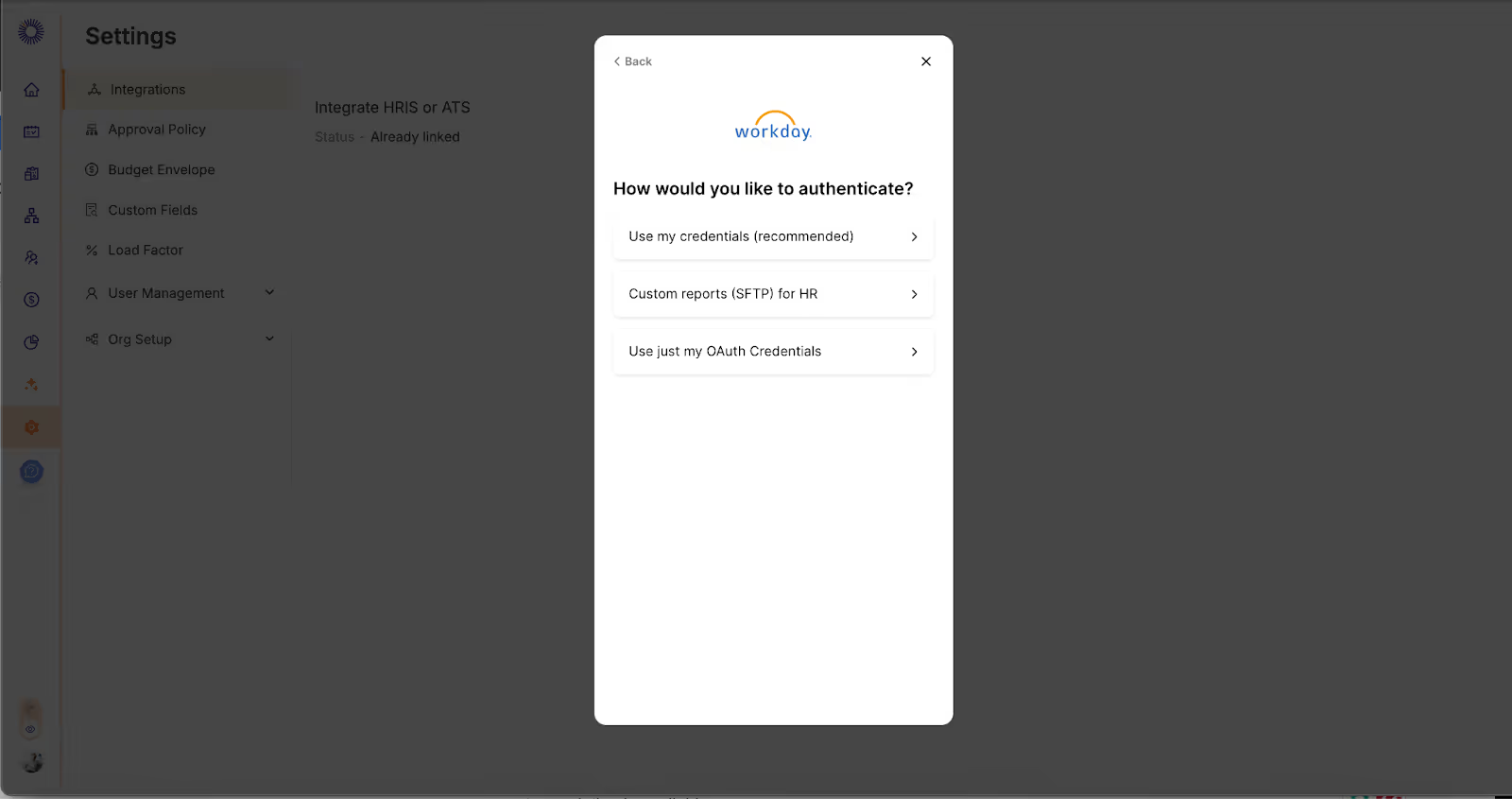
3. The user can follow the steps outlined in Merge Link to complete the authentication process. Once they have, an initial sync gets performed.
For HRIS, data like employees’ full names, job titles, departments, and salaries get synced every hour; for ATS, data like candidates’ full names, hiring statuses, job details, and start dates get pulled in every hour.
Using the integrated data, TeamOhana can power several crucial use cases. Here are just a few:
- Reconciling hired employees: When a candidate is marked as hired in the integrated HRIS, TeamOhana automatically links the new hire with the headcount they filled

- Updating employee headcount: As employees get added, terminated, or change roles in the integrated HRIS, the changes get reflected in TeamOhana. This ensures users have accurate org charts in TeamOhana and allows headcount forecasts to be accurate at all times
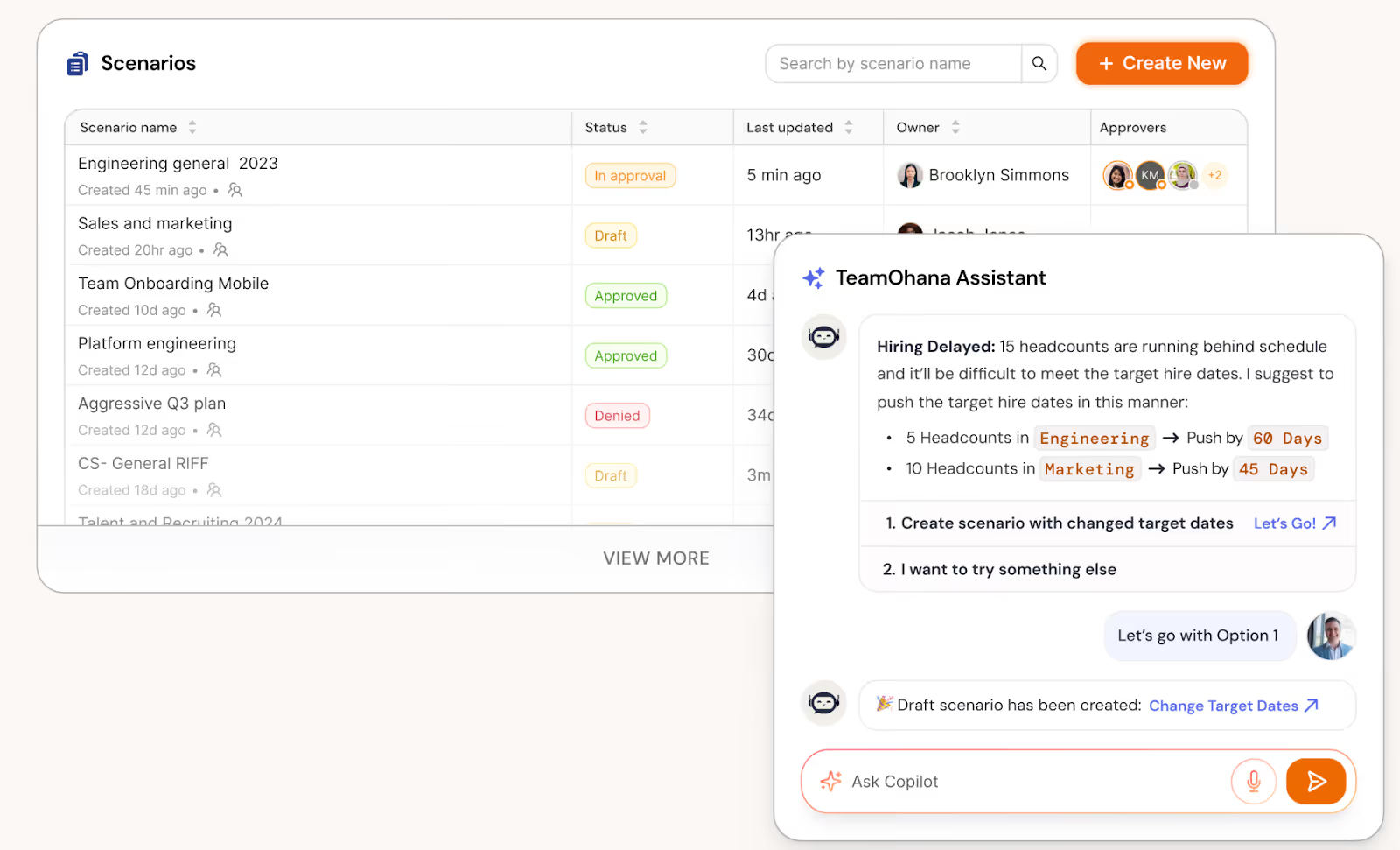
- Powering AI agents: TeamOhana built a suite of AI agents that can help users become aware of critical headcount insights on time and take the appropriate set of actions
For example, if planned headcount for a team isn’t getting filled on time, an AI agent can let the appropriate user(s) know and provide intelligent recommendations (i.e., to push the planned headcount out by a certain number of days).
The AI agent would know how many days to recommend pushing out by using the time-to-fill data for similar roles in the customer’s integrated ATS.
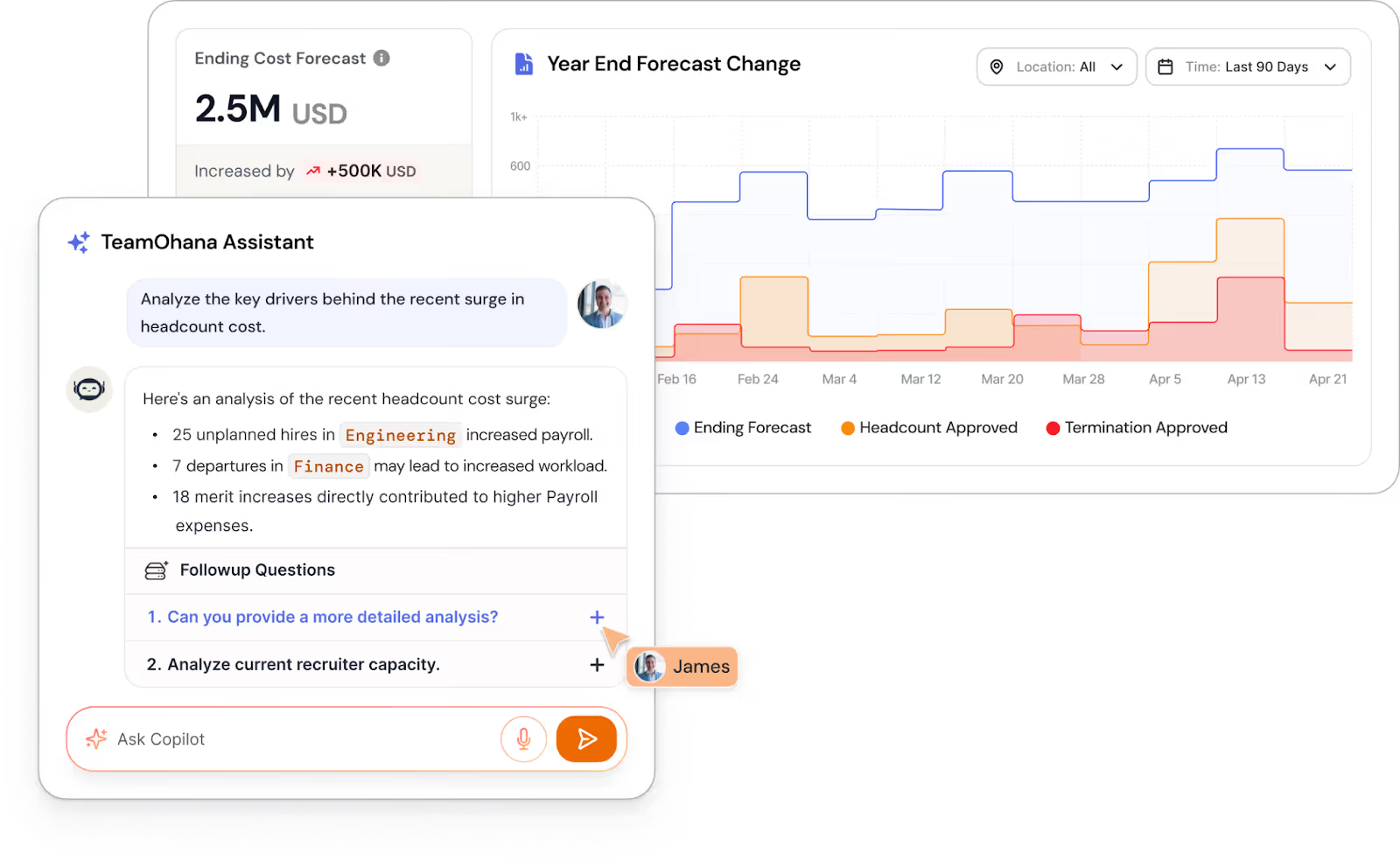
Another common agentic use case is around handling sudden and drastic changes in headcount costs.
More specifically, using integrated employee data, like salaries, new hires, and departed employees, the AI agent can alert users of anomalies in headcount costs and provide detailed insights on why, exactly, the costs changed.
Outcome
Building best-in-class AI agents, quickly
The quality and quantity of Merge’s HRIS and ATS integrations have enabled TeamOhana to build several cutting-edge AI agents in a matter of weeks.
Tushar explains further:
“Merge’s integrations enable us to pull in all the employee and candidate data we need and at the frequency we need it. The integrated data is also always accurate and complete. Taken together, we can support truly differentiated AI agents for users in finance, talent, and HR.”
Tushar also appreciates the Merge team’s level of knowledge and customer-centricity.
“Merge’s post-sales team is full of true integration experts. We count on them to help us adopt the integrations effectively and resolve any issues before they impact customers. Their team even goes above and beyond in helping us avoid unnecessary costs from their platform. It feels like a true partnership.”
So, what’s next in Merge’s partnership with TeamOhana?
Tushar fills us in:
“We’re looking to adopt Merge’s accounting integrations. These integrations would allow us to provide actual spending data and additional costs associated with employees, like equipment and devices. This additional data enables us to provide another layer of accuracy and depth to our forecasts.”
We look forward to helping TeamOhana implement these integrations successfully in the near future.
Customer stories
.webp)

.svg)


Make integrations your competitive advantage
Stay in touch to learn how Merge can unlock hundreds of integrations in days, not years

But Merge isn’t just a Unified
API product. Merge is an integration platform to also manage customer integrations. gradient text
But Merge isn’t just a Unified
API product. Merge is an integration platform to also manage customer integrations. gradient text
But Merge isn’t just a Unified
API product. Merge is an integration platform to also manage customer integrations. gradient text
But Merge isn’t just a Unified
API product. Merge is an integration platform to also manage customer integrations. gradient text